German Shepherd Marker Training: Step-by-Step
It's incredibly frustrating when you're trying to teach your clever German Shepherd something new, and it feels like you're speaking two different languages. You give a command, they do something, and you're left wondering if it was the right something to reward. This guide is all about simplifying that communication, diving deep into marker training, a powerful method that will make your German Shepherd understand exactly what you're asking, fostering a stronger bond and much faster learning.
Understanding Marker Training for Your German Shepherd
Bringing a German Shepherd into your life, whether they’re a fluffy puppy or an adult needing a fresh start, means entering a world of intelligence, loyalty, and boundless energy. But sometimes, that incredible intelligence can also make them a bit too clever for their own good, especially when it comes to understanding new commands. This is where marker training truly shines, cutting through the confusion and making learning a joy for both of you. It’s not just about teaching tricks; it’s about building a clear, consistent language that empowers your dog to understand and engage.
What Exactly Is a Marker?
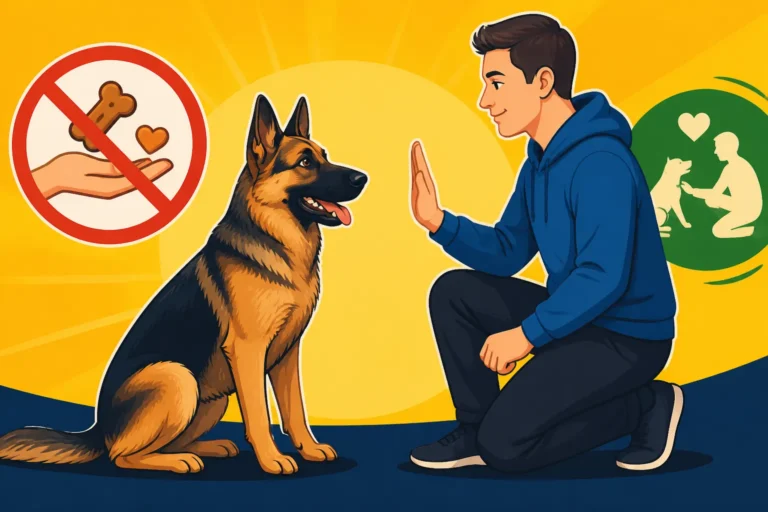
At its heart, a "marker" is simply a precise signal that tells your German Shepherd, "YES! That's exactly what I wanted you to do, and a reward is coming!" Think of it as a snapshot in time. In the split second your German Shepherd performs the desired action – a perfect sit, a focused glance, or a gentle touch – the marker captures that exact moment. This immediate and consistent feedback is what makes it so incredibly effective. Without a marker, there's often a delay between the desired behavior and the treat, leaving your dog guessing which part of their action earned the reward. Did they get the treat for sitting, or for sniffing the floor after sitting? The marker removes this ambiguity completely.
We often use a clicker as a marker because it's a distinct, consistent sound that's easy to deliver precisely. However, a verbal marker, like a sharp "Yes!" or "Good!", can also be incredibly effective, especially once your dog understands its meaning. The key is consistency and timeliness. The marker isn't the praise itself; it's a promise, a beacon that signals imminent reward.
Why Marker Training Works So Well for German Shepherds
German Shepherds are renowned for their intelligence and desire to work. They thrive on clear communication and having a "job" to do, even if that job is simply learning a new command. Marker training taps directly into these inherent traits. Because the marker provides such crystal-clear feedback, German Shepherds often grasp new concepts at an astonishing pace. They quickly learn to "offer" behaviors, actively trying to figure out what earns the click or "yes," rather than passively waiting for guidance. This engagement is fantastic for a breed that needs mental stimulation as much as physical exercise.
Moreover, this method helps to build incredible focus. When your German Shepherd knows that a precise action will be marked, they become much more attentive to what you’re trying to communicate. This focus is invaluable for everything from basic obedience to more advanced tasks or even How to Train a German Shepherd Off-Leash. It also reduces frustration for both ends of the leash. Instead of guessing, your German Shepherd is confidently working towards a clear goal, which in turn strengthens your bond and makes training sessions much more enjoyable and productive. It’s a positive reinforcement method that truly leverages your German Shepherd's natural drive to learn and please.
Essential Tools and Setup for Success
Before you dive headfirst into marker training with your German Shepherd, taking a moment to gather your tools and set up the right environment will make all the difference. It’s like preparing for a marathon – you wouldn’t just show up without the right shoes, would you? The same goes for training; a little preparation smooths the path to success and minimizes frustration for both you and your canine companion.
Choosing Your Marker Signal: Clicker vs. Verbal
This is often the first decision new marker trainers face. Both clickers and verbal markers can be highly effective, and each has its own set of advantages and disadvantages.
A clicker is a small device that makes a sharp, distinct sound. Its primary benefit is its consistency. A clicker always sounds the same, no matter your mood, how tired you are, or if you have a cold. This unwavering consistency is excellent for German Shepherds, who thrive on clear signals. It's also impersonal, meaning it doesn't carry emotional baggage the way your voice might. You can easily find affordable clickers on platforms like Amazon, often in multi-packs, so you always have one handy.
A verbal marker, such as "Yes!", "Good!", or "Bingo!", uses your voice. The main advantage here is convenience – you always have your voice with you! This makes it ideal for spontaneous moments of training or when you can't physically reach for a clicker (like when you're jogging with your dog). However, the challenge with verbal markers is maintaining consistency in tone and inflection. A soft "yes" for a gentle behavior and a booming "YES!" for a fast recall might inadvertently confuse your dog initially. If you opt for a verbal marker, practice saying it consistently and clearly every time.
Ultimately, the best choice depends on your personal preference and what feels most natural to you. Some trainers even use both, reserving the clicker for initial training and transitioning to a verbal marker for more advanced or hands-free scenarios.
Creating the Right Training Environment
The environment in which you train plays a crucial role in your German Shepherd's ability to focus and learn. When you're just starting out, simplicity and minimal distractions are your best friends.
Find a quiet space in your home where your German Shepherd feels comfortable, but where there aren't too many exciting things vying for their attention. This could be a calm corner of your living room, a hallway, or even a quiet backyard. The goal is to set your dog up for success, allowing them to concentrate solely on you and the task at hand. As they become more proficient, you can gradually introduce more distractions, slowly increasing the challenge to help them generalize their learning to different environments. This progressive approach is vital for any dog, but especially for intelligent breeds like German Shepherds, who can easily get overwhelmed or distracted if asked to learn in a chaotic setting.
Beyond the physical space, consider the timing. Try to train when your German Shepherd is neither too tired nor overly energetic. After a good potty break and perhaps a short walk to burn off some initial steam, but before a big meal, is often ideal. You want them comfortable, slightly hungry (which makes treats more motivating), and ready to engage. Keep initial sessions short – think 5-10 minutes tops – to maintain their enthusiasm and prevent burnout. Remember, consistency in environment and timing establishes a routine that helps your German Shepherd understand it's "learning time."
Step-by-Step Guide to Introducing the Marker
Now that you understand what a marker is and have your tools ready, it's time to actually introduce it to your German Shepherd. This initial phase, often called "charging the clicker" or "loading the verbal marker," is absolutely critical. It’s how your dog learns that this specific sound or word means something wonderful is coming, creating a positive association that underpins all future training. Don't skip this step or rush through it; the stronger this foundation, the more effective your marker training will be in the long run.
The "Charge the Clicker" or "Load the Verbal Marker" Exercise
This exercise is simple, quick, and profoundly impactful. It teaches your German Shepherd to associate the marker with a reward, specifically high-value treats. For German Shepherds, high-value treats could be small pieces of cooked chicken, cheese, or even specific training treats like those from Zuke's Mini Naturals. The key is that they should be highly desirable and easy to swallow quickly.
Here’s how you do it:
- Preparation: Have about 10-20 small, high-value treats ready in one hand or a treat pouch. Hold your clicker (if using one) in the other hand, or be ready to deliver your verbal marker. Make sure your dog is near you in a quiet, low-distraction environment.
- The Process: Simply click (or say your verbal marker, e.g., "Yes!") and immediately follow it with a treat. Don't ask your dog to do anything. Just marker, then treat.
- Repeat: Do this 10-20 times in a session. You'll observe your German Shepherd quickly starting to anticipate the treat after the marker. Their ears might perk up, or their eyes might light up in expectation. This is a sign that they're making the connection.
- Proofing: After a few sessions, test the association. Click (or say "Yes!") when your dog isn't looking directly at you. Do they orient towards you, expecting a treat? If so, they’ve understood! If not, do a few more repetitions.
The goal here is purely classical conditioning: Marker = Treat. No behavior required, just building that strong, positive link. This forms the bedrock of all future communication. You'll likely notice your German Shepherd becoming more attentive to you, eagerly awaiting the next "signal" that promises a tasty reward.
Short, Frequent Sessions are Key
One of the biggest mistakes new trainers make, especially with highly intelligent and eager breeds like German Shepherds, is trying to do too much, too soon, for too long. Longer sessions don't necessarily mean faster learning; often, they lead to frustration, boredom, and burnout for your dog. For the initial "charging" phase and even when introducing new behaviors, brevity is your friend.
Think of it this way: your German Shepherd puppy has a relatively short attention span, and even adult German Shepherds benefit from concentrated bursts of learning. Aim for training sessions that last no more than 5-10 minutes, especially when you're first introducing the marker or a new command. It’s far more effective to do three 5-minute sessions spread throughout the day than one 15-minute session. This keeps the training fun, engaging, and prevents mental fatigue.
Frequent, short sessions leverage the power of spaced repetition. Each time you come back to training, it reinforces the previous learning without overwhelming your dog. It also ensures that every session ends on a high note, leaving your German Shepherd eager for the next one. This approach is particularly effective when addressing foundational skills as outlined in a German Shepherd Puppy Training Guide. Remember, you're building a habit of positive interaction, not trying to cram a whole textbook into their brain at once.
Applying Marker Training to Basic Commands
Once your German Shepherd understands that the marker (click or verbal "yes!") means a treat is coming, you've unlocked a superpower for training. Now, you can apply this precise communication tool to teach them a myriad of behaviors, starting with the basics. The beauty of marker training is how it allows you to pinpoint and reward the exact moment your dog does something right, accelerating their understanding and making the learning process incredibly clear.
Teaching "Sit" with a Marker
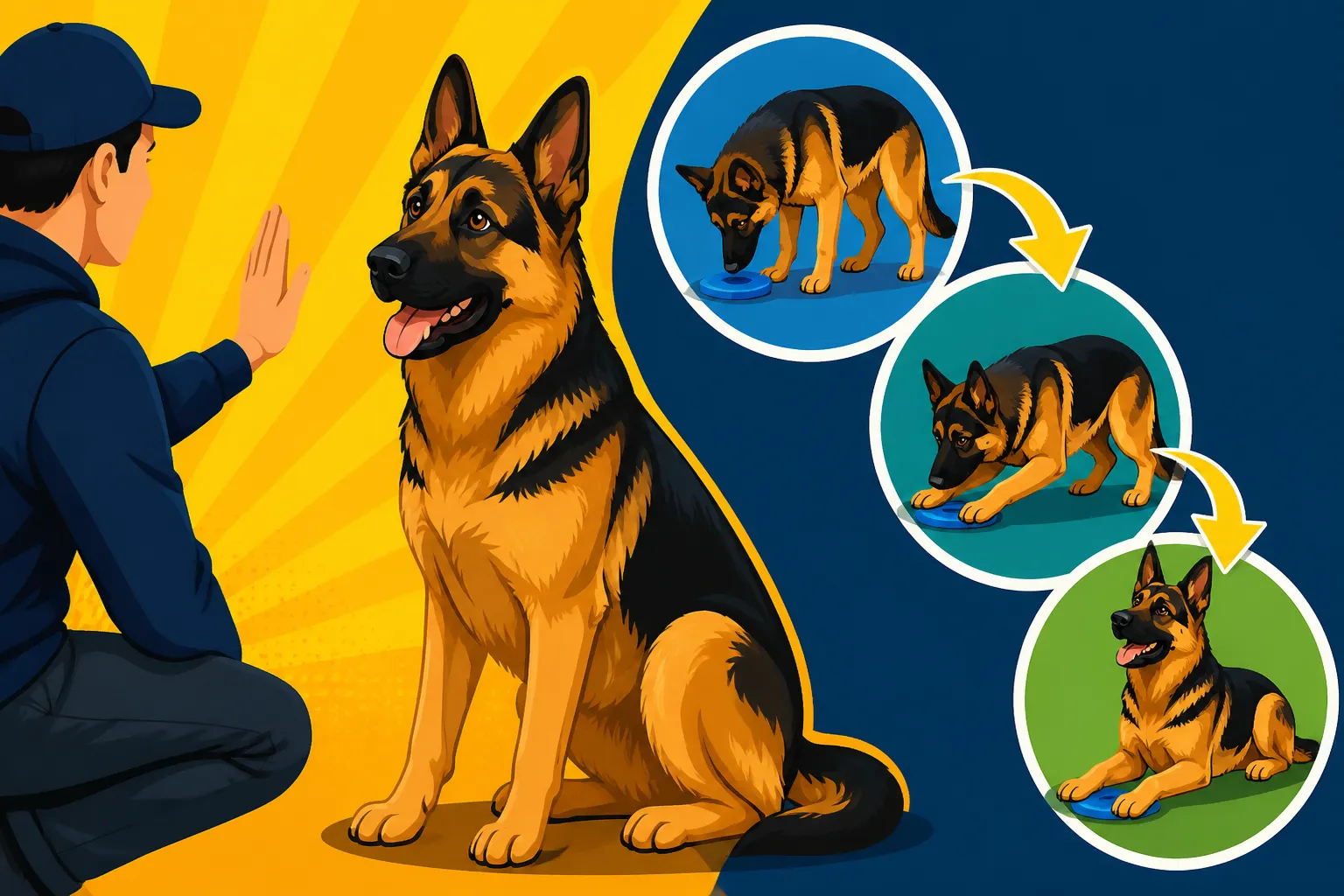
"Sit" is often one of the first commands we teach our dogs, and it's a perfect behavior to demonstrate the power of marker training. Instead of just pushing their rear down, we're going to encourage them to offer the behavior willingly.
- Start with a Lure: Hold a high-value treat close to your German Shepherd's nose. Slowly move the treat in an arc over their head, towards their tail. As their nose follows the treat, their rear end will naturally lower into a sitting position.
- Mark the Moment: The instant their rear touches the ground, click (or say "Yes!").
- Reward: Immediately give them the treat.
- Release (Optional but helpful): After they've eaten the treat, use a release word like "Okay!" or "Free!" to signal they can get up. This helps them understand the duration of the command.
- Repeat: Do this 5-10 times in a short session. Don't add the verbal "Sit" command yet. The focus is purely on associating the action with the marker and reward.
Once your German Shepherd is consistently sitting when lured, you can start to add the verbal cue. Say "Sit" just as you start the luring motion, then mark and reward as usual. Gradually, you'll be able to fade the lure, eventually just needing your verbal "Sit" to get a perfect response. This precise feedback makes the process much faster than traditional methods, reinforcing that exact "sit" position and making it easy for your German Shepherd to repeat it reliably.
Enhancing "Come" (Recall) with a Marker
A reliable recall, or "Come!", is arguably one of the most critical commands you can teach your German Shepherd, especially for their safety and your peace of mind. Marker training can make your recall command incredibly strong and appealing.
- Start Close and Fun: Begin in a low-distraction environment. Gently get your German Shepherd's attention. Take a step or two back and enthusiastically say "Come!" or their name followed by "Come!"
- Mark Their Movement: The instant they start moving towards you, click (or say "Yes!").
- Reward Generously: When they reach you, give them several high-value treats and lots of praise. You want this to be an incredibly positive experience. This is one area where you can use a training platform like BAXTER & Bella to help structure these exercises, as they often emphasize positive reinforcement and marker training techniques.
- Practice Often: Repeat this many times, moving slightly further away each time, or even hiding briefly to make it a game. The marker tells them, "Yes, that decision to come towards me was correct!"
- Avoid Negative Associations: Never use "Come!" to do something unpleasant, like giving them a bath if they hate it, or ending playtime abruptly. You want "Come!" to always mean good things happen when they get to you.
As your German Shepherd understands the game, you can increase distractions and distance. The consistent marking and rewarding of their decision to come to you will build a powerful association, making them eager to respond to your call, even when there are tempting squirrels or other dogs around. This reliability is paramount for a breed that loves to explore, ensuring they return to you promptly. Having a strong recall is a cornerstone of responsible ownership and ensures your German Shepherd's safety in various environments, as discussed in How to Teach a German Shepherd to Come.
Common Challenges and Troubleshooting
Even with the most intelligent and willing students like German Shepherds, training isn't always a smooth, linear path. You might hit a few bumps in the road, which is completely normal. The key is to recognize these challenges and have strategies ready to troubleshoot them, ensuring you maintain a positive and productive training environment.
When Your German Shepherd Isn't Responding
It can be disheartening when your German Shepherd, who you know is smart, seems to be ignoring your marker or isn't picking up on a new behavior. There are usually a few common culprits behind this lack of response.
First, are your treats high-value enough? For a German Shepherd, a dry kibble might not cut it, especially in a distracting environment or when learning something new. Experiment with different treats – small pieces of chicken, cheese, hot dogs, or even specific training treats designed for high motivation. If your dog isn't super excited about the treat, the marker loses its power.
Second, is your timing off? The marker's power lies in its precision. If you're clicking too early or too late, your German Shepherd won't understand what they're being rewarded for. Practice your timing. Have a friend observe you, or even record yourself. Aim to mark the exact split second the desired behavior occurs, not a moment before or after.
Third, are there too many distractions? As mentioned earlier, starting in a quiet environment is crucial. If you've moved to a more distracting area too quickly, your German Shepherd might be overwhelmed and unable to focus. Scale back to a simpler environment, build confidence there, and then gradually introduce distractions.
Fourth, are your sessions too long or too frequent? Even eager German Shepherds can get mentally fatigued. If they're bored or tired, they won't engage. Keep sessions short, fun, and end them before your dog loses interest. This helps maintain enthusiasm and prevents the training from becoming a chore. If you’re pushing your German Shepherd too hard, you might also see signs of stress or disengagement. Sometimes, a break and a fun game of fetch are more beneficial than pushing through a tough training patch.
Avoiding Over-Reliance on the Marker
One concern some trainers have is that their dog will become dependent on the clicker or verbal marker. While the marker is a fantastic learning tool, the goal is always to eventually fade its explicit use, relying instead on your verbal cues and praise.
The marker's primary role is to teach a new behavior. Once your German Shepherd consistently performs a behavior on cue, you can start to randomize the marker. Instead of marking every single correct "sit," you might mark every second or third "sit." This transitions them from needing the precise marker to understanding that the verbal cue itself, along with your praise, signals a good job.
You'll gradually replace the marker with enthusiastic verbal praise ("Good boy!") and sometimes still give a treat. The treats themselves also get randomized over time. You might give a treat for an exceptionally fast or well-executed behavior, but not every single time. This is called intermittent reinforcement, and it actually makes a behavior stronger and more resistant to extinction. Your German Shepherd learns that they might get a super high-value treat, so it's always worth trying their best. This approach is key to developing truly reliable obedience, allowing you to use your skills in various real-life scenarios, as explored in German Shepherd Obedience Training Basics.
Remember, the marker is like training wheels on a bicycle. It helps them learn to balance, but eventually, they'll ride confidently without it. Your German Shepherd's intelligence means they'll pick up on these subtle shifts quickly, moving from relying on the marker to responding to your cues and a broader range of rewards, including praise, play, and even just the joy of a job well done.
Here’s a quick overview of marker choices to help you decide:
| Marker Type | Pros | Cons | Best Use Cases |
|---|---|---|---|
| Clicker | Highly consistent sound; precise | Requires carrying; can be startling initially | New behaviors, teaching complex chains, high distractions |
| Verbal Marker | Always available; natural to use | Tone/inflection can vary; less distinct than a clicker | Everyday reinforcement, spontaneous training, hands-free scenarios |
The most important thing is to be consistent with whichever marker you choose, ensuring it is always followed by a reward, especially in the initial stages.
Disclaimer
This guide provides general information on German Shepherd marker training and is not a substitute for professional veterinary or dog training advice. Always consult with a qualified dog trainer or veterinary professional for personalized guidance regarding your German Shepherd's specific needs, health, and behavior. Training methods should always be adapted to your individual dog's temperament and learning style.