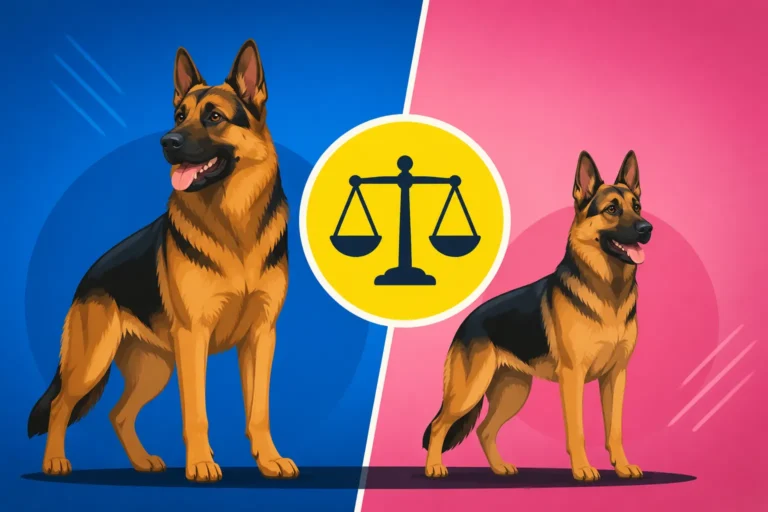
What Is a King Shepherd vs German Shepherd
It can be incredibly confusing when you're looking into getting a German Shepherd, only to stumble upon something called a "King Shepherd" and wonder if it's just a fancier, bigger version of the same beloved breed. Many aspiring GSD owners face this exact dilemma, grappling with breed distinctions, varying temperaments, and conflicting advice. This guide is here to untangle that knot for you, clearly outlining the differences between a German Shepherd and a King Shepherd so you can make an informed decision about which magnificent canine companion is the right fit for your home and lifestyle.
The German Shepherd: A Storied Legacy
Before we dive into what makes a King Shepherd unique, it's essential to truly understand the German Shepherd. This breed has a deep-rooted history and a very specific purpose that shaped its characteristics, making it one of the most recognizable and respected dogs in the world. It’s more than just a dog; it’s a living piece of canine history with a clear standard.
A Deep Dive into Breed Standards and History
The German Shepherd, as we know it today, owes its existence primarily to Captain Max von Stephanitz, who envisioned the perfect German herding dog in the late 19th century. He wasn't just breeding for aesthetics; he was looking for intelligence, strength, and unwavering loyalty – traits that would make an unparalleled working companion. The resulting breed, formally established in 1899, was designed for utility above all else. Its original role as a sheep herder quickly expanded into police work, military service, search and rescue, and assistance roles due to its exceptional intelligence and trainability. If you want to dive deeper into how this breed came to be, you can explore German Shepherd History and Origin.
Because of this clear origin and purpose, the German Shepherd has a very well-defined breed standard. This standard dictates everything from acceptable coat colors and patterns to ideal temperament, bone structure, and gait. While you'll encounter variations, like the distinct differences between Working Line vs Show Line German Shepherd, or variations between American, West German, and Czech lines, they all fall under this unifying standard. A true German Shepherd, regardless of its specific line, will embody the core characteristics laid out by von Stephanitz. It’s a testament to the meticulous breeding over generations that these dogs maintain such consistency in their traits.
Typical German Shepherd Temperament and Physicality
When you think of a German Shepherd, you likely picture a noble, alert, and confident dog. That’s because these traits are central to their being. They are known for their profound loyalty to their families, often forming a strong, singular bond with one primary caregiver, but extending their protectiveness to the entire household. This protective instinct, combined with their inherent intelligence, makes them excellent guardians, though it also means they require consistent socialization and training from a young age to ensure they channel these traits appropriately. A well-socialized German Shepherd is typically aloof with strangers, not necessarily aggressive, but reserved until they assess a situation. You can learn more about their characteristic personality in German Shepherd Temperament and Personality.
Physically, German Shepherds are built for agility, endurance, and power. The breed standard describes them as medium to large-sized dogs. Typically, males stand between 24 and 26 inches at the shoulder and weigh between 65 to 90 pounds, while females are usually 22 to 24 inches tall and weigh 50 to 70 pounds. Their build is muscular and athletic, designed for swift movement and stamina. They possess a dense double coat, which can be short or long-haired, with common colors including black and tan, sable, and solid black. Understanding their specific dimensions and physical characteristics can be found in our comprehensive German Shepherd Size and Weight Guide and German Shepherd Colors and Coat Types articles. This physicality, combined with their sharp minds, is what makes them so versatile in various working roles.
Introducing the King Shepherd: A Majestic Newer Breed
Now that we’ve firmly established what a German Shepherd is, let's turn our attention to the King Shepherd. This breed often catches people's eyes because it looks like a German Shepherd, but bigger – much bigger. However, it's crucial to understand that a King Shepherd is not just an oversized German Shepherd; it is a distinct, relatively new breed with its own unique lineage and characteristics.
The Genesis and Vision Behind the King Shepherd
The King Shepherd breed originated in the United States in the late 1980s. Its creation was driven by a desire to produce a larger, more imposing dog that retained the intelligence and loyalty of the German Shepherd but with a gentler disposition and, ideally, fewer of the structural health issues that sometimes plague the German Shepherd breed, particularly in some show lines. To achieve this, breeders selectively crossed German Shepherds with several other large breeds: the Alaskan Malamute, the Great Pyrenees, and in some lines, the Akita. The careful combination of these breeds was meant to contribute specific traits – the Malamute for size and strength, the Great Pyrenees for its calm, gentle guardian nature and dense coat, and the Akita for its robust build and unwavering loyalty.
The goal was not merely to create a "giant GSD," but a new breed with a specific blend of desired traits. This blend results in a dog that stands apart from its German Shepherd ancestors, offering a different set of characteristics that may appeal to a different kind of owner. While still relatively rare compared to German Shepherds, King Shepherds have carved out their own niche among enthusiasts who appreciate their unique combination of size, majesty, and temperament. They are an emerging breed that continues to gain recognition for their impressive stature and benevolent nature. For a deeper look into this breed, check out King Shepherd: Traits, Facts, and Care.
King Shepherd Appearance, Size, and Temperament
The most striking feature of a King Shepherd is undoubtedly its size. These dogs are truly enormous. Males typically stand 27 to 31 inches at the shoulder and can weigh anywhere from 110 to 150 pounds, sometimes even more. Females are slightly smaller, usually 25 to 29 inches tall and weighing 80 to 120 pounds. Their build is substantial, with heavy bone structure and a powerful, muscular physique that gives them an imposing presence. They often have a denser, longer double coat than many German Shepherds, inherited from their Malamute and Great Pyrenees ancestry, which can come in a variety of colors and patterns, often resembling those of German Shepherds, but with an added plushness.
In terms of temperament, King Shepherds generally aim for a calmer, more laid-back disposition than the high-energy, high-drive German Shepherd. While they inherit the intelligence and loyalty of the GSD, the influence of the Great Pyrenees tends to mellow them out, making them often described as "gentle giants." They are usually good with children and other pets, provided they are properly socialized from a young age. However, their guardian instincts are still strong, and their immense size alone can be a deterrent to potential threats. Despite their calmer nature, they are still intelligent dogs that require consistent training and mental stimulation to be well-adjusted companions. They might not have the same intense "work ethic" as a GSD, but they thrive on being part of the family and having a purpose, even if that purpose is just being a majestic companion.
Key Differences: Side-by-Side Comparison
To truly appreciate the nuances between these two magnificent breeds, it's helpful to look at their key differences side-by-side. While they share some visual similarities, their distinct origins have led to different physical, temperamental, and health profiles.
Size, Build, and Physical Traits
The most obvious difference is size. As mentioned, King Shepherds are significantly larger and heavier than German Shepherds. Imagine standing next to a standard German Shepherd, then next to a King Shepherd; the difference in height and bulk is immediately apparent. King Shepherds possess a more massive, robust bone structure, giving them a grander, more powerful appearance that can almost be described as "bear-like." Their chests are typically deeper and broader, and their overall frame is more substantial.
| Feature | German Shepherd | King Shepherd |
|---|---|---|
| Height | Males: 24-26 inches; Females: 22-24 inches | Males: 27-31 inches; Females: 25-29 inches |
| Weight | Males: 65-90 lbs; Females: 50-70 lbs | Males: 110-150+ lbs; Females: 80-120 lbs |
| Build | Athletic, agile, medium-boned | Massive, robust, heavy-boned, powerful |
| Coat Type | Double coat, medium to long length, less dense | Double coat, often longer and denser/plush |
| Head Shape | Refined, wedge-shaped | Broader, more substantial |
| Overall Impression | Noble, alert, agile | Majestic, imposing, gentle giant |
Beyond size, their coats also often differ. While both have double coats, the King Shepherd's coat tends to be longer and much denser, thanks to the genes from breeds like the Alaskan Malamute and Great Pyrenees. This gives them a very plush, thick appearance that requires consistent grooming to prevent matting and manage shedding. Both breeds shed, especially during "blow coat" season, but a King Shepherd’s thicker coat often means more hair around the house. When it's shedding season, having the right grooming tools readily available, perhaps even finding them on sites like Chewy, can make a huge difference in managing the fur tsunami!
Temperament, Trainability, and Energy Levels
Here’s where you’ll find significant differences in personality and what it takes to live with each breed. German Shepherds are renowned for their high intelligence, intense loyalty, and strong working drive. They thrive on having a "job" to do, whether it's obedience training, agility, protection work, or simply being a vigilant family protector. Their energy levels are typically high, requiring significant physical exercise and, crucially, ample mental stimulation. Without proper outlets, a German Shepherd can become bored, leading to destructive behaviors or excessive barking. They are eager to please their handler and generally respond very well to consistent, positive reinforcement training, making them one of the most trainable breeds. You can delve more into their specific exercise needs in German Shepherd Exercise Requirements.
King Shepherds, while intelligent and loyal, generally possess a calmer, more relaxed temperament. The Great Pyrenees influence often imparts a more independent and serene disposition. They are intelligent and trainable, but might not possess the same intense drive or desire to please as a German Shepherd. Training a King Shepherd requires patience and consistency, as they can sometimes be a bit more stubborn, a trait often seen in guardian breeds. Their energy needs are still substantial due to their size, requiring daily walks and plenty of room to stretch their legs, but they may be less frantic or demanding of constant activity compared to a GSD. They often enjoy lounging around with their family after a good exercise session. When it comes to finding durable toys for these larger, calmer chewers, online stores like Chewy offer a wide range that can withstand their powerful jaws.
Health Concerns and Lifespan
Both breeds, being large dogs, are unfortunately predisposed to certain health conditions, but there are some distinctions due to their genetic makeup. German Shepherds are notably susceptible to orthopedic issues such as German Shepherd Hip Dysplasia Explained and elbow dysplasia. Other significant concerns include Degenerative Myelopathy in German Shepherds (DM), a progressive neurological disease, and bloat (gastric dilatation-volvulus), which is a life-threatening emergency. Responsible breeders conduct extensive German Shepherd Genetic Health Testing to try and minimize the occurrence of these conditions. It's vital for prospective owners to understand these potential challenges, which are covered in detail in our German Shepherd Health Problems Guide.
King Shepherds, having been bred with the intention of creating a healthier, sturdier dog, may have a slightly reduced incidence of some of these issues compared to poorly bred German Shepherds. However, as a giant breed, they are still prone to hip and elbow dysplasia. They can also face challenges common to very large dogs, such as osteosarcoma (bone cancer) and heart conditions. It’s important to remember that combining breeds doesn't eliminate genetic predispositions entirely; it simply introduces a different set of genetic possibilities. Just like with GSDs, meticulous health testing of parent dogs is paramount when choosing a King Shepherd puppy. In terms of lifespan, German Shepherds typically live between 9 to 13 years, as discussed in German Shepherd Lifespan: How Long They Live, while King Shepherds, being a giant breed, may have a slightly shorter average lifespan, often in the range of 10 to 11 years.
Which Breed is Right for You?
Deciding between a German Shepherd and a King Shepherd isn't about one being "better" than the other; it's about which breed aligns best with your lifestyle, experience, and expectations. Both are wonderful dogs, but they come with different requirements and personalities.
Lifestyle Considerations for German Shepherds
A German Shepherd is an ideal choice for individuals or families who are active, experienced dog owners, and committed to providing consistent training and mental stimulation. They thrive in homes where they have a job, even if that job is just being an active family member who participates in daily walks, training sessions, and interactive play. If you're interested in dog sports like agility, obedience, IGP, or even just long hikes and runs, a German Shepherd will likely be an eager and capable partner. They need leadership, structure, and early, thorough socialization to mature into well-adjusted adults. If you have the time and dedication to harness their immense intelligence and energy, a German Shepherd will reward you with unparalleled loyalty and companionship. They are very much a "Velcro dog" for their chosen person and thrive on being involved in family activities.
Lifestyle Considerations for King Shepherds
The King Shepherd, with its typically calmer demeanor and majestic size, might be a better fit for families seeking a large, protective companion who is less intensely driven than a German Shepherd. They can be excellent family dogs, often described as gentle and tolerant with children, especially when raised with them. Their imposing presence alone makes them natural guardians, but their more relaxed nature can make them easier to integrate into a busy household, provided they still receive adequate exercise and training. They need a home with sufficient space, ideally a securely fenced yard where they can roam. While they appreciate walks, they might not demand the same intensity of activity or mental challenges as a GSD. However, their thick, dense coats do require a significant commitment to regular grooming to prevent matting and manage shedding. For all their large dog needs, from big beds to extra-large food bowls, shopping for supplies on platforms like Chewy can be incredibly convenient.
Breeder Selection and Research
Regardless of whether you choose a German Shepherd or a King Shepherd, the most critical step is finding a responsible and ethical breeder. For German Shepherds, this means looking for breeders who are transparent about health testing, provide clear pedigrees, and are dedicated to improving the breed. They should be able to show you health clearances for hips, elbows, and other genetic conditions like DM. You can find more comprehensive advice on How to Find a Reputable German Shepherd Breeder and details about German Shepherd Genetic Health Testing.
For King Shepherds, the process is similar but with an added layer of scrutiny due to their newer breed status. You’ll want a breeder who is upfront about the parent breeds in their lines, the specific health tests conducted on all contributing breeds, and who can speak knowledgeably about the temperament and health trends within their specific lines. Be wary of anyone who cannot provide verifiable health clearances or seems evasive about their breeding practices. A good breeder for either type will prioritize health, temperament, and adherence to breed standards (or the vision for the King Shepherd breed), ensuring you bring home a healthy, well-adjusted puppy that will be a joy for years to come.
Ultimately, both German Shepherds and King Shepherds are incredibly special dogs, each with a unique set of traits that will appeal to different owners. Understanding these differences fully is the first step toward finding your perfect furry family member.
Disclaimer
This article is for general informational purposes only and does not constitute professional advice. Laws, prices and regulations vary by location and change over time. Consult a qualified professional for guidance on your specific situation.