Best Deshedding Tool for German Shepherds
Oh, the joy of owning a German Shepherd! They're loyal, intelligent, and absolutely stunning. But let's be real for a moment – their majestic double coat comes with a "shedding season" that can feel like it lasts all year, transforming your home into a furry wonderland. You’ve probably found yourself wondering if you’re doing something wrong or if there’s a magic bullet out there to tame the tumbleweeds. This guide is all about cutting through the endless fluff to help you find the absolute best deshedding tool for your German Shepherd, making grooming less of a chore and more of a bonding experience.
Understanding the German Shepherd's Double Coat
Before we dive into the wonderful world of deshedding tools, it’s crucial to understand why your German Shepherd sheds so much. It's not out of spite, I promise! Their magnificent coat is actually a marvel of natural engineering, perfectly designed for protection, but it does require a specific approach when it comes to grooming. Many owners find themselves overwhelmed by the sheer volume of hair, and it often comes down to not fully appreciating the mechanics of that dense coat.
Anatomy of the Double Coat
A German Shepherd's coat is what we call a "double coat," and it’s a defining characteristic of the breed. This isn’t just two layers of hair; it’s two distinct types of hair, each serving a vital purpose. The outer layer is the "guard coat" – those longer, coarser hairs that give your German Shepherd their distinct look and color. These guard hairs are water-resistant and protect against dirt, burrs, and minor scrapes. They act like a natural armor, keeping your dog comfortable in various weather conditions.
Beneath this protective outer layer lies the "undercoat." This is where the real shedding drama unfolds. The undercoat consists of soft, dense, downy hairs that are much shorter than the guard hairs. Its primary job is insulation, keeping your German Shepherd warm in winter and helping to regulate body temperature in summer by trapping air. Imagine a built-in down jacket! The density of this undercoat varies, but it's typically very thick, especially around the neck, chest, and hindquarters.
The Shedding Cycle
Because of this sophisticated double coat, German Shepherds have a particular shedding cycle. They're not just shedding stray hairs here and there; they're actively "blowing" their undercoat, typically twice a year. This usually happens in spring, to get rid of the thick winter insulation in preparation for warmer weather, and again in the fall, to make way for a new, thicker winter coat. However, due to indoor living, artificial lighting, and consistent temperatures, many German Shepherds shed a moderate amount year-round, with those two seasonal "blow-outs" being particularly intense.
During these peak shedding periods, it can feel like your dog is losing enough hair to knit another dog! Loose undercoat hairs get trapped beneath the guard coat, forming mats and tangles if not regularly removed. This trapped hair can become uncomfortable for your dog, hindering air circulation and even leading to skin issues. Regular grooming isn't just about keeping your house clean; it's vital for your German Shepherd's German Shepherd Coat and Skin Care and overall comfort. Knowing this, the goal of a deshedding tool isn't to cut or pull out healthy guard hairs, but to effectively reach down and remove the dead, loose undercoat.
Types of Deshedding Tools for German Shepherds
Navigating the aisle of pet grooming tools can feel like trying to decipher a foreign language. There are so many options, all promising to be the "best," but which ones are truly effective for a German Shepherd's unique double coat? The key is understanding what each tool is designed to do and how it interacts with both the guard coat and the dense undercoat. We’re looking for tools that can gently but efficiently remove dead undercoat without damaging the healthy outer layer or irritating your dog's skin.
Undercoat Rakes and Stripping Combs
These tools are often a German Shepherd owner's best friend, especially during those heavy shedding periods. An undercoat rake typically features a single or double row of widely spaced, long metal teeth that are designed to penetrate through the guard coat and gently pull out loose undercoat. The teeth are usually blunt, so they don't scratch the skin, and they're spaced to prevent them from catching on healthy guard hairs.
Stripping combs, sometimes also called rakes, have a similar purpose but often feature a closer tooth pattern or blades specifically designed to 'strip' out dead hair. While the name "stripping" might sound harsh, these tools, when used correctly, don't cut live hair. Instead, they catch and pull out the dead, fuzzy undercoat that's just waiting to fall out all over your furniture. Investing in a good quality undercoat rake can dramatically reduce the amount of hair floating around your home and keep your German Shepherd much more comfortable. Many reputable brands offer excellent undercoat rakes that you can easily find on platforms like Chewy or Amazon. Look for ones with ergonomic handles for your comfort during long grooming sessions.
Deshedding Blades and Brushes
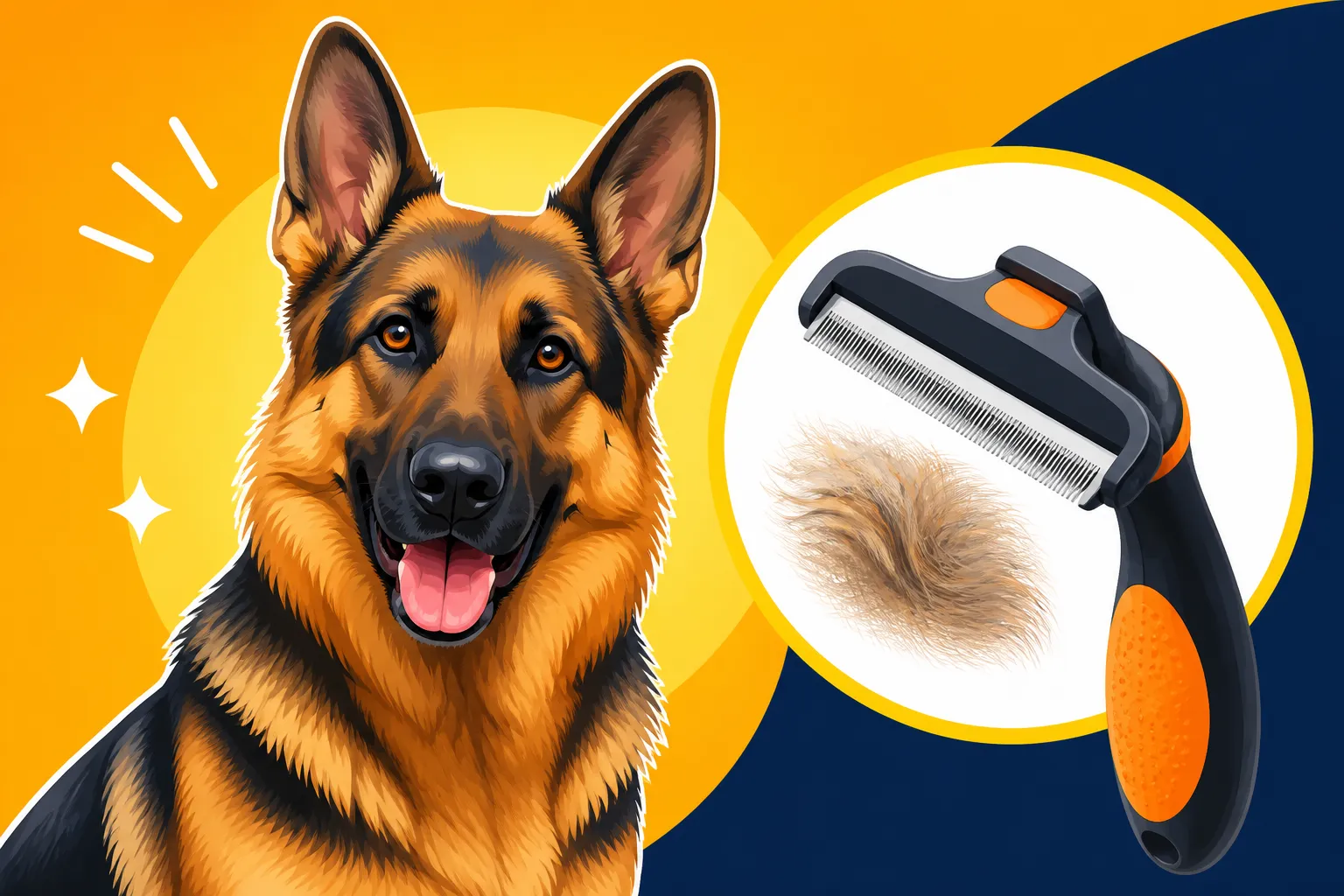
Perhaps the most famous type of deshedding tool is the one often generically referred to as a "Furminator," though many brands now make similar versions. These tools feature a fine-toothed blade-like edge with very short, closely spaced teeth designed to grab and remove loose undercoat hair without cutting the longer guard hairs. They are incredibly effective at pulling out vast amounts of shedding undercoat, often surprising owners with just how much hair comes off.
While highly efficient, these blade-style deshedding tools need to be used with care. They can be abrasive if used too aggressively or too frequently, potentially causing skin irritation or damaging the guard coat over time. It’s best to use them only on a dry, clean coat, and to use gentle, short strokes. Pay attention to your dog's reaction; if they seem uncomfortable, ease up or switch to a different tool. For general How Often to Brush a German Shepherd, a regular slicker brush or pin brush is better, but for targeted deshedding, these blades are hard to beat when used appropriately.
Grooming Gloves and Rubber Curry Brushes
For a gentler approach, especially for German Shepherds who might be sensitive to more aggressive tools or for daily maintenance, grooming gloves and rubber curry brushes are excellent options. Grooming gloves typically have rubber nubs on the palm and fingers, allowing you to "pet" away loose hair. They’re fantastic for distributing natural oils, massaging the skin, and collecting a surprising amount of loose hair, especially from the shorter-haired areas like the legs and head. They also make bath time more effective, helping to work shampoo deep into the coat and remove dead hair when wet.
Rubber curry brushes work similarly, with rubber teeth or nubs that gently massage the skin and pull out loose hair. These are particularly good for puppies or dogs new to grooming, as they’re less intimidating than metal tools. While they won’t remove as much undercoat as a rake or a deshedding blade during a heavy blow-out, they are perfect for daily grooming, helping to prevent matting and keep the coat healthy and shiny. They're also great for a quick tidy-up before your dog comes inside, and many pet parents find them indispensable during German Shepherd Shedding: How to Manage It.
Here's a quick comparison of popular deshedding tool types:
| Tool Type | Best For | Pros | Cons | Key Features |
|---|---|---|---|---|
| Undercoat Rake | Heavy shedding, thick undercoats | Penetrates deep, removes large amounts of loose undercoat, gentle | Can get clogged easily, requires regular cleaning | Long, blunt teeth; single or double row |
| Deshedding Blade (e.g., Furminator-style) | Intense seasonal shedding, quick removal | Extremely efficient, removes significant loose hair | Can damage guard coat or irritate skin if overused, not for daily use | Fine, comb-like teeth on a blade; ejector button |
| Slicker Brush | General grooming, removing tangles & mats | Good for topcoat, stimulates skin, daily maintenance | Not designed to penetrate deep undercoat, can be harsh if bristles are too stiff | Fine, bent wire bristles; often self-cleaning |
| Rubber Curry Brush / Glove | Sensitive dogs, puppies, short-coated areas, bath time | Gentle, massaging, good for spreading oils, easy to clean | Less effective for very heavy shedding, won't remove deep undercoat | Soft rubber nubs; glove form for hands-on feel |
| Pin Brush | Long-haired GSDs, detangling, finishing | Good for longer guard hairs, comfortable for the dog | Not designed for undercoat removal, more for general tidying | Smooth, widely spaced pins with rounded ends |
Choosing the Right Deshedding Tool
So, you know the different types of tools out there. Now, how do you choose the right one for your German Shepherd? It's not a one-size-fits-all situation, and what works wonders for one dog might not be the best fit for another. You need to consider your dog's specific coat characteristics, their temperament, and your own comfort level with grooming. Don't worry if it takes a little trial and error – that's perfectly normal! The goal is to find tools that make the process effective and enjoyable for both of you.
Coat Type and Sensitivity
Even within the German Shepherd breed, there can be variations in coat length and density. Some German Shepherds have a standard, medium-length coat, while others, particularly long-haired varieties, have significantly longer guard hairs. This difference plays a huge role in tool selection. For a standard coat, a good undercoat rake and a deshedding blade can be highly effective. If your German Shepherd has a longer coat, you might find that certain deshedding tools can get tangled more easily, requiring more careful technique. For these longer coats, a Best Brush for a German Shepherd Double Coat is often a broader pin brush, which glides through the longer hair, followed by an undercoat rake to reach the dense underlayer.
Your dog's skin sensitivity is another major factor. Some German Shepherds have very tolerant skin, while others can be quite sensitive, prone to redness or irritation if brushed too vigorously or with harsh tools. If your dog flinches or shows signs of discomfort during grooming, opting for gentler tools like a grooming glove or a rubber curry brush might be a good starting point. You can gradually introduce more effective tools as they become accustomed to the grooming routine, always using light pressure. Remember, a positive grooming experience is key to building trust and cooperation.
Ergonomics and Ease of Use
Grooming a German Shepherd is not a five-minute job, especially during a seasonal coat blow. You're going to be holding that tool for a while, so its design and how it feels in your hand are incredibly important. Look for tools with an ergonomic handle – one that fits comfortably, has a non-slip grip, and reduces strain on your wrist and hand. A good grip will give you better control, which in turn makes the grooming process safer and more efficient for your dog.
Beyond the handle, consider how easy the tool is to clean. Deshedding tools, by nature, collect a lot of hair. Some tools have self-cleaning mechanisms, like a button that pushes the hair off the bristles, which can be a real time-saver. Others might require you to manually pull the hair out. If you're someone who grooms frequently, ease of cleaning will be a significant factor in your overall satisfaction. Brands like Kong and Furminator (widely available on Amazon and Chewy) often prioritize ergonomic design and ease of use in their products.
Durability and Maintenance
A quality deshedding tool isn't always the cheapest, but it's an investment that pays off in the long run. Cheaply made tools might have dull blades, flimsy handles, or teeth that bend or break easily. Look for tools made with durable materials, like stainless steel blades (for deshedding combs) and robust plastic or rubber handles. A tool that stands up to repeated use and the demands of a thick German Shepherd coat will save you money and frustration in the long run.
Proper maintenance also extends the life of your tools. After each grooming session, clean the tool thoroughly to remove all trapped hair. For metal tools, ensure they are dry before storing to prevent rust. If a blade becomes dull (for deshedding blades), it might be time to replace the tool or see if replacement heads are available. Keeping your grooming tools in good condition is part of a responsible How to Groom a German Shepherd routine. Just like any other equipment, a well-maintained tool performs better and is safer for your dog.
Best Practices for Deshedding Your German Shepherd
Having the right tools is only half the battle; knowing how to use them effectively is the other. Deshedding your German Shepherd shouldn't be a wrestle or a race against time. With the right technique and a calm approach, you can turn grooming into a positive experience that benefits both your dog's coat health and your bond with them. Regularity is key, especially when dealing with a breed known for its prolific shedding.
Preparing for a Deshedding Session
Before you even pick up a brush, ensure both you and your German Shepherd are ready for the session. Choose a quiet time when your dog is relaxed, perhaps after a walk or a play session when they've burned off some energy. Having a calm dog makes the process much smoother and safer. Gather all your tools beforehand: your chosen deshedding tool, a regular slicker or pin brush for initial detangling, some treats for positive reinforcement, and a waste bag or designated area for the inevitable mountain of hair.
It's also a good idea to ensure your German Shepherd's coat is clean and completely dry. Washing your dog with a good quality Best Shampoo for a German Shepherd can help loosen dead hair, but always make sure the coat is bone-dry before using deshedding tools, especially those with fine blades. Using deshedding tools on a wet or damp coat can pull and tug, causing discomfort and potentially damaging the hair. A tangled or matted coat should be gently brushed out with a regular slicker or pin brush before using any deshedding tool, as deshedding tools are not designed to remove serious mats. For tips on managing those infamous blow-out seasons, check out our guide on German Shepherd Blow Coat Season Explained.
Step-by-Step Deshedding Technique
Once everything is ready, approach the grooming session methodically.
- Initial Brush-Through: Start with a regular slicker brush or pin brush. This helps remove any surface dirt, loose guard hairs, and minor tangles. Brush in the direction of hair growth, starting from the head and working your way down the body. This step ensures that your deshedding tool doesn't snag on knots.
- Introduce the Deshedding Tool: Take your chosen deshedding tool, whether it's an undercoat rake or a blade-style brush. Begin with gentle, short strokes, always moving in the direction of hair growth. Avoid pressing down too hard. The goal is to let the tool's design do the work of lifting out the dead undercoat.
- Work in Sections: Don't try to tackle the entire dog at once. Divide your German Shepherd into manageable sections: neck, shoulders, back, sides, hindquarters, and tail. Work on one section until a significant amount of loose hair has been removed, then move to the next. Pay extra attention to areas with dense undercoat, such as the rump, tail, and around the "mane" on the neck.
- Monitor Your Dog: Continuously watch your German Shepherd for signs of discomfort. If they start to fidget, pull away, or vocalize, stop and reassess your technique. Offer praise and treats throughout the session to reinforce positive behavior. A happy dog is a cooperative dog!
- Clean the Tool Regularly: As you brush, the tool will fill with hair. Stop frequently to clear the collected hair from the tool. This keeps the tool effective and prevents it from pulling.
- Finishing Touches: After you've gone over the entire dog with your deshedding tool and removed as much loose undercoat as possible, finish with another light brush-through with your slicker or pin brush. This helps smooth the coat and check for any missed spots. You might also consider a quick wipe-down with a damp cloth to remove any lingering loose hairs.
Remember that consistency is more important than intensity. Regular, shorter deshedding sessions are often more effective and less stressful for your dog than infrequent, marathon grooming sessions. For a truly comprehensive grooming regimen, remember to include tasks like German Shepherd Dental Care Explained and regular ear checks. This holistic approach will keep your German Shepherd looking and feeling their best.
Post-Deshedding Care
You’ve battled the fluff, and emerged victorious! But the grooming process doesn't quite end when the last clump of undercoat is removed. Proper post-deshedding care is essential for maintaining your German Shepherd's skin and coat health, ensuring they stay comfortable and looking their best. It's about more than just admiring your handiwork; it’s about nurturing that magnificent double coat.
Hydrating the Skin and Coat
After a thorough deshedding, your German Shepherd’s skin and remaining coat can benefit greatly from some extra care. Removing all that dead undercoat can expose fresh skin to the air, and while this is healthy, it can sometimes lead to dryness if not addressed. Consider using a moisturizing spray designed for dogs, or even a very light application of a dog-safe conditioning oil. These products can help restore moisture to the skin and add a healthy shine to the guard coat.
Another aspect of hydration comes from within. Ensure your German Shepherd always has access to fresh, clean water. A well-hydrated dog will generally have healthier skin and a more resilient coat. Some owners also find that incorporating high-quality omega-3 and omega-6 fatty acid supplements into their dog's diet can significantly improve skin and coat health, reducing dryness and promoting a lustrous shine. You can find excellent options for these supplements on platforms like Chewy or ask your vet for recommendations. This proactive approach contributes to How to Keep a German Shepherd Healthy from the inside out.
Rewarding Good Behavior
Grooming, especially deshedding, can be a long and sometimes tedious process for both you and your German Shepherd. Always end the session on a positive note. Lavish your dog with praise, offer their favorite treats, or engage in a short play session. This positive reinforcement helps your German Shepherd associate grooming with pleasant experiences, making future sessions much easier. It teaches them that cooperating during grooming leads to good things.
Over time, consistent positive reinforcement can transform a dog who tolerates grooming into one who actually enjoys it. They'll learn to relax and trust you during these essential care routines. Remember, building a strong, positive relationship with your dog is at the heart of responsible ownership, and even something as routine as deshedding can be an opportunity to strengthen that bond. A relaxed dog is easier to groom, and a well-groomed dog is a healthier, happier companion.
Disclaimer
This article is for general informational purposes only and does not constitute professional advice. Laws, prices and regulations vary by location and change over time. Consult a qualified professional for guidance on your specific situation.