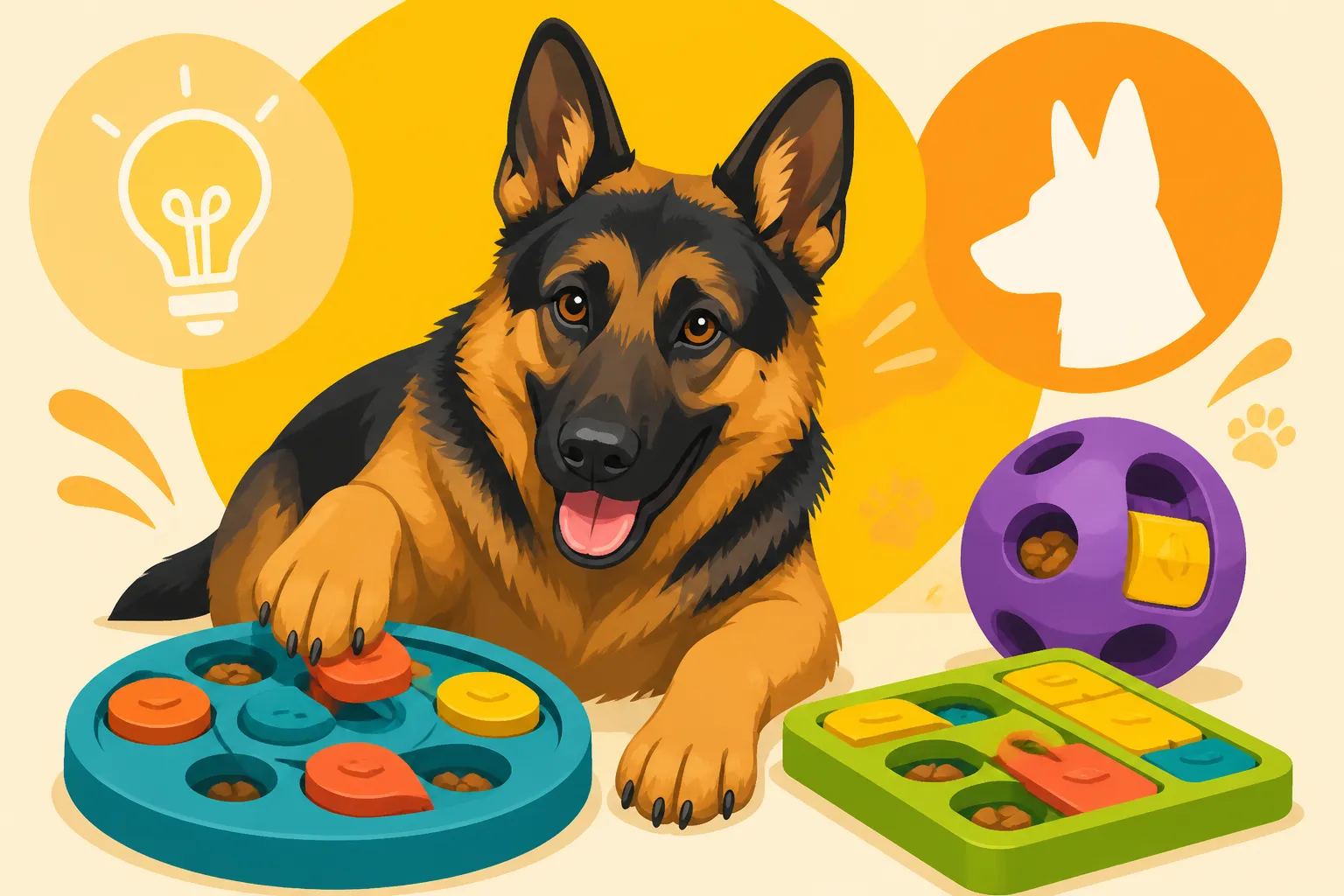
Best Puzzle Toys for German Shepherds
If you're a German Shepherd owner, you know the drill: your dog has just had a vigorous walk, played fetch for an hour, and yet they're still looking at you with those intelligent, expectant eyes, clearly ready for more. It’s a common frustration – these incredible dogs need more than just physical exercise; their brilliant minds crave a challenge. This guide will dive deep into the world of puzzle toys, exploring how they can transform your GSD's mental well-being, curb destructive behaviors, and keep that clever canine brain happily engaged.
Why German Shepherds Crave Mental Stimulation
It's easy to think that a long run or a romp at the dog park is enough to tire out a German Shepherd, but anyone who lives with one knows that's only half the battle. These dogs were bred for demanding jobs – herding, guarding, police work, search and rescue. Their intelligence is off the charts, and if you don't give them a productive outlet for that brainpower, they'll find their own "jobs," which often involve things like chewing through furniture, incessant barking, or digging up your prize-winning petunias.
Mental stimulation isn't just a nice-to-have; it's absolutely essential for a German Shepherd's overall happiness and preventing behavior problems. Think of it like this: physical exercise tires the body, but mental exercise tires the mind. A tired mind is often a calm mind, and a calm German Shepherd is a well-behaved German Shepherd. Ignoring this need can lead to frustration, anxiety, and even aggression in some cases. You might recognize this restless energy if your dog paces, whines, or constantly brings you toys even after a full day of activity. It's their way of telling you, "My brain isn't done yet!"
The Difference Between Physical and Mental Exercise
When we talk about exercise for dogs, most people immediately think of walks, runs, or throwing a ball. These are crucial for your German Shepherd's physical health, muscle development, and burning off excess energy. However, even the most athletic GSD needs more. Imagine if you ran a marathon every day but never read a book, solved a puzzle, or engaged in meaningful conversation. You'd be physically fit but mentally stagnant, and likely pretty bored!
Mental exercise engages your dog's cognitive functions, problem-solving skills, and natural instincts. It involves sniffing, strategizing, manipulating objects, and focusing their attention for sustained periods. This type of engagement can be far more tiring for their brains than physical activity alone. For instance, twenty minutes of scent work or a challenging puzzle toy session can often leave a German Shepherd more satisfied and calmer than an hour of mindless running around. It taps into their natural drive to work and achieve. To learn more about how much your GSD needs, check out our guide on German Shepherd Exercise Requirements.
How Lack of Mental Engagement Manifests in Behavior
If your German Shepherd isn't getting enough mental exercise, you'll likely start seeing some unwelcome behaviors crop up. This isn't because they're "bad dogs," but because they're bored, frustrated, and trying to find an outlet for their innate drive. It's often a cry for help.
Common signs of insufficient mental stimulation include destructive chewing, where your dog targets inappropriate items like shoes, furniture legs, or even drywall. They might develop excessive barking issues, either at perceived threats or just out of sheer boredom. Digging in the yard, chasing shadows or lights, or even showing signs of anxiety like pacing or compulsive licking can also point to a need for more mental work. Some German Shepherds might even become pushy or demanding, constantly seeking attention because they don't have enough constructive activities to occupy their minds. Providing them with tools like puzzle toys can significantly reduce these problematic behaviors by giving them a constructive way to engage their formidable intelligence. If you're struggling with these issues, our article on German Shepherd Behavior Problems and Solutions offers further insights.
Exploring Different Types of Puzzle Toys for German Shepherds
The world of dog puzzle toys is vast and varied, designed to cater to different levels of difficulty and types of engagement. For a German Shepherd, you'll want toys that are durable, engaging, and ideally, can be scaled up in difficulty as your dog learns.
Treat-Dispensing Puzzle Toys
These are often the entry point for many owners into the world of puzzle toys. The premise is simple: food (usually kibble or small treats) is hidden inside, and your dog has to figure out how to release it. They range from simple rolling balls with holes to more complex devices requiring pushing levers or rotating compartments.
One popular option is a classic Kong toy, which isn't just for stuffing with peanut butter. You can fill it with kibble mixed with a bit of wet food and freeze it for a long-lasting challenge. Other variations include interactive balls that dispense treats as your dog nudges and rolls them around. These are fantastic because they encourage natural foraging behaviors and reward persistence. For German Shepherds, look for robust, heavy-duty versions that can withstand strong jaws. Brands like Kong and Planet Dog make durable rubber options that are hard to beat. You can find a huge selection of these kinds of toys on platforms like Amazon.
Interactive Puzzle Toys
Moving beyond simple treat dispensing, interactive puzzle toys require more complex manipulation and problem-solving. These often involve sliding panels, lifting compartments, or rotating pieces to reveal hidden treats. They force your German Shepherd to think strategically and use their paws and nose in coordination.
Nina Ottosson by Outward Hound offers an excellent range of interactive puzzle toys with varying difficulty levels, perfect for starting your German Shepherd with an easier challenge and moving up as they master it. The "Brick" or "Dog Worker" puzzles require your dog to lift blocks and slide panels in sequence. These types of toys build confidence and teach your dog that their actions have consequences (tasty ones!). Always supervise your dog with these toys, especially when they are new to them, to ensure they don't try to chew through the toy rather than solve the puzzle.
Snuffle Mats and Scent Work Toys
While not always categorized strictly as "puzzle toys," snuffle mats and other scent work items are incredible for German Shepherds. These intelligent dogs have an incredible sense of smell and a strong drive to use it. Scent work is one of the most mentally exhausting activities you can do with your dog, tapping into their primal hunting instincts in a safe, constructive way.
A snuffle mat is typically a fabric mat with many strips of fleece sewn on, creating countless hiding spots for kibble or treats. Your German Shepherd has to sniff out and forage for every piece of food, which is a fantastic mental workout. Beyond snuffle mats, you can create DIY scent games by hiding treats around the house for your dog to find, a concept often taught in comprehensive online training programs like those offered by BAXTER & Bella. This kind of "nose work" builds focus, reduces anxiety, and is suitable for dogs of all ages and physical abilities. It's especially great for puppies, as explored in our German Shepherd Puppy Training Guide, or senior dogs who might not be able to do as much physical exercise.
| Puzzle Toy Type | Engagement Type | Best For GSDs Who… | Pros | Cons |
|---|---|---|---|---|
| Treat Dispensers | Rolling, nudging, basic manipulation | Need an intro to puzzles, chewers, quick reward | Durable, easy to clean, various difficulty | Can be solved quickly by smart GSDs |
| Interactive Puzzles | Sliding, lifting, rotating, sequential solving | Are problem-solvers, need a challenge, focus | Highly engaging, builds confidence, scalable | May require supervision, less durable plastic |
| Snuffle Mats/Scent | Foraging, sniffing, focused nose work | Have high prey drive, need calming activity, all ages | Mentally exhausting, low impact, natural instinct | Can be messy, requires frequent washing, not chew-proof |
Choosing the Right Puzzle Toy for Your German Shepherd
Selecting the perfect puzzle toy isn't just about picking the flashiest one on the shelf. It requires considering your individual German Shepherd's personality, their chewing habits, and their current skill level. A toy that's too easy will be boring, and one that's too difficult might lead to frustration.
Considering Your Dog's Chewing Habits and Durability
German Shepherds are known for their strong jaws and often enthusiastic chewing. This means durability is paramount when choosing a puzzle toy. Many excellent puzzle toys are made primarily from hard plastic, which might not stand up to an determined GSD chewer for long.
If your German Shepherd tends to destroy toys quickly, opt for puzzle toys made from tough rubber, reinforced nylon, or even metal for certain parts. Brands like Kong or West Paw offer more robust options. Always check reviews specifically mentioning durability with strong chewers. Remember, a puzzle toy is meant to be solved, not dismantled. If your dog consistently tries to chew the toy apart instead of figuring out the puzzle, it might be too frustrating, or they might just prefer traditional chew toys. Supervise new toys closely to ensure they're being used as intended and don't pose a choking hazard if pieces break off.
Matching Difficulty Levels to Your German Shepherd's Intellect
Just like people, dogs have different learning curves. You wouldn't give a toddler a complex Rubik's Cube, and the same applies to your German Shepherd. Start with beginner-level puzzles and gradually increase the difficulty.
For a first-timer, a simple treat-dispensing ball where food falls out easily with a roll is ideal. Once they master that, move to something that requires a bit more effort, like a Kong Wobbler that needs to be nudged to release kibble, or a basic sliding puzzle. Pay attention to how quickly your German Shepherd solves the puzzle. If they master it in minutes, it's time for a more advanced challenge. If they get frustrated and give up (or try to chew it), the toy might be too hard, or they might need more guidance from you. Many interactive puzzle toys, like those found on Amazon from brands like Nina Ottosson, come with difficulty ratings, making it easier to select an appropriate challenge. Observing your dog's progress is key to ensuring they remain engaged and don't get bored or overwhelmed. This gradual progression ensures their brain is always working without leading to frustration, which is vital for positive training outcomes.
Age-Appropriate Selections
The best puzzle toy for a rambunctious German Shepherd puppy might not be the same for a stately senior. Tailoring your selection to your dog's age and physical capabilities is important.
For puppies, gentle, easy-to-solve puzzles are best. They should be durable enough to withstand puppy teeth but not so complex that they become discouraging. Soft rubber or fabric options for sniffing are also great, as puppies are still developing their problem-solving skills and coordination. As your GSD matures into adulthood, you can introduce more intricate and challenging puzzles that require sequential steps or multiple actions. These are perfect for tapping into their prime intelligence and energy levels. For senior German Shepherds, especially those with arthritis or vision impairment, gentler puzzles that don't require much physical manipulation are ideal. Snuffle mats or simpler treat-dispensing toys that are easy to access can still provide excellent mental engagement without putting strain on their bodies. Remember, a mentally stimulated senior dog is a happier senior dog. You can find more specific advice on German Shepherd Senior Care Guide.
Integrating Puzzle Toys into Your German Shepherd's Daily Routine
Puzzle toys are most effective when they're a regular part of your German Shepherd's routine, not just an occasional novelty. Incorporating them strategically can enhance meal times, provide enrichment during alone time, and offer a calming activity.
Making Mealtime a Mental Workout
One of the easiest and most beneficial ways to use puzzle toys is during meal times. Instead of simply dumping your German Shepherd's kibble into a bowl, turn it into a brain game. This slows down their eating, aids digestion, and provides valuable mental engagement.
Using a treat-dispensing ball or a slow-feeder puzzle bowl for their regular meals can make a huge difference. Your dog will have to work for every bite, mimicking their natural foraging instincts. This can be particularly helpful for fast eaters or those prone to bloat, as discussed in our guide on German Shepherd Bloat Prevention Feeding Tips. Imagine the satisfaction your German Shepherd gets from "earning" their dinner versus just gulping it down! You can rotate different types of food puzzles to keep things interesting and prevent your dog from getting too bored with the same challenge every day. This simple change transforms a mundane activity into a rewarding mental exercise.
Using Puzzles for Alone Time and Crate Training
Puzzle toys can be a lifesaver for German Shepherds who struggle with alone time or who are being crate trained. Providing a long-lasting, engaging puzzle toy can distract them, reduce anxiety, and create positive associations with being alone or in their crate.
A frozen Kong stuffed with a mix of kibble, peanut butter (xylitol-free!), and maybe some pureed pumpkin can keep a German Shepherd occupied for a significant amount of time. This is especially helpful when you need to leave them in their crate for a short period. The effort required to get the food out provides a calm, focused activity that helps them settle. This strategy is often recommended by dog trainers and organizations like BAXTER & Bella for helping dogs adjust to being left alone. It teaches them that alone time can be rewarding, rather than something to be feared or anxious about. For more tips on this, refer to our article on How to Crate Train a German Shepherd.
Rotating Toys for Sustained Interest
Even the most brilliant German Shepherd can get bored if they're given the same puzzle toy every single day. To keep them engaged and ensure the toys remain challenging, it's crucial to rotate your puzzle toy collection.
Aim to have at least three to five different puzzle toys that you can swap out every few days or weekly. This keeps the experience fresh and prevents your dog from memorizing the solution too quickly. When a toy reappears after a break, it often feels like a new challenge again. You can also vary the treats or food you put inside to add novelty. Some days it might be kibble, other days small pieces of cheese or carrots. Don't be afraid to experiment with different types of puzzles, from treat dispensers to snuffle mats, to provide a well-rounded mental workout. The goal is to always keep their brilliant German Shepherd mind guessing and engaged!
Disclaimer
The information provided in this article is for general informational purposes only and is not a substitute for professional veterinary or behavioral advice. Always consult with a qualified veterinarian or certified professional dog trainer for any health concerns or before making changes to your dog's diet, exercise, or training routine.