Homemade German Shepherd Food Recipes
Figuring out what to feed your magnificent German Shepherd can feel like navigating a minefield. You want the best for them, of course, but between sensitive stomachs, allergies, and the sheer volume of food they need, it’s easy to feel overwhelmed by commercial kibble options. If you’ve ever wished you could have more control over what goes into your dog’s bowl, you're in the right place. This guide will walk you through the ins and outs of crafting delicious, nutritious homemade meals for your German Shepherd, helping you understand the benefits, the essential ingredients, and how to do it safely.
Why Consider Homemade Food for Your German Shepherd?
It’s a huge commitment, making your dog’s food from scratch, and it's totally valid to wonder if it's really worth the extra effort. For many German Shepherd owners, the decision to go homemade stems from a desire for more control and a deep understanding of what their beloved companion is consuming. It's not just about cooking; it's about providing a tailored, thoughtful approach to their health and well-being.
Addressing Dietary Sensitivities and Allergies
One of the most common reasons owners turn to homemade food is when their German Shepherd struggles with dietary sensitivities or full-blown allergies. You know the drill: persistent itching, endless scratching, upset stomachs, or recurring ear infections that just won't clear up, despite trying countless "limited ingredient" kibbles. It's heartbreaking to see them uncomfortable, and frustrating when you can't pinpoint the culprit.
With homemade food, you become the detective and the chef. You have absolute power over every single ingredient, which means you can meticulously eliminate common allergens like chicken, beef, corn, wheat, or soy. For example, if your German Shepherd has been suffering from chronic skin issues, switching to a novel protein like venison or fish with a simple carbohydrate like sweet potato can make a world of difference. Many owners have seen a dramatic improvement in their dog's coat quality, digestion, and overall comfort once they removed the offending ingredients from their diet. This level of precision is nearly impossible to achieve with even the highest quality commercial dog foods, where hidden ingredients or cross-contamination can often occur. If you're struggling with these issues, you might find our guide on German Shepherd Allergies: Symptoms and Treatment particularly helpful, as it delves deeper into identifying and managing these sensitivities.
Control Over Ingredients and Quality
Let's be honest, reading the ingredient list on a bag of kibble can sometimes feel like deciphering ancient hieroglyphs. "Meat meal," "animal digest," and various unpronounceable chemicals often leave us wondering exactly what our furry friends are eating. The allure of homemade food lies in its transparency. You buy whole, fresh ingredients – the same ones you’d pick for your own family – and prepare them yourself.
This direct control ensures that your German Shepherd is getting real, wholesome nutrition, free from artificial preservatives, colors, fillers, or by-products. You choose the cuts of meat, the types of vegetables, and the quality of the grains. This means you can opt for organic produce, grass-fed meats, or wild-caught fish, knowing exactly where your ingredients came from. It's about providing optimal fuel, not just sustenance. For instance, instead of rendered fat, you're adding healthy oils like flaxseed or fish oil, which are fantastic for their skin and coat. The peace of mind that comes from knowing every single component of your dog's meal is fresh and beneficial is truly invaluable.
Tailoring Nutrition for Specific Needs
German Shepherds are incredible dogs, but their needs can vary widely depending on their age, activity level, and specific health conditions. A rapidly growing German Shepherd puppy needs different nutrition than a sedentary senior dog or a highly active working line German Shepherd. Commercial foods often offer "all life stages" or "large breed" formulas, but these are broad strokes. Homemade diets allow for a level of customization that truly meets individual requirements.
Imagine having a senior German Shepherd with German Shepherd Arthritis in Senior Dogs who needs extra joint support, or a dog recovering from surgery who needs easily digestible, high-nutrient meals. You can adjust protein levels, add specific supplements, or alter the texture of the food to make it more appealing. For a German Shepherd prone to conditions like bloat, smaller, more frequent meals of easily digestible, fresh food can be a preventative measure. This personalized approach can make a significant difference in managing chronic conditions, supporting recovery, and optimizing their overall vitality. Our article on German Shepherd Senior Diet Adjustments offers more specialized advice for older dogs that could benefit from this tailored approach.
Essential Nutritional Components for German Shepherds
Embarking on the homemade food journey means you're now responsible for ensuring your German Shepherd gets all the nutrients they need to thrive. This isn't just about throwing some chicken and rice together; it requires a thoughtful understanding of canine nutrition. It's a bit like becoming a nutritionist for your four-legged family member!
The Right Balance of Protein, Fats, and Carbohydrates
Just like us, German Shepherds need a balanced diet of macronutrients: protein, fats, and carbohydrates. But the ratios are different. They are primarily carnivores, meaning protein is paramount for muscle maintenance, tissue repair, and overall strength. Good sources include lean meats like chicken, turkey, beef, lamb, and fish. It's crucial to offer a variety of protein sources over time to ensure a full spectrum of amino acids.
Fats are concentrated sources of energy and essential for healthy skin, coat, and absorption of fat-soluble vitamins. Don't shy away from healthy fats! Sources include animal fats (from lean meats), fish oil, flaxseed oil, and a small amount of coconut oil. They are also important for brain health and keeping that German Shepherd coat glossy. Carbohydrates provide quick energy and fiber for digestive health. Excellent complex carbohydrate options include sweet potatoes, pumpkin, brown rice, quinoa, and oats. These also contribute important vitamins and minerals. It's important to avoid simple, refined carbs that can lead to energy spikes and crashes, and potentially contribute to weight gain. Finding the sweet spot for these macronutrients can sometimes feel like a puzzle, but with practice, you'll get the hang of it.
Crucial Vitamins, Minerals, and Supplements
Beyond the macronutrients, a homemade diet absolutely must include a full spectrum of vitamins and minerals. This is where many well-meaning homemade diets fall short if not carefully formulated. Dogs need vitamins like A, D, E, K, and B-complex, and minerals such as calcium, phosphorus, zinc, iron, and selenium. Simply feeding meat and veggies usually won't cover all the bases, especially for calcium and phosphorus which need to be in a specific ratio for bone health.
This is where a high-quality canine-specific multivitamin and mineral supplement comes into play. It acts as an insurance policy, filling in any nutritional gaps that might occur. Bone meal (food-grade, specifically for pets) is often used as a natural calcium source. Organ meats like liver and kidney are powerhouses of vitamins and minerals, offering an excellent natural boost. You might also consider adding omega-3 fatty acids, often found in fish oil, which are fantastic for inflammation, joint health, and a shiny coat. Many owners also find German Shepherd Joint Health Supplements to be an invaluable addition, especially as their dogs age. Always source these supplements carefully from reputable brands, and consider getting them from trusted online pet stores like Chewy or Amazon.
Understanding Caloric Needs and Portion Control
This is a big one, because German Shepherds are large, active dogs, and their energy requirements can fluctuate wildly. Overfeeding or underfeeding can lead to health problems, from obesity and joint strain to malnutrition and lethargy. The caloric needs of your German Shepherd depend on several factors: their age (puppies need more per pound), their activity level (a working dog needs significantly more than a couch potato), their metabolism, and whether they are spayed or neutered.
A general guideline for an adult German Shepherd might be around 1,700-2,400 calories per day, but this is a broad average. A good starting point is to calculate their Resting Energy Requirement (RER) and then multiply it by an activity factor. A vet or a veterinary nutritionist can help you with a precise calculation. Once you know their caloric needs, you can measure ingredients carefully. It’s not just about a full bowl; it's about a measured, balanced meal. Remember to weigh ingredients if you want accuracy, especially when you're starting out. This ensures your portions are consistent and your dog isn't inadvertently gaining or losing too much weight. Keeping tabs on your dog’s weight and adjusting food intake as needed is crucial for their long-term health. Our article on German Shepherd Weight and Obesity Risks offers valuable insights into maintaining a healthy weight for your dog.
Practical Homemade German Shepherd Food Recipes
Alright, let's get to the fun part: cooking! These recipes are designed to be a starting point. Remember, always consult with your vet or a certified veterinary nutritionist before making a full switch to a homemade diet to ensure it's balanced for your individual German Shepherd.
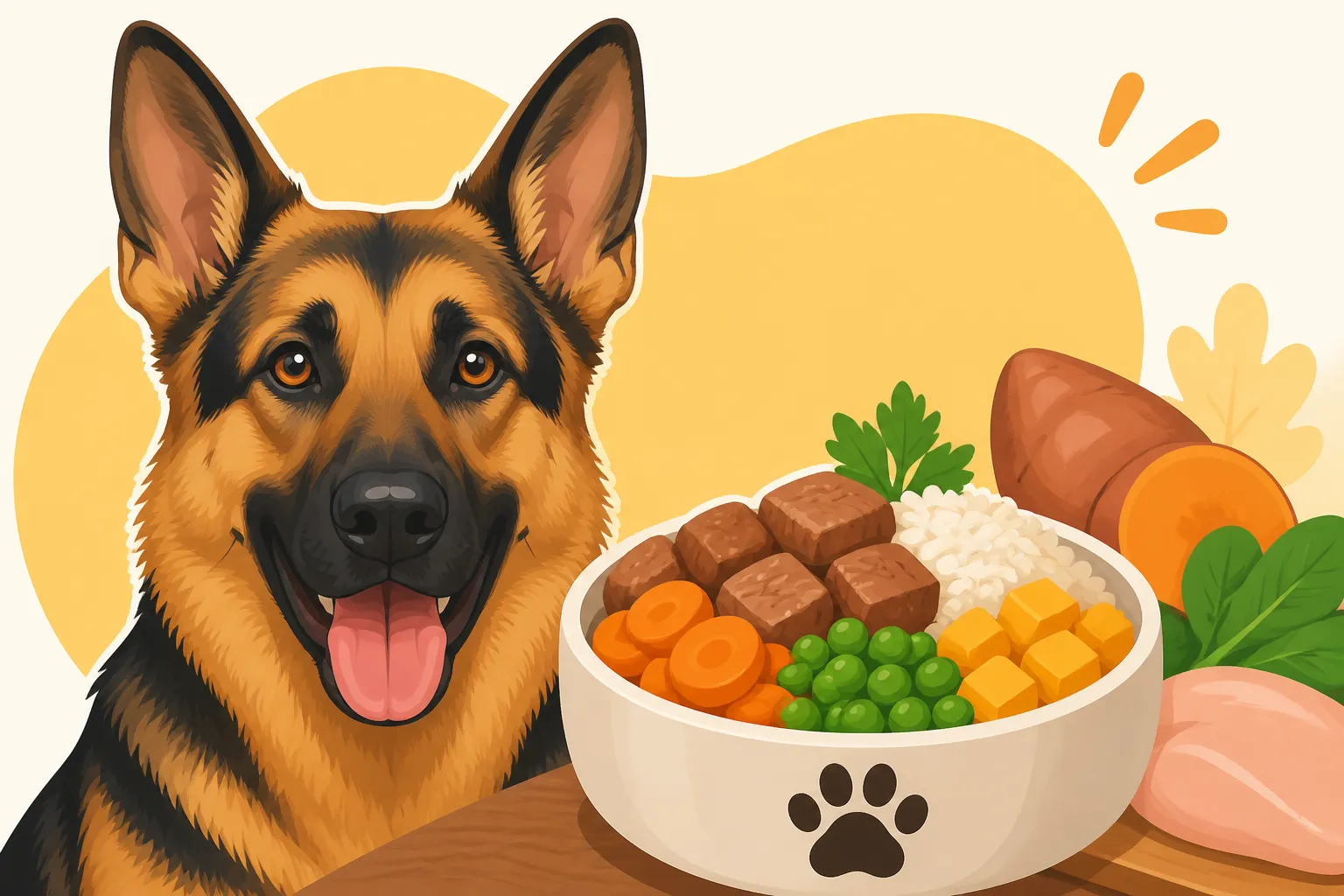
Classic Chicken and Rice Bowl
This is a gentle, easily digestible option, often recommended by vets for dogs with upset stomachs, but it can be a great base for a regular meal once properly supplemented.
Ingredients:
- 2 lbs boneless, skinless chicken breast or thighs (cooked and shredded)
- 2 cups brown rice (cooked)
- 1 cup green beans (steamed or boiled, chopped)
- 1 cup carrots (steamed or boiled, finely diced)
- 1/2 cup pumpkin puree (100% pure pumpkin, not pie filling)
- 1 tbsp olive oil or flaxseed oil
- Canine multivitamin/mineral supplement (as recommended by your vet)
- Calcium supplement (e.g., bone meal powder, as recommended by your vet)
Instructions:
- Cook the Chicken: Place chicken breasts or thighs in a pot, cover with water, and simmer until fully cooked (no pink inside). Let it cool, then shred it. Save a bit of the broth if you want to moisten the final meal.
- Cook the Rice: Prepare the brown rice according to package directions. Brown rice is a great source of fiber and slower-releasing energy.
- Prepare Vegetables: Steam or boil the green beans and carrots until soft. Chop them into small, digestible pieces.
- Combine Ingredients: In a large bowl, combine the shredded chicken, cooked brown rice, chopped green beans, diced carrots, and pumpkin puree.
- Add Fats and Supplements: Drizzle with olive or flaxseed oil. Thoroughly mix in the recommended doses of your vet-approved canine multivitamin/mineral supplement and calcium supplement.
- Portion and Store: Mix everything thoroughly. Divide into daily portions based on your German Shepherd's caloric needs. Store refrigerated in airtight containers for up to 3-4 days, or freeze for longer storage. This is a perfect starter recipe for those considering a switch from commercial options like those offered by Ollie or other premium brands, as it allows for a clear understanding of each component.
Beef and Vegetable Stew for Active Dogs
For a more robust and energy-packed meal, especially good for active German Shepherds, a beef and vegetable stew can be a fantastic option. This recipe incorporates organ meat for an extra nutritional punch.
Ingredients:
- 1.5 lbs lean ground beef (e.g., 90/10)
- 1/2 lb beef liver (finely chopped or ground)
- 2 cups mixed vegetables (e.g., chopped broccoli, peas, sweet potato, spinach)
- 1 cup quinoa (cooked)
- 1/4 cup unsweetened applesauce
- 2 tbsp fish oil (e.g., salmon oil)
- Canine multivitamin/mineral supplement
- Calcium supplement
Instructions:
- Cook Beef and Liver: In a large pot or Dutch oven, brown the ground beef. Drain any excess fat. Add the finely chopped beef liver and cook until no longer raw.
- Add Vegetables: Stir in the mixed vegetables. If using harder vegetables like sweet potato or carrots, you might want to steam them slightly beforehand for easier cooking and digestion. Add about 1 cup of water or low-sodium beef broth, bring to a simmer, and cook until vegetables are tender.
- Prepare Quinoa: Cook the quinoa according to package instructions. Quinoa is a complete protein and a great alternative to rice.
- Combine and Cool: Remove the beef and vegetable mixture from heat. Let it cool slightly.
- Mix Everything: In a large bowl, combine the beef and vegetable mixture, cooked quinoa, and unsweetened applesauce.
- Add Supplements: Stir in the fish oil, multivitamin/mineral supplement, and calcium supplement thoroughly.
- Portion and Store: Portion out for daily meals. This stew can be refrigerated for 3-4 days or frozen in individual servings. This hearty meal provides ample energy and nutrient density, making it a strong candidate if you're looking for ways to boost your German Shepherd's vitality beyond standard kibble offerings.
Turkey and Sweet Potato Mash for Sensitive Stomachs
This recipe is incredibly gentle and a fantastic choice for German Shepherds with particularly sensitive digestive systems or those prone to issues like German Shepherd Pancreatitis Diet or general stomach upset.
Ingredients:
- 2 lbs ground turkey (lean)
- 3 medium sweet potatoes (peeled and cubed)
- 1 cup zucchini (finely diced)
- 1 cup fresh cranberries (optional, for urinary health)
- 1 tbsp coconut oil
- Canine multivitamin/mineral supplement
- Calcium supplement
Instructions:
- Cook Sweet Potatoes: Boil or steam the cubed sweet potatoes until very soft. Mash them thoroughly.
- Cook Turkey: In a separate pan, brown the ground turkey until fully cooked. Drain any excess fat.
- Sauté Zucchini: Add the finely diced zucchini to the turkey pan and cook until soft. If using cranberries, add them here too and cook until they start to soften.
- Combine Ingredients: In a large mixing bowl, combine the mashed sweet potatoes, cooked ground turkey, and zucchini (and cranberries).
- Add Fats and Supplements: Stir in the coconut oil, which can be beneficial for digestion and skin, along with the vet-recommended multivitamin/mineral and calcium supplements.
- Mix Well: Ensure all ingredients are thoroughly mixed to distribute nutrients evenly.
- Portion and Store: Divide into appropriate daily portions. This mash stores well in the refrigerator for 3 days or in the freezer for up to a month. This can be a lifesaver for dogs exhibiting German Shepherd Sensitive Stomach Solutions and allows for precise control over ingredients, unlike many commercial sensitive stomach formulas.
Important Considerations Before You Start Cooking
While the idea of homemade food is appealing, it's not something to jump into lightly. There are crucial steps and considerations to ensure you're providing a complete and safe diet. This isn't just about love; it's about responsible pet ownership.
Consulting Your Veterinarian or a Veterinary Nutritionist
I cannot stress this enough: always consult your veterinarian or, even better, a board-certified veterinary nutritionist before transitioning your German Shepherd to a homemade diet. This is not a suggestion; it's a critical safety measure. They can help you:
- Assess individual needs: Your dog's age, weight, activity level, health conditions (like German Shepherd Hip Dysplasia Explained or German Shepherd EPI Diet and Management), and existing dietary sensitivities all play a role in formulating the perfect diet.
- Formulate a balanced recipe: A nutritionist can create a recipe tailored to your German Shepherd that meets all their specific nutrient requirements, including the correct calcium-to-phosphorus ratio, which is vital for large breeds and can be tricky to get right.
- Recommend appropriate supplements: They can advise on the right brands and dosages for canine-specific vitamins, minerals, and other necessary supplements, ensuring no critical nutrients are missed.
- Monitor health: Your vet can perform bloodwork and other tests to monitor your dog's health and ensure the homemade diet is having a positive effect and isn't causing any deficiencies over time.
Relying solely on recipes found online without professional guidance can lead to severe nutritional deficiencies or excesses that can harm your German Shepherd in the long run.
The Risks of Nutritional Imbalances
This is the biggest pitfall of homemade diets. While anecdotal evidence from other dog owners sounds promising, without careful formulation, homemade meals can easily become unbalanced. Common issues include:
- Calcium and Phosphorus Imbalance: This is incredibly important for large breeds like German Shepherds. An incorrect ratio can lead to significant skeletal problems, especially in growing puppies. Too little calcium, or an imbalance with phosphorus, can cause weakened bones.
- Vitamin and Mineral Deficiencies: Dogs need a wider range of micronutrients than most people realize. Simply feeding meat and vegetables, even varied ones, often doesn't provide enough of certain vitamins (like B vitamins, Vitamin D) and minerals (like zinc, iodine, selenium). Over time, these deficiencies can lead to serious health problems.
- Protein or Fat Excess/Deficiency: Too much protein can strain kidneys, while too little can lead to muscle loss. Too much fat can cause pancreatitis, while too little can lead to skin issues and lack of energy.
The consequences of long-term nutritional imbalances can be severe, impacting bone density, organ function, coat health, and overall vitality. This is why professional guidance is non-negotiable.
Safe Food Handling and Storage
Just like with human food, proper food hygiene is paramount when preparing homemade dog food. German Shepherds might have iron stomachs, but they're still susceptible to foodborne illnesses.
- Hygiene: Always wash your hands thoroughly before and after handling raw meat. Sanitize all cutting boards, utensils, and bowls that come into contact with raw ingredients.
- Cooking Temperatures: Ensure all meats are cooked to safe internal temperatures to eliminate bacteria like Salmonella and E. coli.
- Cooling: Allow cooked food to cool completely before portioning and storing.
- Storage: Store homemade food in airtight containers in the refrigerator for no more than 3-4 days. For longer storage, freeze individual portions. Label containers with the date they were made to ensure freshness.
- Thawing: Thaw frozen portions in the refrigerator overnight or using a microwave, never at room temperature on the counter.
- Serving: Serve food at room temperature or slightly warmed. Don't leave uneaten food out for extended periods, especially in warm weather, as it can quickly spoil.
Taking these precautions will protect both you and your beloved German Shepherd from potential health risks.
Common Homemade Ingredients for German Shepherds
To help you visualize the ingredients that typically go into a homemade German Shepherd diet, here's a quick reference table. Remember, variety is key, but balance is paramount!
| Ingredient Category | Examples | Primary Benefits | Important Considerations |
|---|---|---|---|
| Proteins | Chicken (breast, thigh), Turkey, Lean Beef | Muscle building, tissue repair, amino acids | Cook thoroughly. Vary sources. Be aware of potential allergies (e.g., chicken, beef). |
| Salmon, Sardines, Cod | Omega-3 fatty acids, protein, joint health | Cook thoroughly. Remove all bones. Avoid raw fish, especially salmon, due to potential parasites. | |
| Eggs | High-quality protein, vitamins, minerals | Cook thoroughly. Can be mixed in cooked and scrambled. | |
| Carbohydrates | Brown Rice, Quinoa | Energy, fiber, B vitamins | Cook thoroughly. Introduce slowly. Ensure grains are well-tolerated. |
| Sweet Potato, Pumpkin, Butternut Squash | Fiber, vitamins A & C, antioxidants, digestive aid | Cook thoroughly and mash for easy digestion. Avoid seasonings. | |
| Oats | Fiber, energy, can be soothing for sensitive stomachs | Cook into oatmeal consistency. Avoid instant, sugary varieties. | |
| Vegetables | Green Beans, Carrots, Broccoli, Spinach | Vitamins, minerals, fiber, antioxidants | Steam or lightly cook and chop finely. Introduce new veggies slowly. Avoid onions, garlic, grapes, raisins, avocado. |
| Healthy Fats | Salmon Oil, Flaxseed Oil, Coconut Oil | Skin & coat health, brain function, energy, anti-inflammatory | Use in moderation. Ensure oils are fresh and stored properly. |
| Organ Meats | Liver (chicken, beef), Kidney | Vitamin A, B vitamins, iron, trace minerals, protein | Feed in small quantities (5-10% of total diet) due to high vitamin A content. |
| Supplements | Canine Multivitamin/Mineral, Bone Meal | Fill nutritional gaps, ensure calcium/phosphorus balance | Essential for homemade diets. Must be vet-approved and canine-specific. Do not use human supplements. |
Disclaimer
The information provided in this article is for educational purposes only and is not intended as a substitute for professional veterinary advice. Always consult with your veterinarian or a board-certified veterinary nutritionist before making any significant changes to your German Shepherd's diet, especially when preparing homemade meals. They can help you create a balanced and complete nutritional plan tailored to your dog's specific health needs.