How to Train a German Shepherd to Ignore Distractions
Having a German Shepherd is an incredible experience, but let's be honest, it also comes with its own unique set of challenges. One of the biggest frustrations many German Shepherd owners face is when their usually intelligent and focused dog suddenly acts like they've never heard a command in their life the moment a squirrel darts by, another dog barks, or a child screams with delight. It's not a reflection of your dog's intelligence or your training skills; it's just how deeply aware and driven they are. This comprehensive guide is here to walk you through practical, empathetic strategies to help your German Shepherd learn to ignore distractions and maintain focus on you, no matter what chaos unfolds around them.
Understanding Why German Shepherds Get Distracted
It's easy to get discouraged when your meticulously trained German Shepherd suddenly forgets everything you've taught them the moment a leaf blows by a little too enthusiastically. But understanding why they get distracted is the first step toward effective training. It's not about defiance; it's often rooted in their very nature.
Natural Instincts and High Awareness
German Shepherds were bred for a purpose: herding and protection. This means they possess a keen sense of their surroundings, an acute hearing, and an exceptional sense of smell. They are designed to be alert, to notice changes in their environment, and to react. When a German Shepherd sees a rabbit, hears a distant siren, or smells a new dog on their walk, their instincts kick in. That "distraction" to us is often a highly stimulating and entirely natural part of their world. Their prey drive, for example, can be incredibly strong, making chasing anything that moves an almost irresistible urge. It's not that they don't want to listen; it's that their hardwired instincts are screaming louder than your voice in that moment.
We often ask our German Shepherds to suppress these instincts in our modern, busy world, which is a huge ask. Think about it: imagine trying to focus on a math problem while your favorite band is playing a concert right next to you, and someone is cooking your favorite meal. It's tough! For your German Shepherd, those smells, sights, and sounds are their concert and favorite meal all rolled into one. Recognizing this helps us approach training with more patience and understanding, rather than frustration. They aren't trying to be difficult; they're just being German Shepherds.
Lack of Early Socialization and Exposure
Another significant factor contributing to distraction is insufficient or improper early socialization. While you might think "socialization" just means letting your puppy play with other dogs, it's actually much broader. It's about exposing your puppy to a wide variety of sights, sounds, smells, people, environments, and experiences in a positive, controlled way during their critical developmental period.
If a German Shepherd puppy isn't adequately exposed to different stimuli when they're young, these novelties can become overwhelming or overly exciting later in life. A dog who wasn't used to children's screams as a puppy might become overly excited or anxious around them as an adult, making it hard to focus. Similarly, a dog who rarely saw other dogs as a pup might become reactive on leash, pulling and barking at every passing canine. The goal isn't to make them ignore everything entirely, but rather to teach them that most things in their environment are not a threat and don't require their full, undivided attention, especially when you're giving a command. A well-socialized German Shepherd learns to process distractions without reacting excessively, allowing them to remain calm and attentive to you. This is why resources like our guide on How to Socialize a German Shepherd are so crucial from the start.
Insufficient Mental and Physical Exercise
German Shepherds are not couch potatoes. They are a high-energy, highly intelligent breed that needs significant amounts of both physical and mental stimulation. When a German Shepherd isn't getting enough appropriate exercise for their breed and individual needs, they often develop "zoomies" or become easily overstimulated by their environment.
A bored or under-exercised dog has a huge amount of pent-up energy, both physical and mental. This excess energy makes it incredibly difficult for them to settle down and focus, even in a quiet environment, let alone one filled with distractions. They're like a pressure cooker ready to blow; any small trigger can set them off. This can manifest as excessive barking, destructive chewing, or, you guessed it, a complete inability to ignore distractions. Providing sufficient outlets for their energy, such as long walks, structured play sessions, obedience training, and puzzle toys, drains that excess energy and makes them much more receptive to learning and focusing. This is covered in depth in our article on German Shepherd Exercise Requirements. A tired German Shepherd is often a well-behaved and more focused German Shepherd.
Laying the Foundation for Focus and Calm
Before you can expect your German Shepherd to ignore a squirrel doing acrobatics on a tree, you need to build a rock-solid foundation of focus and obedience in quiet, low-distraction environments. Think of it like building a house: you wouldn't start with the roof, right? You need a strong foundation first.
Mastering Basic Obedience in a Quiet Environment
The first step, and arguably the most important, is to ensure your German Shepherd has a strong grasp of basic obedience commands in a calm, familiar setting, like your living room or backyard. Commands like "sit," "stay," "down," and "come" need to be almost automatic responses without any external stimuli competing for their attention. This isn't just about them knowing the command; it's about them performing the command reliably every single time you ask, with enthusiasm.
Start with short, frequent training sessions – 5 to 10 minutes, several times a day – to keep it fun and engaging. Use high-value treats (think cooked chicken, cheese, or hot dogs, not just their regular kibble) and enthusiastic praise. The goal is to make obeying you the most rewarding thing they can do. If they can't reliably "sit" when nothing else is happening, they certainly won't when a stranger walks by. Consistent repetition in a controlled environment builds muscle memory for these behaviors and establishes you as the source of all good things, making them want to pay attention to you. Our German Shepherd Obedience Training Basics guide provides excellent starting points for these essential commands.
Building a Strong "Look at Me" Command
The "Look at Me" or "Watch Me" command is a game-changer for distraction training. It teaches your German Shepherd to voluntarily make eye contact with you, turning their attention from whatever they were focused on directly to you. This is your secret weapon.
Here’s how to teach it:
- Start in a Quiet Place: Hold a high-value treat near your nose.
- Say "Watch Me": As you say the command, bring the treat up to your eyes. The moment your dog looks at your eyes, even for a split second, say "yes!" or click (if you use a clicker) and give them the treat.
- Repeat, Repeat, Repeat: Do this many times. Don't move the treat around; keep it steady by your nose.
- Fade the Lure: Once your dog consistently looks at your eyes when you say "Watch Me" and present the treat, start gradually removing the lure. Say "Watch Me," wait for eye contact, then mark and reward. You can eventually hold the treat at your side and only bring it out after they've made eye contact.
- Practice Everywhere: Once mastered in a quiet space, start practicing in slightly more distracting environments (e.g., another room, the backyard).
The "Watch Me" command helps you redirect your dog's focus before they become too engrossed in a distraction. It's like pressing a reset button, bringing their attention back to you. This foundation is invaluable as you start introducing more complex situations.
Implementing Structured Play and Engagement
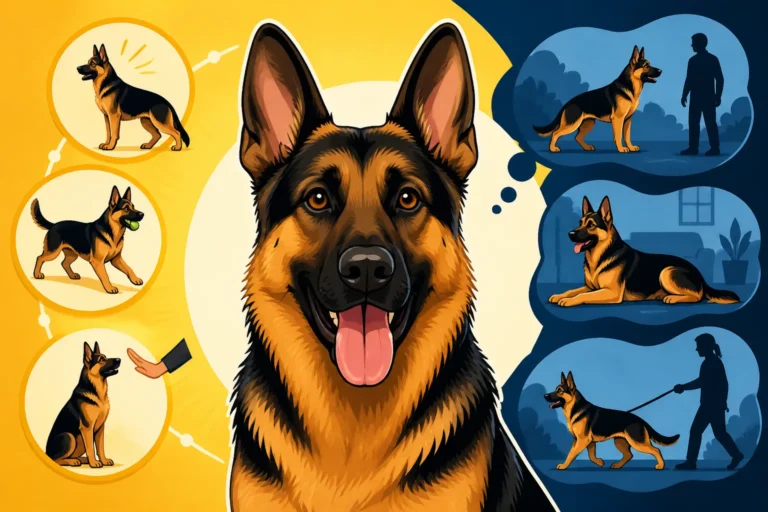
German Shepherds thrive on interaction and having a "job." Structured play isn't just about letting them run wild; it's about building engagement and responsiveness to you in a fun, high-energy context. This can significantly improve their focus even amidst distractions.
Consider incorporating games like:
- Tug-of-War (with rules): This game can build incredible bond and drive. Teach your dog to "take it" and, crucially, to "drop it" on command. This control is vital.
- Fetch (with control): Instead of just throwing the ball endlessly, make your dog "sit" and "stay" before you throw it. Have them "come" back and "drop" the ball consistently. This turns a simple game into a training exercise.
- Hide-and-Seek: Have your dog "stay" while you hide nearby, then call their name. This builds their recall and makes finding you incredibly rewarding.
These games, when structured, teach your German Shepherd that engaging with you is the most exciting and rewarding activity available. When you become the source of all fun and good things, they are much more likely to choose to engage with you over any external distraction. This also taps into their natural instincts in a constructive way, fulfilling their need for interaction and mental stimulation. For ideas on more stimulating activities, check out our guide on Best Mental Stimulation for German Shepherds.
Introducing Distractions Gradually and Systematically
Once your German Shepherd has a solid foundation of obedience and a strong "Watch Me" command in low-distraction environments, it's time to slowly, and I mean slowly, start introducing distractions. This is where many owners get ahead of themselves, expecting too much too soon. Remember, success breeds success!
The "Engagement vs. Distraction" Game
This game is all about teaching your German Shepherd that you are more interesting than anything else around them. It's not about forcing them to ignore distractions; it's about making you the ultimate prize.
- Choose a Low-Distraction Spot: Start in your backyard or a quiet park. Have your dog on a leash, even if they're off-leash trained, just for safety.
- Start with "Watch Me": Get their attention with your "Watch Me" command, reward heavily.
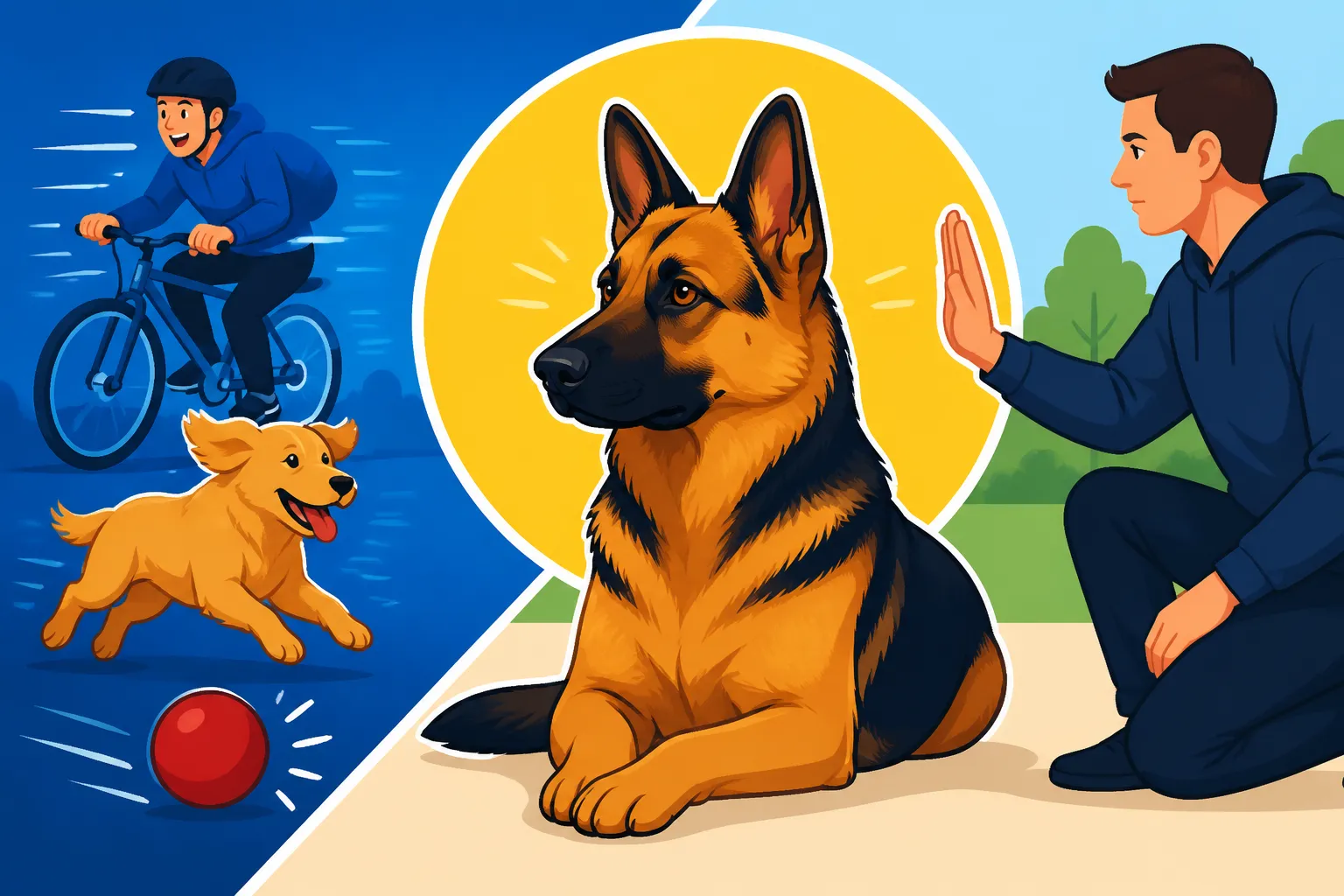
- Introduce a Mild Distraction: Have a friend walk a short distance away, or place a favorite toy a few feet from you. The distraction should be noticeable but not overwhelming.
- Reward for Disengagement: The moment your German Shepherd glances at the distraction and then chooses to look back at you (or you use "Watch Me" to bring their attention back), mark it and reward heavily. You're rewarding their choice to engage with you over the distraction.
- Increase Difficulty Slowly: Gradually increase the intensity or proximity of the distraction. This might mean having the friend walk closer, having another dog walk by at a distance, or training near a slightly busier walking path.
The key here is to keep the distraction level low enough that your dog can still choose to focus on you. If they're completely blowing you off, the distraction is too high, and you need to backtrack. This is a marathon, not a sprint.
Utilizing the "Watch Me" Command in Controlled Settings
Now that your German Shepherd knows "Watch Me," you'll actively use it as a tool to navigate mild distractions.
Imagine you're on a walk in a relatively quiet neighborhood. You see a person walking their dog in the distance. Instead of waiting for your German Shepherd to react, anticipate it. The moment you see the other dog, before your German Shepherd is fully engaged, give your "Watch Me" command. The goal is to get their attention before the distraction becomes irresistible.
- Proximity and Duration: Start by getting their attention for just a second as the distraction passes far away. Reward immediately. Gradually increase the proximity of the distraction and the duration of their focus on you.
- Practice with Different Distractions: Apply this technique to various distractions: children playing, bikes, cars, other people, even interesting smells.
- Become the Predictor: Your job is to become a master predictor of potential distractions. Scan your environment constantly. If you see something that might grab your dog's attention, get their focus first.
This proactive approach helps your dog learn that you are their guide and that focusing on you means good things happen, regardless of what else is going on. Consistency is everything here. Even something like a new delivery truck driving down your street can be a valuable, controlled training opportunity.
Proofing Commands in Increasingly Distracting Environments
"Proofing" is the process of practicing a command in many different environments, with varying distractions, until your dog performs it reliably anywhere. This is where you connect the dots between your quiet living room training and the bustling outside world.
Think of proofing in steps:
- Level 1 (Home Base): Your house, backyard – zero to minimal distractions.
- Level 2 (Quiet Neighborhood): Sidewalks near your home, quiet park early in the morning – distant sounds, occasional people or dogs.
- Level 3 (Slightly Busier Areas): A local dog park (from a distance), a quiet outdoor mall, a pet-friendly store like a local feed store – more consistent foot traffic, varied sounds.
- Level 4 (High Distraction): A busy city park, outdoor event, bustling downtown area – constant movement, loud noises, many people and dogs.
For each level, practice all your basic obedience commands and your "Watch Me" command. If your dog struggles at a higher level, go back to a lower one where they can succeed. The goal is to gradually raise the criteria while ensuring your dog is still successful at least 80% of the time. If your success rate drops below that, you've moved too fast.
Example Scenario:
You're working on "sit" and "stay" with your German Shepherd.
- Home: They "sit-stay" for 30 seconds with you 10 feet away. Great!
- Quiet Park: They "sit-stay" for 10 seconds while a bird sings nearby. Awesome!
- Slightly Busier Park: They struggle to "sit-stay" for even 5 seconds when a child runs past. Backtrack! Go back to the quiet park and shorten the duration, or move further away from the path, until they can succeed.
This systematic approach minimizes frustration for both of you and builds confidence in your German Shepherd that they can focus on you, no matter what. Many comprehensive online courses, like those offered by BAXTER & Bella, emphasize this kind of progressive, distraction-proofing methodology, providing structured lessons to guide you through these stages.
Advanced Strategies for Real-World Distraction Proofing
Once you've built a strong foundation and introduced distractions gradually, it's time to refine those skills for real-world scenarios. This is about making your German Shepherd’s focus second nature, even in unpredictable environments.
The Art of the Emergency Recall
Imagine your German Shepherd is off-leash in a safe, designated area, happily sniffing a particularly interesting patch of grass. Suddenly, a jogger with a small, yapping dog appears out of nowhere. This is where an emergency recall can be a lifesaver. An emergency recall isn't just "come"; it's a command that means "drop everything and get to me now, because something amazing is about to happen, or I need you safe."
To build a truly reliable emergency recall:
- Choose a Unique Command: Use a command different from your everyday "come." Something like "Here!" or "Front!" or a distinct whistle.
- Super High-Value Rewards: This is where you pull out the absolute best treats imaginable – roasted chicken, prime steak, hot dogs, squeezy cheese. Only use these for the emergency recall, so it always carries maximum excitement.
- Practice in Low-Distraction Areas First: Start in your home or backyard. Call your emergency command, and when your dog comes (and they should, given the high-value reward), throw a party! Shower them with treats and praise.
- Introduce Controlled Distractions: Slowly, gradually, introduce distractions as you would for other commands. Have a friend toss a toy, or jingle keys nearby. The moment your dog hears the emergency command, they should override the distraction to get to you.
- Never Use It for Punishment: If your dog runs off and you finally get them back with your emergency recall, do not punish them. The recall must always be a positive experience. If you punish them, you teach them that coming to you after a distraction is a bad thing, and they'll be less likely to do it next time.
A solid emergency recall, like the one taught in our article How to Teach a German Shepherd to Come, gives you immense peace of mind and is a testament to your dog's ability to focus on you even under pressure.
Managing Leash Reactivity and Overstimulation
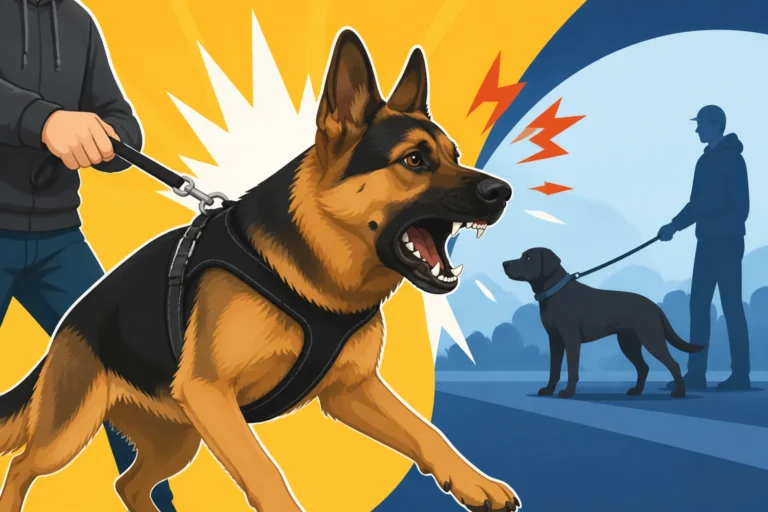
Leash reactivity is a common challenge for German Shepherd owners, often manifesting as barking, lunging, and pulling when they see other dogs, people, or even vehicles while on leash. This isn't usually aggression, but rather frustration, fear, or over-excitement, and it's a huge distraction.
To manage and mitigate leash reactivity:
- Identify Triggers: What specifically sets your dog off? Other dogs? People with hats? Skateboards? Note the distance at which they react.
- Stay Below Threshold: The "threshold" is the point where your dog starts to react. Your goal is to keep your dog below their threshold during training. If they're already lunging and barking, they're too overwhelmed to learn.
- Counter-Conditioning and Desensitization:
- Desensitization: Gradually expose your dog to their trigger at a distance where they notice it but don't react.
- Counter-Conditioning: Pair the sight of the trigger with something positive. For example, if another dog is their trigger, the moment they see another dog in the distance (before they react), start feeding them high-value treats. The other dog becomes a predictor of deliciousness. Stop feeding when the other dog disappears.
- "Look at That" Game: This is a variant of "Watch Me." When your dog sees a trigger, say "Look at that!" and immediately reward them for looking at the trigger without reacting, then looking back at you for a treat. This helps them associate the trigger with positive things.
- Controlled Encounters: If possible, arrange highly controlled, parallel walks with a calm, well-behaved dog at a safe distance.
- Seek Professional Help: Leash reactivity can be complex. Don't hesitate to consult with a certified professional dog trainer or behaviorist. For more in-depth solutions, refer to our article on How to Fix German Shepherd Leash Reactivity.
The key is consistency and patience. It's about changing your dog's emotional response to triggers from negative or over-excited to neutral or even positive.
Incorporating Training into Everyday Life
Training shouldn't be confined to specific "sessions" in your backyard. The most effective way to help your German Shepherd ignore distractions is to weave training into your daily routine. Every walk, every trip to the car, every interaction is an opportunity.
- Walks as Training Sessions: Don't just walk your dog; train your dog on walks. Practice "Watch Me" when you see a person approaching. Practice "sit-stay" at crosswalks. Reward for walking calmly past barking dogs or interesting smells. Use a comfortable, well-fitting harness or collar to ensure control, perhaps something you can easily find on Amazon.
- "Wait" at the Door: Before going outside, have your German Shepherd "wait" at the door. This teaches self-control when their excitement levels are high, and distractions are imminent.
- Calm Greetings: Teach them to greet visitors calmly rather than jumping and barking. A "place" command can be incredibly useful here.
- Mental Engagement Indoors: Even indoors, use puzzle toys or scent work to keep their minds engaged. A mentally stimulated dog is less likely to seek out distractions or create their own.
- Consistency from All Family Members: Ensure everyone in the household uses the same commands and training methods. Inconsistency can confuse your German Shepherd and make it harder for them to generalize behaviors.
By making training a seamless part of your life, you reinforce positive behaviors constantly, helping your German Shepherd build the habit of focusing on you amidst the chaos of the world. Remember, your German Shepherd wants to please you; they just need clear, consistent guidance and the skills to navigate a world full of exciting distractions.
| Distraction Type | Low-Level Example | Medium-Level Example | High-Level Example | Training Focus |
|---|---|---|---|---|
| People | Person walking quietly across the street far away | Someone jogging or walking by at a moderate distance | Children playing loudly, people running, group gathering | "Watch Me," "Sit-Stay," loose leash walking |
| Other Dogs | Dog barking faintly in the distance or far off on leash | Another dog walking calmly on leash 20-30 feet away | Off-leash dogs playing, reactive dog barking, multiple dogs | "Watch Me," "Leave It," emergency recall, passing calmly |
| Sounds | Distant car horn, quiet bird chirping | Construction noise in the background, lawnmower down the street | Fire truck siren, loud music, shouting, large vehicle backfiring | "Watch Me," desensitization, remaining calm |
| Movement | Leaf blowing across the path, distant bike passing | Person on a skateboard, car driving by at normal speed | Squirrel running up a tree, children playing ball, fast-moving vehicles | "Leave It," "Watch Me," disengagement, focus on handler |
| Smells (Environmental) | Freshly mown grass, new patch of flowers | Dog urine marking a bush, barbecue smells from a neighbor | Animal scent trail (rabbit, deer), garbage bins, strong food smells | "Let's Go," redirecting attention, loose leash walking |
Disclaimer
Please note that the information provided in this article is for educational purposes only and should not replace professional veterinary or certified dog trainer advice. Every German Shepherd is an individual, and what works for one may not work for another. If your German Shepherd is exhibiting significant behavioral issues, aggression, or extreme anxiety, please consult with a qualified professional dog trainer or veterinary behaviorist. They can provide personalized guidance and support tailored to your dog's specific needs.