How Much to Feed a Adult German Shepherd
It's incredibly frustrating, isn't it? You want to do right by your magnificent adult German Shepherd, but figuring out exactly how much food they need can feel like solving a complex math problem. The guidelines on the bag are often too generic, leaving you second-guessing whether you're overfeeding, underfeeding, or just getting it completely wrong. This comprehensive guide is here to demystify the process, helping you understand the key factors, calculate appropriate portions, and ensure your adult German Shepherd thrives.
Understanding the Variables that Impact Your German Shepherd's Diet
Feeding an adult German Shepherd isn't a one-size-fits-all situation. While the food bag offers a starting point, it doesn't account for the unique characteristics of your dog. Just like people, German Shepherds have individual metabolic rates, activity levels, and health considerations that dictate their caloric needs. Neglecting these nuances can lead to problems like unwanted weight gain or, conversely, insufficient energy for their active lifestyle.
Age and Life Stage Considerations
Even among "adult" German Shepherds, there's a spectrum. A young, vibrant adult GSD, say between two and five years old, often has a higher metabolism and energy output compared to a senior German Shepherd who might be slowing down. As your dog enters their golden years, their activity naturally decreases, and their body's ability to process nutrients might change. This means a senior dog will require fewer calories to maintain a healthy weight and could benefit from a diet formulated for older canines, often lower in calories but still nutrient-dense. It’s important to acknowledge these shifts to prevent weight issues later in life.
For example, a five-year-old German Shepherd that still enjoys daily long runs and rigorous play will burn significantly more calories than an eight-year-old GSD whose walks are shorter and who prefers napping to chasing balls. Understanding these age-related changes is the first step in tailoring their feeding plan. You might find our guide on German Shepherd Senior Diet Adjustments particularly helpful as your dog ages.
Activity Level and Energy Output
This is arguably the most significant factor in determining how much to feed your adult German Shepherd. A GSD bred for working lines, actively engaged in protection sports like IGP, or routinely accompanying you on strenuous hikes will require a substantially higher caloric intake than a beloved family pet whose primary exercise consists of moderate daily walks and backyard play. Their bodies are furnaces burning through fuel, and if you don't provide enough, they can become underweight or lack the stamina needed for their tasks.
Think about a German Shepherd involved in search and rescue missions. Their day could involve hours of intense physical and mental exertion, navigating challenging terrains. Compare that to a GSD who lives a more relaxed suburban life. Their caloric demands are vastly different. Feeding a highly active dog too little will impact their performance and health, while feeding an inactive dog too much will quickly lead to weight gain, putting strain on their joints and overall well-being. Keeping an eye on their German Shepherd Exercise Requirements can help you gauge their needs.
Metabolic Rate and Individual Health
Every dog is an individual, and this extends to their metabolic rate. Some German Shepherds are naturally lean and seem to burn off every calorie, while others tend to put on weight more easily. This can be influenced by genetics, existing health conditions, or even whether they've been spayed or neutered, which often lowers metabolic needs. Furthermore, certain health issues, such as thyroid problems or gastrointestinal sensitivities, can affect how their body utilizes food and what kind of diet they need.
For instance, a German Shepherd with an underactive thyroid (hypothyroidism) might gain weight easily despite a moderate food intake, necessitating a careful diet and medical management. Conversely, a dog recovering from an illness or one with Exocrine Pancreatic Insufficiency (EPI) might need more calories or specialized highly digestible food to maintain their weight. Always consult your vet if you suspect a health issue is impacting your dog's weight or appetite. They can offer guidance on managing conditions like German Shepherd Pancreatitis: Symptoms and Treatment or other digestive issues.
Calculating the Ideal Food Portion for Your Adult German Shepherd
Now that we've covered the crucial variables, let's get down to the brass tacks: how do you actually figure out the right amount of food? It involves a combination of smart calculation, careful observation, and a willingness to adjust as needed. Remember, this is an ongoing process, not a one-time fix.
Deciphering Dog Food Labels
The back of your dog food bag is your first reference point, but it's essential to understand its limitations. These charts typically provide a range based on weight, often suggesting amounts for "less active" and "more active" dogs. However, their definition of "active" might not perfectly align with your German Shepherd's actual routine. A common mistake is simply feeding the amount listed for your dog's weight without considering the caloric density of the food itself, or your dog's unique needs.
Always look for the "kcal/cup" or "calories per cup" information on the label. This is the crucial number that tells you how much energy is in each serving. Different brands and formulas can vary wildly. For example, a high-protein, performance-oriented kibble might have 400-450 kcal/cup, while a standard maintenance formula might be closer to 350 kcal/cup. If you switch foods without adjusting the volume based on caloric density, you could inadvertently be overfeeding or underfeeding your dog. Many pet food retailers, like Chewy, list this information clearly on their product pages, making it easier to compare.
Body Condition Scoring
Forget the number on the scale for a moment; your German Shepherd's body condition score (BCS) is a far more accurate indicator of whether they're at a healthy weight. This visual and tactile assessment helps you determine if your dog is too thin, too heavy, or just right. A healthy adult German Shepherd should have:
- Ribs that are easily felt under a thin layer of fat, but not visibly prominent.
- A visible waist when viewed from above, like an hourglass figure.
- An abdominal tuck when viewed from the side, meaning their belly slopes up from the rib cage towards the hips.
If you can't feel your dog's ribs without pressing hard, or if their waist isn't apparent, they might be overweight. Conversely, if their ribs are very visible or their hip bones protrude, they may be underweight. This subjective assessment is more valuable than comparing your dog to an average weight chart, as individual bone structure and muscle mass vary. Learning How to Tell If a German Shepherd Is Overweight is a critical skill for any owner.
Calculating Caloric Needs
Here's where we get a bit more scientific. Veterinarians use a formula to estimate a dog's Resting Energy Requirement (RER) and then multiply it by a factor based on their activity level, age, and reproductive status to get their daily caloric needs (DER).
A simplified approach for adult dogs:
- Determine your dog's ideal weight in kilograms. (1 lb = 0.45 kg)
- Calculate RER: (Ideal Body Weight in kg)^0.75 x 70. This calculation can be tricky, so many online calculators exist.
- Multiply RER by an activity factor:
- Neutered/Spayed Adult: RER x 1.6
- Intact Adult: RER x 1.8
- Lightly Active: RER x 2.0 (e.g., daily moderate walks)
- Active/Working: RER x 2.5 – 5.0 (depending on intensity and duration of work)
- Weight Loss: RER x 1.0 (based on ideal weight, not current)
- Weight Gain: RER x 2.0 – 2.5 (based on current weight, then gradually increase)
Let's do a hypothetical example for a moderately active, spayed female German Shepherd with an ideal weight of 70 lbs (approx. 32 kg):
- RER: (32 kg)^0.75 * 70 = approximately 1076 calories
- Daily Energy Requirement (DER) for a moderately active, spayed dog: 1076 * 1.6 = approximately 1722 calories per day.
Once you have this number, divide it by the calories per cup of your chosen dog food. If your food has 400 kcal/cup, then: 1722 / 400 = approximately 4.3 cups per day.
Remember, this is an estimate. Always start with this calculated amount and then monitor your dog's body condition over the next few weeks.
Here's a simplified table for general daily feeding guidelines, but please remember these are estimates and must be adjusted for your individual dog's activity level and metabolic rate.
| Adult Weight (lbs) | Activity Level | Estimated Daily Calories (kcal) | Approximate Cups/Day (380 kcal/cup) |
|---|---|---|---|
| 50-60 lbs | Low/Moderate | 1100-1400 | 2.9 – 3.7 |
| High | 1500-1900 | 3.9 – 5.0 | |
| 60-70 lbs | Low/Moderate | 1300-1700 | 3.4 – 4.5 |
| High | 1800-2300 | 4.7 – 6.0 | |
| 70-80 lbs | Low/Moderate | 1500-1900 | 3.9 – 5.0 |
| High | 2000-2700 | 5.2 – 7.1 | |
| 80-90 lbs | Low/Moderate | 1700-2200 | 4.5 – 5.8 |
| High | 2300-3000 | 6.0 – 7.9 |
Note: This table assumes a typical kibble density of 380 kcal per cup. Always check your specific dog food's caloric content and adjust accordingly.
Common Pitfalls and How to Optimize Your German Shepherd's Feeding Routine
Even with the best intentions, it's easy to fall into common feeding traps. Being aware of these can help you avoid problems and ensure your German Shepherd stays at a healthy weight and receives proper nutrition.
Overfeeding Treats and Table Scraps
This is probably the number one culprit behind canine obesity. We love our dogs, and giving them treats or a bite of our dinner feels like an act of love. However, those extra calories add up quickly and can throw off even the most carefully calculated diet. A single medium-sized dog biscuit can contain 50-100 calories, and a small piece of cheese or meat from your plate can be even more. If your German Shepherd is getting several of these throughout the day, you could be adding hundreds of unneeded calories.
The solution isn't to stop giving treats entirely, but to be mindful and account for them. If you give treats, reduce their regular meal portion accordingly. Opt for low-calorie training treats, or use small pieces of their regular kibble as rewards. Avoid feeding table scraps altogether, as many human foods are not suitable for dogs and can cause digestive upset or worse. When considering what goes into your dog's bowl, remember to account for everything they consume daily. Services like Ollie, which provide fresh, human-grade dog food, emphasize balanced nutrition and can help you avoid these hidden calorie traps with precise portioning.
Inconsistent Feeding Schedules
German Shepherds thrive on routine, and a consistent feeding schedule isn't just good for their mental well-being; it's also crucial for their digestive health. Feeding at irregular times can confuse their digestive system, leading to issues like bloating, discomfort, or even an increased risk of serious conditions like Gastric Dilatation-Volvulus (GDV), often referred to as bloat. Feeding two meals a day, roughly 12 hours apart, is generally recommended for adult German Shepherds.
This routine helps regulate their metabolism, prevents them from becoming excessively hungry (which can lead to gulping food too quickly), and makes it easier to monitor their appetite and stool quality. If you have a busy schedule, consider using an automatic feeder from a site like Amazon that dispenses food at programmed times. This consistency contributes to overall health and can help prevent life-threatening emergencies like German Shepherd Bloat: Signs and Prevention.
Not Factoring in Nutritional Density and Quality
Not all dog food is created equal. A cheaper, filler-heavy kibble might technically meet your German Shepherd's caloric needs, but it might lack the high-quality protein, essential fatty acids, and digestible nutrients necessary for their robust health. Feeding a diet that isn't nutritionally dense can leave your dog feeling unsatisfied, even if they've eaten enough by volume, leading to begging and a persistent feeling of hunger.
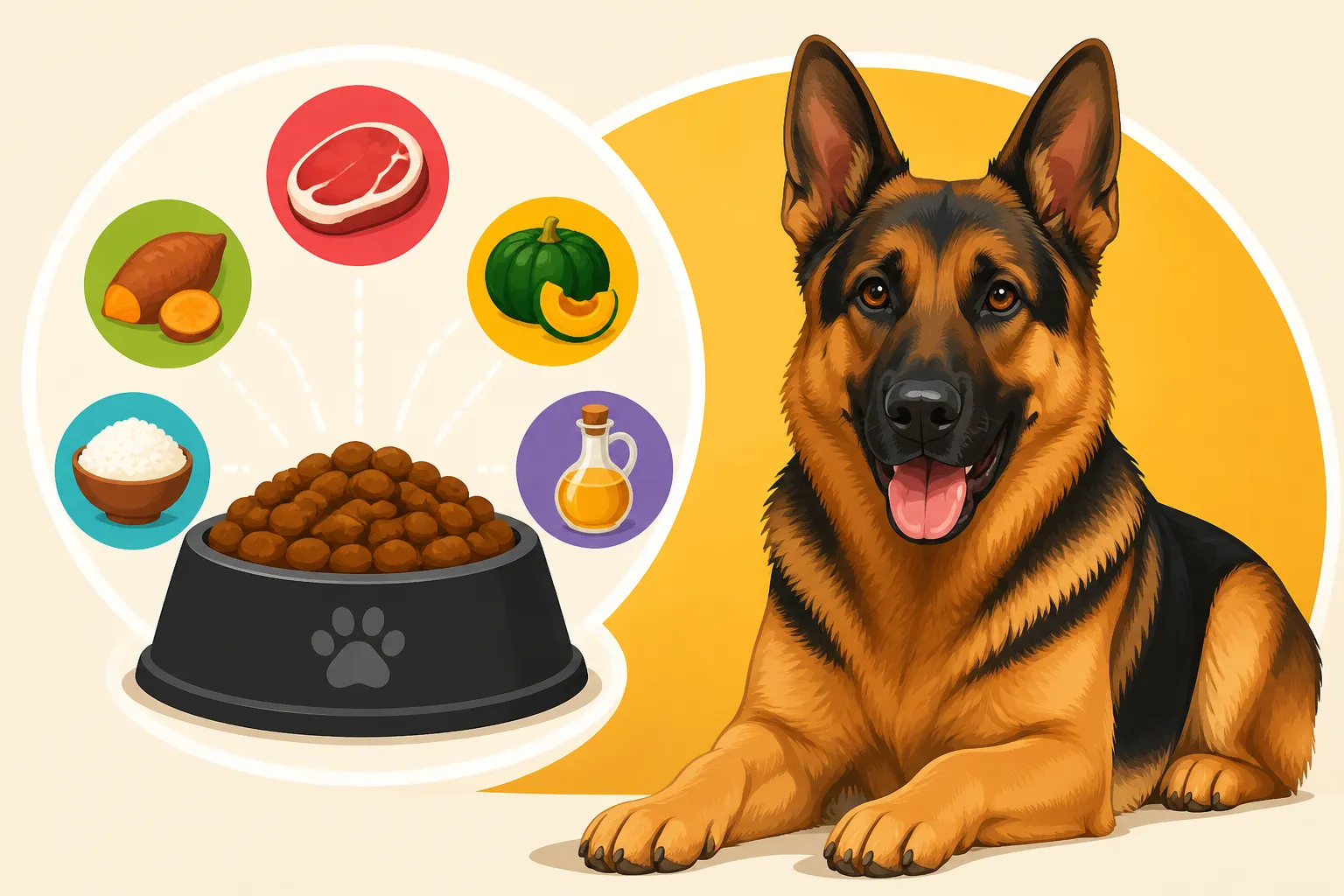
Investing in a high-quality dog food specifically formulated for large breeds like German Shepherds is paramount. Look for whole meat as the first ingredient, and avoid excessive fillers, artificial colors, and preservatives. A premium diet ensures your dog receives optimal nutrition from fewer calories, supporting everything from a shiny coat to strong muscles and a healthy immune system. We have an in-depth guide on Best Dog Food for German Shepherds that can help you navigate the options and choose wisely.
When and How to Adjust Your German Shepherd's Food Intake
Your German Shepherd's nutritional needs aren't static. They will change over time, and a good owner knows how to read their dog's body language and physical condition to make necessary adjustments to their diet. This proactive approach is key to lifelong health.
Monitoring Weight and Body Condition
Regularly assessing your German Shepherd's body condition score (BCS) is non-negotiable. Make it a habit to feel their ribs, check their waist, and observe their energy levels at least once a month. If you notice their ribs becoming harder to feel, or their waistline disappearing, it's a clear sign they are gaining too much weight. Conversely, if their ribs are becoming too prominent, or their energy levels are dropping, they might need more food.
It's a subtle art, this monitoring. Don't wait until your dog is visibly overweight or underweight to make changes. Small, incremental adjustments are far better than drastic overhauls. A slight increase or decrease of about 10-15% of their daily food intake, observed over a few weeks, is typically all that's needed. Keep a journal if it helps, noting their weight, food intake, and activity levels. This data can be invaluable for you and your vet. For dogs needing to shed a few pounds, our article on How to Help a German Shepherd Lose Weight offers practical strategies.
Seasonal and Activity Level Changes
Your German Shepherd's activity levels can fluctuate with the seasons or changes in your lifestyle. During warmer months, you might be taking longer hikes or spending more time at the dog park. In winter, short, cold days might mean less outdoor activity. These changes directly impact their caloric needs. A GSD who is highly active in the summer might need more food, while the same dog might need slightly less during a less active winter period.
Similarly, if your family goes on vacation and your dog is boarded, their routine will change. If they're more active at the kennel, they might need more food. If they're less active, they'll need less. Always communicate with whoever is caring for your dog about their typical diet and activity. It's about being flexible and responsive to their current lifestyle, not sticking rigidly to a number printed on a bag months ago.
Veterinary Guidance and Special Dietary Needs
Finally, never underestimate the value of your veterinarian. They are your best resource for personalized nutritional advice, especially if your German Shepherd has specific health concerns. Conditions like allergies, sensitive stomachs, or joint issues can all impact dietary needs. Your vet can recommend specific therapeutic diets, supplements, or guide you in creating a homemade food plan if necessary.
For instance, a German Shepherd dealing with German Shepherd Allergies: Symptoms and Treatment might need a limited ingredient diet or a food free from common allergens like chicken or beef. Dogs with orthopedic concerns could benefit from joint supplements incorporated into their diet, or foods fortified with glucosamine and chondroitin. Regular check-ups allow your vet to assess your dog's overall health, including their weight and body condition, and make recommendations that evolve with your dog’s life journey. They can also help interpret bloodwork and other diagnostics to uncover underlying issues affecting your dog's nutrition, ensuring your German Shepherd receives the German Shepherd Nutrition Essentials they need to thrive.
Disclaimer
The information provided in this guide is for general informational purposes only and does not constitute veterinary advice. Always consult with a qualified veterinarian for any health concerns or before making any changes to your German Shepherd's diet or exercise routine. Individual needs may vary.