German Shepherd Herding Instinct Explained
One of the most defining, and sometimes perplexing, traits of the magnificent German Shepherd is their innate herding instinct. Many new owners find themselves scratching their heads when their puppy tries to "round up" the kids, or an adult dog attempts to gather the household cats into one spot. This guide will delve into the historical roots of this behavior, explain how it manifests in your furry family member, and provide actionable strategies to manage and redirect these powerful instincts into positive outlets.
Understanding the German Shepherd's Herding Roots
To truly grasp why your German Shepherd acts the way they do, we need to take a little trip back in time and understand their origins. This breed wasn't just bred for companionship; they were specifically developed for demanding work, primarily herding sheep.
A Legacy of Livestock Guardianship
The German Shepherd, as we know it today, was intentionally created in the late 19th century by Captain Max von Stephanitz in Germany. His vision was to create the ultimate German herding dog – a versatile, intelligent, and strong working canine. He observed various local shepherd dogs and selectively bred them to enhance specific traits essential for herding: intelligence, loyalty, strength, and a keen protective instinct, all while being trainable and eager to please. The goal was a dog that could not only move flocks of sheep but also protect them from predators. This wasn't just about chasing; it was about control, vigilance, and strategic movement. German Shepherd History and Origin covers this in more detail.
When you look at your German Shepherd trying to get everyone to sit together in the living room, you're witnessing generations of this carefully cultivated instinct at play. They see their family unit as their "flock" and feel a deep, inherent drive to keep everyone organized and safe. It’s not aggression; it's their job, as they perceive it. They are trying to be helpful, even if their methods can sometimes be a bit much for a busy household.
The Instinctive Drives
Herding behavior isn't just one simple action; it's a complex set of innate drives that combine to form the overarching instinct. Understanding these individual components can help you recognize what your German Shepherd is trying to communicate or achieve.
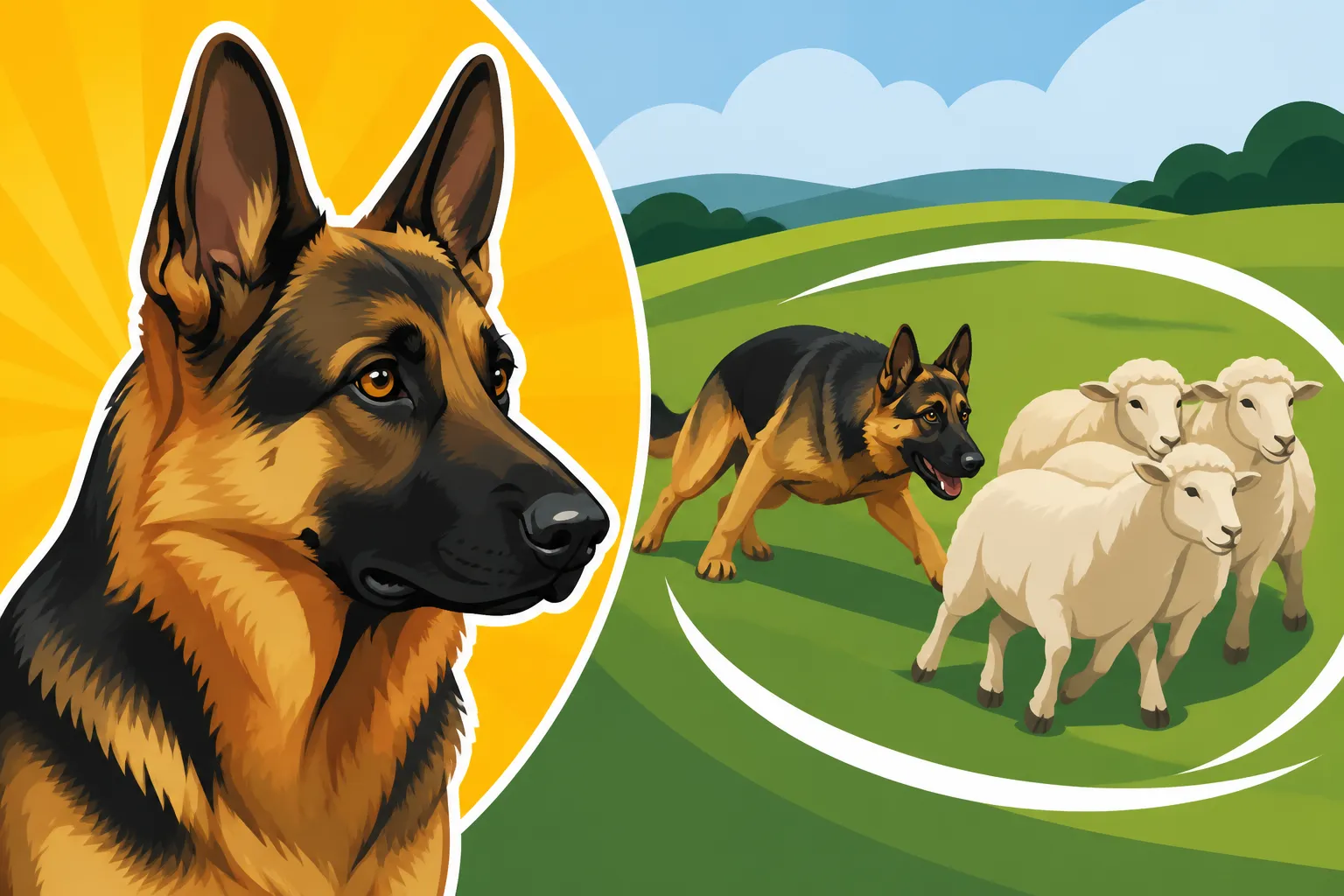
One key component is the "prey drive" – but with a significant modification. Unlike a predator that would kill and consume its prey, a herding dog's prey drive is inhibited at the final chase and bite stage. Instead, they focus on controlling movement. This means they'll stalk, chase, and nip, but usually without the intent to harm. They use their body, their stare, and sometimes gentle nips to direct the flock. Think of it as a highly refined version of hunting, where the goal isn't to kill but to maneuver. This also includes an intense focus on movement. If something moves, especially erratically, it triggers the instinct to control that movement. This is why children running or bicycles whizzing by can be particularly stimulating for a German Shepherd.
Another critical element is the "gathering instinct." A good herding dog doesn't just push animals forward; they will also circle widely to bring scattered individuals back to the group. This explains why your dog might try to round up family members who are in different rooms, nudging them gently towards a central location. They are instinctively trying to consolidate their perceived flock. This desire to keep the group together is deeply ingrained and can be a powerful motivator for their actions.
Manifestations of Herding Instinct in Everyday Life
For a German Shepherd living in a suburban home rather than on a sheep farm, these powerful instincts don't just disappear. Instead, they find new, sometimes inconvenient, ways to express themselves. Recognizing these manifestations is the first step toward effective management.
Nipping and Chasing
It's a common complaint: "My German Shepherd puppy nips at my heels!" or "My dog chases the kids when they run." This isn't usually malicious; it's a classic herding maneuver. In a working context, a quick nip at a sheep's hock (ankle) is used to encourage movement or change direction. When a German Shepherd sees children running, or even adults moving quickly, their instinct kicks in: "That's a scattered sheep! I need to control its movement!" So, they might nip at ankles, or try to cut off their path. How to Stop German Shepherd Nipping provides more targeted advice on curbing this specific behavior.
Similarly, chasing is a fundamental part of herding. A dog will run behind or alongside a flock to drive them. In a home environment, this translates to chasing anything that moves quickly – children, other pets, bicycles, skateboards, or even cars if not properly contained. This can be especially problematic if not managed, as chasing can quickly become dangerous, especially in public areas or around vulnerable family members. It's not about being aggressive, but about an overwhelming urge to direct movement.
"Gathering" Behavior
Have you ever noticed your German Shepherd trying to get everyone in the same room, or bringing their toys into a central pile? That’s their gathering instinct at work. They may gently nudge you with their nose, or stand between you and an "outlier" (like a child playing alone in another room), subtly trying to guide everyone together. They might also lie in a doorway, effectively "corralling" everyone within a certain space.
This behavior also extends to objects. Many German Shepherds will collect their favorite toys and bring them to a specific spot, creating their own "flock" of possessions. My own German Shepherd, Rex, used to gather all the socks from the laundry basket and bring them to his bed, carefully arranging them as if they were his prized sheep. It’s a testament to how deeply ingrained this instinct is, finding expression even in mundane household activities. They thrive on order, and if they perceive chaos, they'll try to bring things back into line.
Staring and Stalking
Before a herding dog springs into action, there's often a period of intense focus: the "herding eye." This involves a low, intense stare, often accompanied by a lowered body posture, as if they're trying to communicate solely through their gaze. They might stalk slowly, keeping their body low to the ground, trying to move around the "flock" to position themselves for the next move.
In a home setting, this can look like your German Shepherd intently watching your every move, especially if you're bustling around the kitchen or getting ready to leave. They might stalk the cat or another dog, freezing suddenly and dropping into a low crouch. While it can seem a bit intimidating, it's their way of assessing the situation and preparing to "manage" the movement. It's their method of control and observation, a quiet prelude to action that shows their intelligent and strategic approach to their perceived duty.
Managing and Redirecting Herding Instinct
While you can't erase an instinct, you can absolutely manage and redirect it into appropriate and enjoyable channels. This requires understanding, consistency, and providing suitable alternatives.
Early Socialization and Training
The foundation for managing any strong instinct in a German Shepherd starts young. German Shepherd Puppy Training Guide is crucial for setting expectations. Early and consistent socialization exposes your puppy to a wide variety of sights, sounds, people, and other animals in a positive way. This helps them understand what is a "threat" or "sheep to be moved" and what is simply part of their normal environment. A well-socialized German Shepherd is less likely to react instinctively to every running child or moving object.
Obedience training, especially teaching commands like "stay," "leave it," and a strong "recall," is paramount. These commands provide you with the tools to interrupt nascent herding behaviors before they escalate. If your puppy starts nipping at ankles, a firm "leave it" and a redirection to a toy can teach them that this behavior is not acceptable. Consistency is key here; every family member needs to be on board with the same commands and expectations. German Shepherd Obedience Training Basics offers a great starting point for foundational skills.
Providing Appropriate Outlets
Since the herding instinct is so strong, simply suppressing it isn't fair to your German Shepherd. They need an outlet for these drives. Think about activities that mimic herding without involving actual livestock or chasing family members.
- Herding Trials: If you have access, participating in organized herding trials or lessons with real sheep can be an incredibly fulfilling experience for both you and your dog. It allows them to use their natural talents in a structured, safe environment.
- Agility: This sport involves guiding your dog through an obstacle course. It taps into their desire for direction, control, and quick movements, satisfying many aspects of the herding drive.
- Fetch and Retrieve Games: These can satisfy the chase and return aspects. Throw a ball or frisbee, and have your dog bring it back. The act of "gathering" the object and returning it to you can be very satisfying for their instincts. Consider toys from popular retailers like Chewy that are designed for high-energy breeds.
- Flirt Poles: A flirt pole is a long pole with a lure (toy) attached to a rope. You drag the lure on the ground, and your dog chases it. This provides a safe, controlled outlet for chasing and predatory-like behavior without involving people or other pets.
Consistent Boundaries and Commands
Establishing clear boundaries and consistent commands is non-negotiable for a German Shepherd, especially one with strong herding instincts. Every family member needs to use the same language and enforce the same rules. For example, if your dog is not allowed to chase the children, everyone must intervene every time this behavior occurs.
Teach your German Shepherd impulse control. This can involve exercises where they have to wait for permission to eat, go through a doorway, or retrieve a toy. Commands like "wait" or "stay" before releasing them for an activity help build self-control. When you're out on walks, if your dog tends to "herd" other dogs or people, keep them on a short leash and use a firm "heel" command. This teaches them that you are in control of the "flock" (them!) and their movements. Consistent management will help them understand their role and yours.
When Herding Becomes a Problem: Troubleshooting Common Issues
Sometimes, a German Shepherd's herding instincts can manifest in ways that are more than just inconvenient; they can be problematic or even unsafe. Addressing these issues requires specific strategies and often a deeper dive into behavior modification.
Herding Children and Other Pets
When a German Shepherd puppy nips at a child's heels or pushes the family cat, it's often an innocent expression of instinct, but it can quickly become dangerous if not corrected. The key is to intervene before the behavior starts.
- Supervision is paramount: Never leave young children or small, vulnerable pets unsupervised with a German Shepherd who exhibits strong herding tendencies.
- Teach "Stop" and "Go" commands: Teach children to "freeze" if the dog starts to herd them, making them less like "runaway sheep." Then, teach the dog a "leave it" or "off" command to disengage.
- Redirection: If your dog starts to focus on a child, immediately redirect their attention to an appropriate toy or a structured game of fetch.
- Designated "safe zones": Create areas where children and smaller pets can retreat without the dog being able to follow, such as baby-gated rooms.
- Leash work indoors: Sometimes, keeping your dog on a drag leash indoors when children are present can allow you to quickly and gently correct unwanted herding attempts without having to grab them. How to Introduce a German Shepherd to Other Dogs offers more general advice on inter-animal introductions.
Excessive Nipping or Barking
While a gentle nudge is one thing, persistent nipping that breaks the skin or excessive barking aimed at controlling movement can be very frustrating and even painful.
- Nipping: For persistent nipping, employ bite inhibition training from the start. When your puppy nips too hard, yelp loudly (like another puppy would) and withdraw attention for a short period. This teaches them that hard nips end playtime. For adult dogs, redirection to a chew toy or a firm "no" followed by a short timeout can be effective. Never use physical punishment, as it can escalate fear or aggression. German Shepherd Puppy Biting: What to Do has more details.
- Barking: German Shepherds can use barking as a tool to move their "flock." If they're excessively barking to try and control your movements or those of other family members, teach them a "quiet" command. Identify the triggers for the barking (e.g., someone getting up, kids playing) and proactively interrupt with a "quiet" command, rewarding silence. Provide ample physical and mental exercise, as an under-stimulated German Shepherd is more prone to problematic barking. How to Stop German Shepherd Excessive Barking can help you address this.
Resource Guarding with a Herding Twist
Resource guarding is when a dog becomes possessive of an item, space, or even a person. When combined with herding instinct, this can manifest as a dog trying to "herd" people away from their food bowl, a favorite toy, or even a specific family member they perceive as "theirs."
This is a more serious issue that often requires professional help from a certified dog behaviorist. However, some initial steps include:
- Trade-up: Teach your dog to "trade" a guarded item for a higher-value treat, making it a positive experience to give things up.
- Avoid confrontation: Never try to forcefully take items away from a resource-guarding dog, as this can escalate aggression.
- Management: Keep high-value items put away unless actively supervised. Feed your dog in a quiet, undisturbed area.
- Building trust: Consistent, positive interactions where your dog learns that you are a source of good things, not a threat to their resources, is crucial. This can take time and patience.
Engaging Activities for Your Herding German Shepherd
Satisfying your German Shepherd's innate drives through appropriate activities is perhaps the most effective way to manage their herding instinct. An engaged and mentally stimulated German Shepherd is a happy, well-behaved German Shepherd.
Organized Dog Sports
These are fantastic for German Shepherds because they provide structured outlets for their intelligence, athleticism, and natural instincts.
- Herding Trials: This is the most direct way to engage their herding drive. Under the guidance of an experienced trainer, your dog can learn to work with real sheep or ducks in a controlled environment. It’s an amazing sight to see a German Shepherd truly in their element, using the skills they were bred for.
- Agility: As mentioned, agility is a brilliant sport that requires your dog to navigate an obstacle course with speed and precision. It combines physical exercise with mental challenges, demanding focus and responsiveness to your commands. This builds a strong working relationship and satisfies their need to be directed.
- Obedience and Rally Obedience: While less about herding, these sports capitalize on the German Shepherd's desire to please and their intelligence. They involve performing a series of commands and maneuvers, honing their focus and impulse control.
- Tracking and Scent Work: German Shepherds also have an excellent nose. Activities like tracking, where they follow a scent trail, or nose work, where they find hidden odors, provide immense mental stimulation and satisfy their innate drive to search and solve problems. This can be a great alternative if herding specific activities aren't available.
Mental Stimulation
A bored German Shepherd is often a destructive or problematic German Shepherd. Providing ample mental stimulation is just as important as physical exercise for this intelligent breed.
- Puzzle Toys: These toys dispense treats only when your dog figures out how to manipulate them. They can keep your German Shepherd engaged for significant periods, working their brain to earn a reward. You can find a great variety of these on pet supply sites like Chewy.
- Interactive Games: Games like "find it," where you hide treats or toys around the house and encourage your dog to sniff them out, are fantastic. This taps into their natural scenting abilities and problem-solving skills.
- Training Challenges: Continuously teach your dog new tricks or refine existing commands. Even short, daily training sessions can provide significant mental exercise. Think about teaching them the names of their toys and asking them to retrieve specific ones. This reinforces their memory and listening skills. Best Mental Stimulation for German Shepherds offers even more ideas.
Structured Playtime
While free play is good, structured playtime can better channel their herding energy.
- Controlled Fetch: Instead of just letting them run wild, incorporate commands into your fetch game. Make them "sit" and "stay" before you throw the ball, and then "drop" it when they return. This reinforces obedience and control within a high-energy activity.
- Flirt Pole Fun: This tool is excellent for safely simulating the chase. The dog focuses on the lure, not your hands or body. It allows them to use their speed and quick direction changes without practicing unwanted behaviors on people or other animals. Many excellent flirt poles are available, often found on online pet stores.
- Tug-of-War (with rules): Tug-of-war can be a great bonding activity and energy burner, but it needs rules. Teach your dog to "take it" and "drop it" on command. This teaches them impulse control and that you initiate and end the game, reinforcing your leadership. Just be sure to always be in control of the game.
By understanding the deeply ingrained herding instinct in your German Shepherd and providing appropriate outlets and consistent guidance, you can transform what might seem like a challenge into a wonderful opportunity to bond with your dog and help them thrive. Your German Shepherd wants a job; it’s up to you to provide a safe and constructive way for them to do it.
| Herding Behavior Manifestation | Why it Happens (Instinct) | How to Redirect/Manage |
|---|---|---|
| Nipping at Heels/Ankles | Attempts to move/direct perceived "stray flock members" | "Leave it" command, redirect to appropriate chew toy/flirt pole |
| Chasing Running Children/Pets | Instinct to gather and control moving "flock" | Strong recall, "stay" command, supervised play, designated safe zones |
| Staring/Stalking | Intense focus and positioning before herding action | "Look at me" command, redirect focus to structured activity |
| Barking to "Move" People | Communication to direct or gather perceived "flock" | "Quiet" command, plenty of mental & physical exercise |
| Gathering Objects/People | Drive to consolidate "flock" into a central location | Provide appropriate "herding" toys (e.g., large balls to push) |
| Herding other dogs at park | Impulse to control movement within a larger "pack" environment | Leash control, short interactions, focus on handler, dog sports |
Disclaimer
This article is for general informational purposes only and does not constitute professional advice. Laws, prices and regulations vary by location and change over time. Consult a qualified professional for guidance on your specific situation.