How to Socialize a German Shepherd
Bringing a German Shepherd into your life is an incredible joy, but let's be honest, it also comes with a significant responsibility, especially when it comes to helping them navigate the big, wide world. Many GSD owners find themselves grappling with a dog that's wary of strangers, reactive to other dogs, or overwhelmed by new environments. This isn't just a minor inconvenience; it can be genuinely stressful for both you and your loyal companion, making everyday outings feel like a minefield. This comprehensive guide is here to walk you through the nuances of German Shepherd socialization, offering practical strategies to help your GSD become a confident, calm, and well-adjusted member of society.
Understanding Your German Shepherd's Natural Temperament and Social Needs
German Shepherds are magnificent creatures, renowned for their intelligence, loyalty, and protective instincts. However, these very traits, while desirable, mean that socialization isn't just a nice-to-have; it's an absolute necessity. Without careful, consistent exposure to the world, a GSD's natural caution can easily tip into fear, anxiety, or reactivity.
The German Shepherd's Innate Protective Instincts
At their core, German Shepherds were bred for herding and protection, roles that require a keen observational sense and a natural wariness of the unfamiliar. They are inherently intelligent and watchful, constantly assessing their surroundings for anything that might pose a threat to their family or territory. This makes them truly exceptional guardians, capable of discerning danger and acting decisively.
However, if this powerful protective instinct isn't carefully managed and directed through proper socialization, it can become a double-edged sword. A GSD that hasn't learned to differentiate between a genuine threat and a harmless stranger or a new experience might react with suspicion or fear to anything outside their immediate comfort zone. This could manifest as excessive barking at the mail carrier, lunging at passing joggers, or outright fear of novel sights and sounds, making daily life challenging for everyone involved.
The goal of socialization isn't to strip your German Shepherd of their protective nature, but rather to refine it. It's about teaching them the discernment to understand what truly requires their protective instincts and what is simply a normal part of life. A well-socialized German Shepherd learns that most new people, places, and situations are not threats, allowing their protective nature to surface only when genuinely needed, rather than out of fear or uncertainty.
Why Socialization is More Than Just Meeting Other Dogs
When people hear "socialization," their minds often jump straight to puppies playing with other puppies. While dog-dog interaction is certainly a component, it's far from the whole picture, especially for a breed as complex as the German Shepherd. True socialization is about creating a dog that is comfortable and confident in all aspects of the human world.
This means exposing your German Shepherd to a vast array of stimuli in a positive and controlled manner. Think about all the things we encounter daily: people of different ages, sizes, and appearances (men with beards, women in hats, kids on scooters, people using wheelchairs); various environments (bustling city streets, quiet suburban parks, the vet's office, hardware stores, even car washes); an endless cacophony of sounds (traffic, sirens, thunderstorms, vacuum cleaners, crying babies); different textures underfoot (grass, gravel, pavement, tile, metal grates); and an assortment of objects (umbrellas opening, bicycles whizzing by, strollers, garbage bins).
A German Shepherd who hasn't experienced this diverse range of stimuli in a positive light can develop anxieties or phobias, even in seemingly benign situations. For instance, a dog unaccustomed to the sound of a blender might panic when you make a smoothie, or one who's never seen a man wearing a large hat might become fearfully aggressive. Lack of comprehensive exposure can lead to a dog who is always on edge, unable to relax, and prone to overreacting. By providing rich, varied, and positive experiences, you are building a resilient, confident German Shepherd who can handle the unexpected without fear. If you're looking for a general overview on how to help your GSD thrive, consider checking out our guide on How to Keep a German Shepherd Healthy.
The Critical Windows of Socialization for German Shepherds
Socialization isn't a one-time event; it's a layered process with specific, highly influential periods in a German Shepherd's life. Understanding these windows is crucial for maximizing your efforts and laying down the strongest possible foundation for a well-adjusted companion.
The Golden Window: Puppyhood (8-16 Weeks)
This period, often called the "golden window" or "critical socialization period," is, without exaggeration, the most important time for your German Shepherd's social development. During these few weeks, a puppy's brain is like a sponge, rapidly absorbing new information and forming associations about the world around them. Experiences, both positive and negative, during this time will disproportionately shape their temperament and reactions for the rest of their lives.
Puppies are naturally curious and less fearful during this stage, making them more receptive to new sights, sounds, smells, and interactions. This is the ideal time to introduce them to everything you want them to be comfortable with as an adult. However, it's also a delicate period; around 8-10 weeks, many puppies go through a "fear period" where negative experiences can have a lasting impact. The key is to make all exposures positive, low-stress, and controlled. Avoid overwhelming your puppy. A quick, happy interaction with a calm stranger and a treat is far more beneficial than being mobbed by a loud crowd.
Of course, during this critical period, puppies are also in the process of receiving their vaccinations. While health is paramount, delaying socialization until all shots are complete means you'll miss this crucial window, potentially leading to a lifetime of behavioral challenges. Responsible socialization involves finding safe, low-risk environments where your puppy can have positive exposures without undue risk of illness. Puppy classes, which typically require proof of initial vaccinations, are an excellent example, offering a safe, supervised environment for interaction and learning. Online resources, such as those offered by BAXTER & Bella, can also provide structured guidance during this time, helping you make the most of those precious early weeks, even if you're cautious about public spaces. If you're bringing home a new puppy, our German Shepherd Puppy Training Guide offers further insights.
Continued Socialization Through Adolescence and Adulthood
Many owners breathe a sigh of relief once their German Shepherd puppy navigates the critical socialization window successfully, thinking the job is done. However, socialization is an ongoing journey. As GSDs transition from adorable puppies to leggy, sometimes awkward adolescents (roughly 6 months to 2 years), new challenges and opportunities for continued socialization emerge.
Adolescence brings a whole host of changes: hormones surge, they test boundaries, and they may experience renewed fear periods, becoming suddenly wary of things they previously accepted. A German Shepherd who was once fearless might develop reactivity to specific triggers, or start exhibiting guarding behaviors. This is a crucial time for consistent reinforcement and continued exposure. Regular, positive experiences in varied environments help solidify their confidence and prevent regression. Don't assume that because your dog was fine with something as a puppy, they'll remain so without further, positive encounters.
For adult German Shepherds, especially those adopted later in life or with limited early socialization, the task can be more challenging, but it's never too late to make improvements. While it's harder to reverse deeply ingrained fear or reactivity patterns, adults can absolutely learn to be more comfortable and confident. This process often involves more structured desensitization and counter-conditioning, working gradually to change their emotional response to triggers. It requires patience, consistency, and often, professional guidance. The goal here shifts from preventative exposure to rehabilitation and building new, positive associations. Ongoing training and exposure are vital components in maintaining a balanced and confident German Shepherd throughout their life. For more detailed information, exploring German Shepherd Training Timeline by Age can be very helpful.
Practical Steps for Socializing Your German Shepherd Puppy
Socializing a German Shepherd puppy doesn't mean throwing them into every situation imaginable. It's about thoughtful, positive, and controlled introductions. The key is to create positive associations with new experiences, people, and other dogs.
Controlled Exposures to Diverse Environments and Sounds
The world is a noisy, bustling place, and your German Shepherd puppy needs to learn that most of these sights and sounds are not a cause for alarm. Start small and strategically. Take your puppy to quiet parks where they can simply sit and observe people, dogs, and cars from a distance. A gentle stroll down a residential street can introduce them to different houses, gardens, and the sounds of daily life without being overwhelming. Pet-friendly stores, even if it's just a quick trip in and out for a treat at the entrance, are great for exposing them to new indoor environments once they're fully vaccinated. The goal is gentle exposure, not forced interaction.
When it comes to sounds, you can be incredibly proactive at home. Use online resources like YouTube to find recordings of common urban noises: city traffic, construction sounds, sirens, thunder, even the sounds of children playing. Start playing these sounds at a very low volume while your puppy is relaxed and engaged in a positive activity, like eating their meal or playing with a favorite toy. Gradually increase the volume over days or weeks, always observing your puppy for signs of stress. If they show any discomfort, lower the volume immediately. The idea is to desensitize them to these sounds by pairing them with positive experiences, teaching them that loud noises are nothing to fear.
Don't forget the ground beneath their paws! German Shepherds will encounter many different surfaces in their lives. Let your puppy walk on grass, concrete, gravel, asphalt, and even indoor surfaces like tile, wood, and carpet. Introduce them to stairs, ramps, and even grates. Every new texture is a learning opportunity. Each exposure should be brief, positive, and followed by praise and a high-value treat. The more varied and positive their early environmental experiences are, the more resilient and adaptable your German Shepherd will become.
Positive Interactions with a Variety of People and Dogs
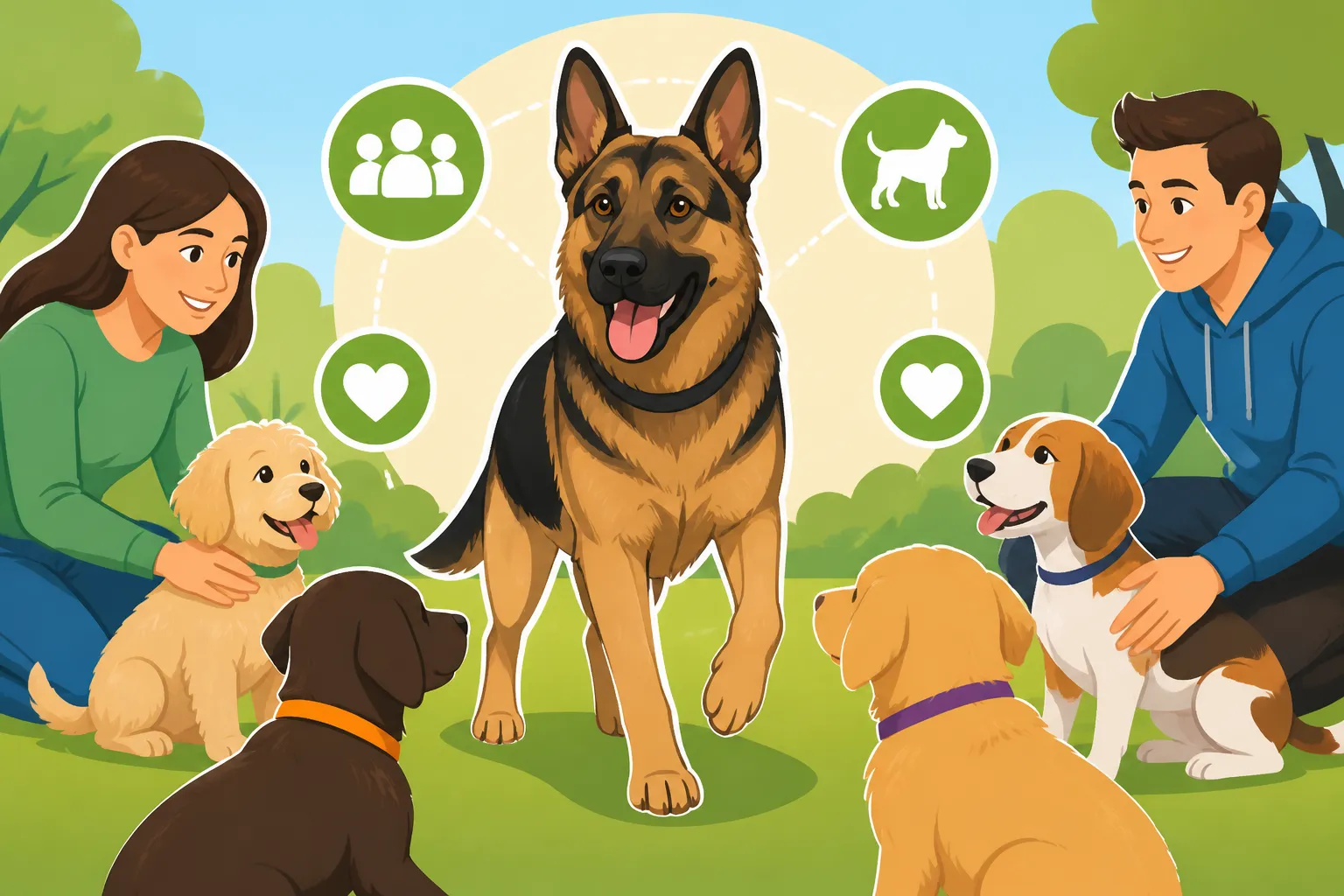
Meeting new individuals is a cornerstone of socialization, but it must be done thoughtfully, especially for a German Shepherd known for its reserved nature. Begin by inviting calm, dog-loving friends and family members to your home. Instruct them to approach your puppy gently, allowing the puppy to initiate contact, and to offer small, tasty treats. Ensure children in your life are taught how to interact respectfully with dogs – no sudden movements, no grabbing, and always supervised. You want your puppy to associate people with pleasant experiences, not fear or annoyance.
For dog-dog interactions, puppy classes are an absolute godsend. These classes provide a safe, supervised environment for puppies to play and learn appropriate social cues from their peers. A good puppy class will ensure all participants are age-appropriate, have initial vaccinations, and are healthy. This is vital for developing appropriate dog etiquette and confidence around other canines. Online programs, like those from BAXTER & Bella, often include modules on supervised play and appropriate dog interactions, which can complement or even stand in for in-person classes if you're in a remote area or have health concerns.
When introducing your puppy to individual adult dogs, always ensure the adult dog is known to be calm, friendly, fully vaccinated, and well-socialized themselves. Keep initial meetings short, on-leash, and in a neutral territory. The goal is positive, brief interactions, not extended playdates right away. Always observe both dogs' body language carefully. If either dog shows signs of stress or discomfort, gently separate them. Remember, quality of interaction far outweighs quantity. A few positive interactions with well-mannered dogs are infinitely more beneficial than many chaotic or negative ones. For more insights on this specific topic, you might find our article on How to Introduce a German Shepherd to Other Dogs particularly useful.
Socializing an Adolescent or Adult German Shepherd
Socializing an adolescent or adult German Shepherd often involves different strategies than those used for puppies. While puppies are learning what the world is, older dogs might need to unlearn negative associations or manage existing reactivity. It’s certainly more challenging, but highly rewarding to see a previously anxious or reactive dog blossom into a confident companion.
Addressing Reactivity and Fear-Based Behaviors
One of the most common challenges with adolescent or adult German Shepherds is reactivity. This often manifests as barking, lunging, or growling at triggers like other dogs, strangers, cyclists, or even specific objects. It's crucial to understand that reactivity is almost always rooted in fear, anxiety, or over-arousal, not malice. Your dog isn't trying to be "bad"; they're likely feeling overwhelmed and are trying to create distance or make the scary thing go away. Punishing these outward displays only suppresses the warning signs and doesn't address the underlying emotion, often making the problem worse in the long run.
The primary strategy for addressing reactivity is called "threshold training" combined with "counter-conditioning." This means working with your dog at a distance where they notice the trigger (e.g., another dog) but do not react negatively. This distance is their "threshold." Every time they see the trigger and remain calm, you reward them with a high-value treat. A particularly effective technique is the "engage-disengage game": when your GSD looks at the trigger, immediately mark the behavior (with a clicker or "yes!") and reward them. When they disengage and look back at you, reward them again. This changes their emotional association from "that thing is scary/exciting" to "that thing means good things (treats) happen when I look at it calmly and then at my owner."
Management is also paramount. Until you've made significant progress with training, avoid putting your German Shepherd in situations where they are guaranteed to react. If you know a particular park is too busy, choose a quieter route. Use a comfortable, well-fitting harness (many excellent options are available on Amazon, such as the Freedom No-Pull Harness, which helps with leverage) and a sturdy leash to maintain control and keep everyone safe. If your German Shepherd's reactivity is severe or you feel overwhelmed, do not hesitate to seek help from a certified professional dog trainer or a veterinary behaviorist. They can provide a tailored plan and hands-on guidance, which is often essential for complex cases. For specific guidance on tackling these issues, read our detailed article on German Shepherd Reactivity on Walks.
Structured Introductions to New Experiences
For an adult German Shepherd who hasn't had adequate socialization or has developed specific anxieties, new introductions must be slow, deliberate, and systematically positive. This process is called desensitization and counter-conditioning. You're essentially re-educating your dog, changing their negative or neutral feelings about something into positive ones.
Let's say your GSD is particularly wary of men wearing hats, perhaps due to a past negative encounter. You wouldn't immediately have a stranger in a hat approach them. Instead, you'd start by having a trusted family member or friend, whom your dog already knows and likes, wear a hat at a significant distance – so far away that your dog barely notices or shows no reaction. Each time your dog observes the person with the hat calmly, they get a high-value treat. Over many, many sessions, you gradually decrease the distance, always ensuring your dog remains below their reaction threshold. The person with the hat should avoid direct eye contact or approaching the dog until the dog is completely comfortable.
This same methodical approach applies to sounds, objects, and environments. For a dog fearful of the vacuum cleaner, start by having it in the room, turned off, and rewarding calm behavior. Then, turn it on for a second from a distance, rewarding calm. Gradually increase the duration and decrease the distance over time. Always pair the "scary" thing with something incredibly positive – their favorite treats, a beloved toy, or gentle praise. Consistency is key, and never rush the process. A single negative experience can undo weeks of progress. Structured obedience classes designed for adult dogs can also be beneficial, providing controlled exposure to other dogs and people in a training context, helping to generalize good behavior.
Common Socialization Challenges and Solutions
Even with the best intentions, German Shepherd owners can encounter specific socialization challenges. Recognizing these early and understanding how to address them effectively is vital for your dog's well-being and your peace of mind.
Dealing with Over-Excitement and Impulsivity
While fear and reactivity are common, some German Shepherds present a different kind of socialization challenge: overwhelming over-excitement and impulsivity. These are the dogs who bark incessantly when they see another dog, jump all over guests, or pull relentlessly on the leash, not out of malice, but pure, unadulterated enthusiasm. While it's lovely that they're happy, these behaviors are still problematic and can be interpreted negatively by others, or even lead to unsafe situations.
The solution here lies heavily in impulse control training and channeling that boundless energy appropriately. Basic obedience commands become your best friend, practiced diligently in increasingly distracting environments. A solid "sit" and "stay" can be used to manage greetings. Teaching a strong "leave it" command is invaluable for ignoring distractions. A reliable "come" (recall) is crucial for off-leash safety. These commands teach your German Shepherd to think before they act and to look to you for direction, even when highly stimulated.
Management tools can also be incredibly helpful during the training process. A front-clip harness, like those widely available on Amazon, can significantly reduce pulling, making walks more manageable and enjoyable for both of you. For very strong pullers, a head halter (like a Gentle Leader) can offer more control, guiding their head and thus their body. Remember, these are training aids, not substitutes for actual training. Furthermore, ensuring your German Shepherd receives adequate physical and mental exercise is paramount. A German Shepherd who is bored and under-stimulated is far more likely to be impulsive and over-excited. Learn more about German Shepherd Exercise Requirements to ensure your dog is getting enough activity. Regular, varied exercise helps them burn off energy, making them calmer and more receptive to training when encountering new stimuli.
Addressing Fear and Aggression
Fear and aggression are serious socialization challenges that can arise from a lack of early, positive exposure, traumatic experiences, or even genetic predispositions in German Shepherds. When a German Shepherd exhibits aggression – growling, snapping, biting, or lunging – it is almost always a sign that the dog is feeling threatened, overwhelmed, or is trying to create distance from something that frightens them. It is a desperate plea for space and safety. Crucially, punishing aggressive displays never solves the problem; it only teaches the dog to suppress their warning signs, potentially leading to a bite without prior warning.
The approach to addressing fear-based aggression is a combination of gentle desensitization and counter-conditioning, as discussed in the previous section. The goal is to change the dog's underlying emotional response to the trigger, from fear to neutrality or even positive anticipation. This means working well below their aggression threshold, slowly and patiently, pairing the trigger with extremely high-value rewards. It requires an incredible amount of precision, consistency, and a deep understanding of canine body language.
Given the potential severity of aggression, early intervention and professional guidance are non-negotiable. If you observe any consistent signs of fear, reactivity escalating into aggression, or actual aggressive incidents, your first step should be to consult with a veterinary behaviorist (DACVB) or a certified professional dog trainer (CPDT-KA) who has extensive experience with aggression cases. These professionals can conduct a thorough assessment, help identify the root cause of the behavior, and develop a safe, ethical, and effective behavior modification plan. Trying to tackle aggression on your own can be dangerous and inadvertently make the problem worse. This is a situation where expert guidance is absolutely essential to ensure the safety of your dog, yourself, and others. For more specific information, please refer to our guide on How to Stop German Shepherd Aggression.
Tools and Resources to Aid German Shepherd Socialization
While patience and consistency are your greatest assets in socializing your German Shepherd, having the right tools and knowing where to find professional support can make a significant difference in your success.
Training Aids and Equipment
Your training toolkit doesn't need to be extensive, but a few key items can dramatically aid your socialization efforts:
- High-Value Treats: Forget bland kibble. For powerful learning and positive associations, you need treats your German Shepherd absolutely loves. Think small pieces of cooked chicken, cheese, hot dogs, or store-bought soft training treats. Keep them tiny so you can deliver many repetitions without overfeeding.
- Clicker: A clicker is an incredibly precise communication tool. When you click exactly as your dog does something desirable (like calmly observing a trigger), it marks that moment precisely, telling them exactly what behavior earned the reward. This speed and accuracy can significantly accelerate learning during socialization.
- Leashes and Harnesses: A sturdy, comfortable 6-foot leash is a must for daily walks and training. For harnesses, opt for models that offer comfort and control without restricting movement. Front-clip harnesses, like those offered by Ruffwear or Freedom Harness, are excellent for reducing pulling by redirecting your dog's momentum towards you. You can find a wide variety of these products on Amazon. Avoid retractable leashes, as they offer little control and can be dangerous.
- Long Line: A 15-30 foot long line is invaluable for practicing recall in open, safe environments (like a quiet park or large backyard). It allows your German Shepherd more freedom to explore and investigate new smells and sights while still maintaining a crucial safety connection to you.
- Puzzle Toys and Chews: Mental stimulation is just as important as physical exercise for a German Shepherd. Puzzle toys (such as Kongs or Nina Ottosson toys, widely available on Amazon) that dispense treats encourage problem-solving and can keep your dog happily occupied, especially when you need to introduce new sounds or environments calmly at home. Durable chews also provide an appropriate outlet for their strong jaws and can help reduce stress.
These tools, when used correctly, can enhance your German Shepherd's learning, improve your communication, and ensure safety during the socialization process.
Professional Guidance and Online Programs
Sometimes, despite your best efforts, you might feel overwhelmed or encounter challenges beyond your experience. This is where professional guidance becomes invaluable.
- Puppy Classes: As mentioned earlier, puppy classes are foundational. They provide a safe, structured environment for puppies to interact with other puppies, meet new people, and be exposed to novel objects and sounds under the watchful eye of an experienced trainer. These classes are not just about play; they're about learning appropriate social skills, basic obedience, and building confidence. Many local pet stores, dog training clubs, and private facilities offer these programs.
- Online Training Programs: For those who live in remote areas, have irregular schedules, or prefer a self-paced approach, online puppy and dog training programs can be a fantastic resource. Platforms like BAXTER & Bella offer comprehensive curricula with video tutorials, live Q&A sessions with trainers, and access to a supportive community. These programs can guide you through everything from basic obedience to advanced socialization strategies, all from the comfort of your home. They provide structured learning that can be particularly beneficial for German Shepherd owners.
- Certified Professional Dog Trainers (CPDT-KA) or Veterinary Behaviorists (DACVB): If you're dealing with serious behavioral issues like aggression, intense fear, or separation anxiety, or if you simply feel out of your depth, do not hesitate to hire a qualified professional. A CPDT-KA has undergone rigorous testing and demonstrated expertise in dog training. A DACVB is a veterinarian who has specialized in animal behavior, making them uniquely qualified to diagnose and treat behavioral disorders, especially those with a strong medical component. They can offer one-on-one sessions, customized training plans, and invaluable insights into your German Shepherd's specific needs, ensuring a safe and effective path forward. Understanding How to Train a German Shepherd effectively involves knowing when to seek expert help.
Maintaining Lifelong Socialization for Your German Shepherd
Socialization isn't a "set it and forget it" task; it's an ongoing commitment that evolves throughout your German Shepherd's life. Just like humans, dogs can become rusty if not regularly exposed to novel situations, and new challenges can always arise.
The Importance of Ongoing Exposure and Reinforcement
Think of socialization as a muscle: if you don't use it, it can weaken. To keep your German Shepherd well-adjusted, confident, and polite, you need to continue providing positive, varied exposures throughout their entire life. Don't fall into the trap of only visiting the same park or walking the same route. Explore new hiking trails, visit different pet-friendly stores (if appropriate for your dog's temperament and vaccination status), or simply drive to a new neighborhood for a walk. The novelty keeps their minds engaged and their social skills sharp.
Every time your German Shepherd encounters a new person, sound, or environment calmly and politely, it's an opportunity to reinforce that positive behavior. Acknowledge and reward them for looking at you instead of lunging, for calmly watching a skateboarder go by, or for settling nicely in a busy outdoor cafe. High-value treats, verbal praise, and a gentle scratch behind the ears all contribute to building those positive associations. This consistent reinforcement helps generalize good behavior, teaching your GSD that positive outcomes happen when they handle new situations with composure.
Consider engaging in dog sports or advanced obedience classes. Activities like agility, nose work, or rally obedience provide mental stimulation, physical exercise, and structured social exposure. They help build a stronger bond between you and your dog, and regularly challenge your German Shepherd to adapt to new environments and work around distractions. This varied engagement is crucial for a breed as intelligent and active as the German Shepherd, helping them maintain their social graces and overall well-being.
Monitoring Body Language and Stress Signals
Even the most thoroughly socialized German Shepherd can have an off day, or simply encounter a situation that is genuinely overwhelming for them. A critical part of lifelong socialization is becoming a keen observer of your dog's body language and understanding their unique stress signals. Dogs communicate constantly, and learning to "read" your German Shepherd can prevent negative experiences and strengthen your bond.
Look for subtle signs of stress or discomfort: lip licking, yawning (when not tired), "whale eye" (where the whites of their eyes are visible), a stiff body posture, ears pinned back, tail tucked low, panting excessively, or attempting to hide or move away. These are your dog's ways of telling you they are uncomfortable or feeling overwhelmed. Ignoring these signals and pushing your dog further into a stressful situation can erode their trust in you and potentially lead to a fear-based reaction.
If you observe these stress signals, your immediate response should be to calmly remove your German Shepherd from the situation. Give them space to decompress and relax. Don't force interactions or try to "make them get over it" by prolonged exposure. This can be counterproductive and create deeper negative associations. Instead, take a break, go to a quiet spot, and perhaps try again another day from a greater distance or with less intensity.
Understanding your GSD's body language also empowers you to advocate for them. If another dog is approaching too aggressively, or a person is being overly intrusive, you can step in to protect your German Shepherd and prevent a potentially negative encounter. Being your dog's protector and interpreter helps them feel safe and secure, reinforcing their trust in you and building their confidence in navigating the world. Knowing these signals is essential for Understanding German Shepherd Behavior more deeply.
Disclaimer
The information provided in this article is for general informational purposes only and is not a substitute for professional veterinary advice, diagnosis, or treatment. Always seek the advice of your veterinarian or other qualified animal health provider with any questions you may have regarding a medical condition or behavior of your German Shepherd. Do not disregard professional advice or delay in seeking it because of something you have read in this article.