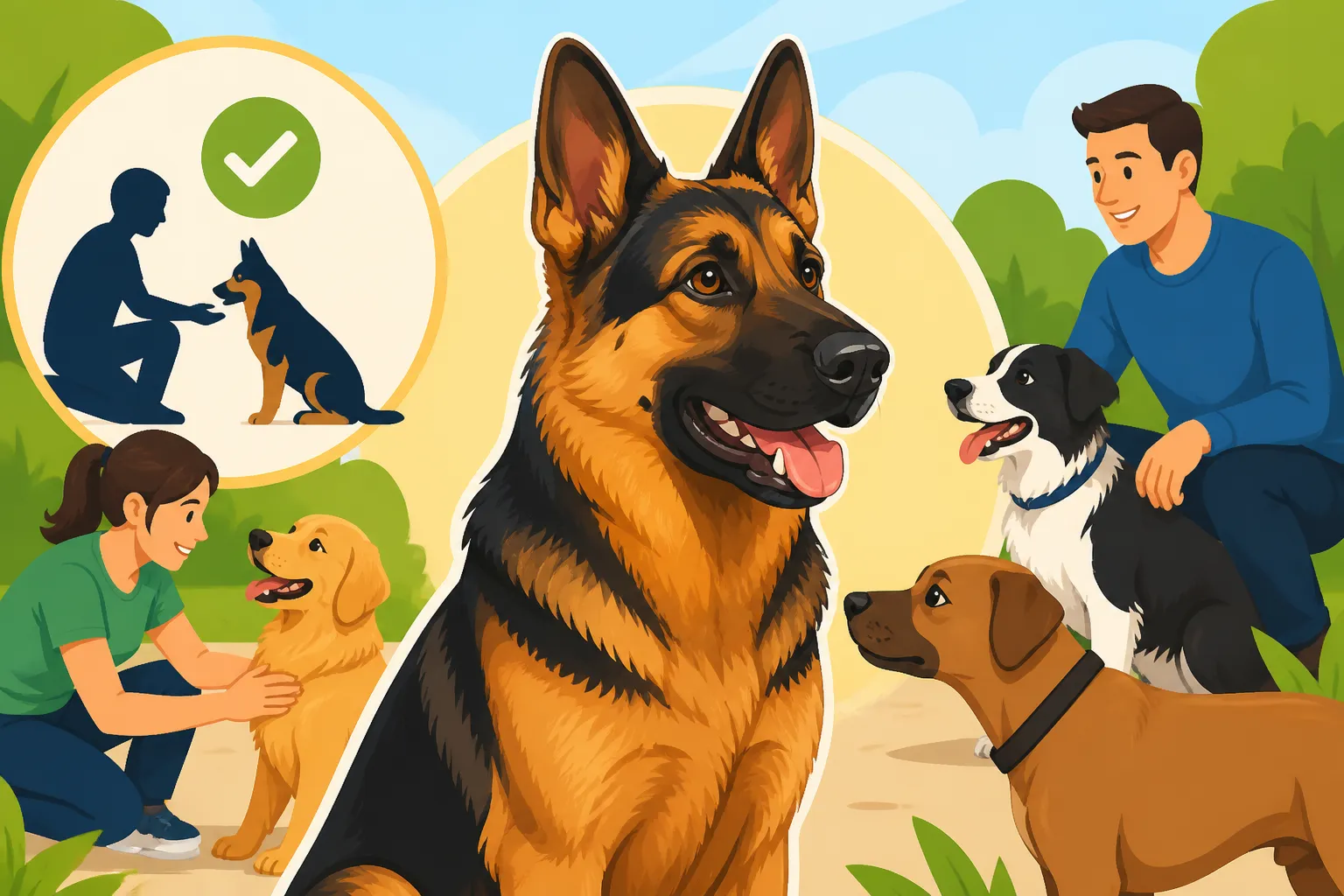
How to Socialize an Adult German Shepherd
It's incredibly frustrating, isn't it? You love your adult German Shepherd dearly, but walks can feel like navigating a minefield, visitors cause a flurry of anxiety or barking, and you wonder if they'll ever be truly comfortable in new situations. Many of us adopt or rescue adult GSDs who, through no fault of their own, missed out on crucial early socialization or developed fear and reactivity over time. This guide is here to tell you that it's absolutely possible to improve their confidence and social skills, offering realistic, empathetic strategies to help your adult German Shepherd navigate the world with greater ease.
Why Adult German Shepherd Socialization is Different and More Challenging
When we talk about socialization, most people immediately picture a cute, fluffy German Shepherd puppy exploring the world with boundless curiosity. And while puppyhood is indeed the golden window, it doesn't mean the door slams shut forever for adult dogs. It just means the approach needs to be more nuanced, patient, and understanding.
The Critical Puppy Socialization Window
Puppies, typically between 8 and 16 weeks, are like sponges. They soak up experiences, sounds, sights, and interactions, forming crucial positive associations with the world around them. This period is when they learn what's "normal" and safe. If a German Shepherd misses out on this vital phase – perhaps due to being in a kennel, a fearful home environment, or simply a lack of exposure – they often grow into adults who view novel stimuli, other dogs, or strangers with suspicion, fear, or even aggression. It’s not about them being "bad" dogs; it's about their brains not having the necessary positive data points to process new situations calmly. The world can feel overwhelming and threatening if you haven't been taught how to interpret its signals. Understanding this missed window is crucial for managing expectations and approaching adult socialization with the right mindset. For more on early training, you might find our guide on German Shepherd Puppy Training Guide helpful, even if your dog is an adult, as it outlines the foundations that might have been missed.
Common Behavioral Manifestations
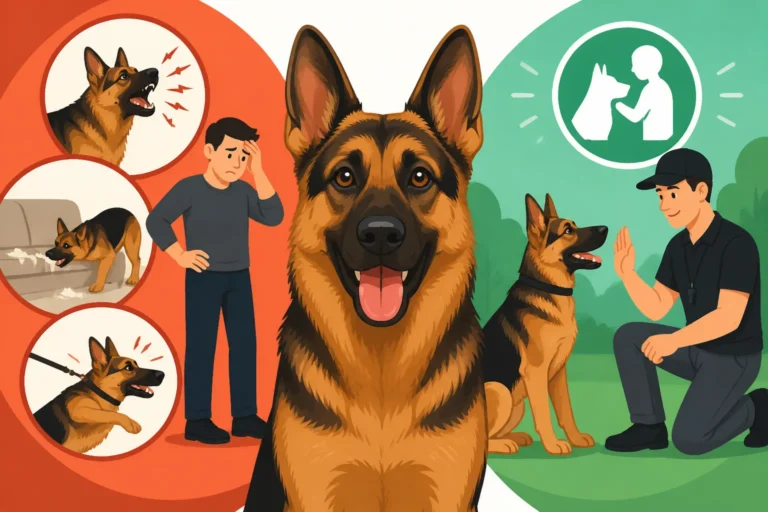
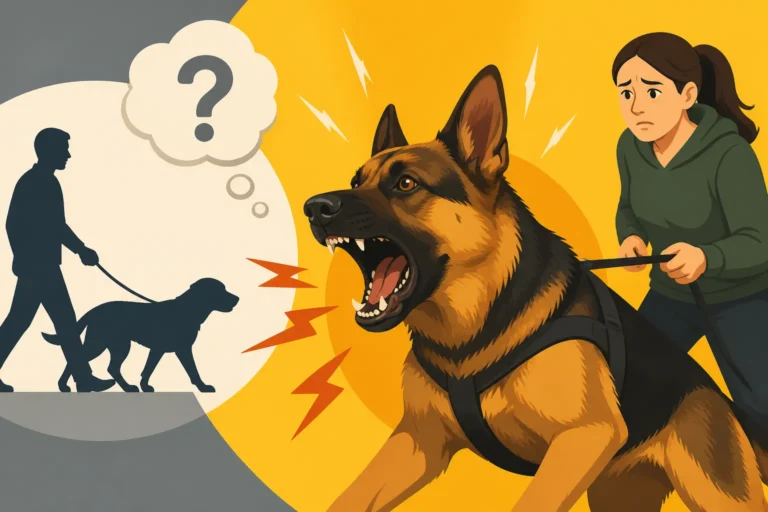
So, what does a lack of early socialization actually look like in an adult German Shepherd? It can manifest in a spectrum of behaviors. One of the most common is leash reactivity, where your GSD might lunge, bark, or growl at other dogs, people, or even bicycles during walks. This isn't usually born out of true aggression, but rather a deep-seated anxiety and a desire to create distance. They're saying, "Go away, you're too close!" in the loudest way they know how.
Another common issue is profound shyness or fearfulness. Your GSD might cower, tremble, try to hide, or even refuse to move when encountering new situations, such as a trip to the vet, a walk through a bustling town square, or when a new person enters your home. Some may exhibit resource guarding, becoming possessive over toys, food, or even their favorite person, especially if they've experienced neglect or had to compete for resources in the past. It’s a survival mechanism, not an act of defiance. Recognizing these behaviors as fear-based helps us respond with empathy and effective training rather than frustration or punishment. Our article on German Shepherd Behavior Problems and Solutions delves deeper into many of these manifestations.
Setting the Stage for Successful Adult Socialization
Before you dive headfirst into exposing your German Shepherd to every dog and person on the block, it’s vital to lay some solid groundwork. Rushing the process without preparation can actually worsen existing fears and setbacks.
Building a Strong Foundation of Trust and Obedience
Effective socialization for an adult German Shepherd hinges entirely on a strong, trusting relationship between you and your dog. Your German Shepherd needs to see you as their secure anchor, the one who will keep them safe and guide them through uncertain situations. This trust is built through consistent, positive reinforcement training. Focus on reinforcing calm behavior and mastering basic obedience commands in a distraction-free environment first. Things like "sit," "stay," "come," and a solid "leave it" become invaluable tools when you start venturing into more stimulating environments.
Use high-value treats and praise generously when they respond well. Keep training sessions short, fun, and positive to build their confidence and reinforce your bond. A German Shepherd who is confident in their handler and understands expectations is much more likely to cope with new experiences. Don't underestimate the power of simply spending quality time together, playing games, and offering comfort. Many German Shepherd owners find that reviewing and strengthening their German Shepherd Basic Commands Every Owner Should Teach helps tremendously.
Identifying Triggers and Managing the Environment
One of the most crucial steps in socializing an adult German Shepherd is becoming a keen observer of their body language and understanding their triggers. What makes your dog uncomfortable? Is it loud noises, children, men with hats, small fluffy dogs, or bicycles? Pay attention to subtle cues like lip licking, yawning (when not tired), averted gaze, stiff body posture, tail tucked, or excessive sniffing. These are often signs of stress or anxiety.
Once you know their triggers, you can proactively manage their environment to prevent overstimulation and reactivity. This might mean walking your German Shepherd during off-peak hours, choosing quiet routes, or crossing the street when you see a potential trigger approaching. The goal isn't to avoid triggers forever, but to control the exposure so your dog can learn to cope at a comfortable distance, below their "threshold" of reactivity. For a GSD with severe reactivity, even seeing a trigger from a distance might be too much initially. In these cases, even just sitting in your car watching people or dogs from afar can be a valuable, low-pressure exercise.
Essential Tools and Resources
Having the right equipment can make a world of difference in your socialization journey, not just for safety but also for comfort and control. A well-fitting harness that discourages pulling (like a front-clip harness) or a head halter can give you better control without causing discomfort or pain, which is vital for building positive associations. A long line (15-30 feet) can be incredibly useful for practicing recall in a safe, open area, allowing your dog more freedom while still maintaining control. You can find excellent options for these on Amazon.
For German Shepherds with a history of nipping or fear-based aggression, a properly fitted basket muzzle is a non-negotiating safety tool. It allows the dog to pant, drink, and take treats, ensuring their comfort while providing peace of mind for everyone involved. Introducing the muzzle positively with treats is key. Additionally, high-value treats (like boiled chicken or cheese) are your best friend for counter-conditioning. Finally, consider professional help. A certified professional dog trainer or veterinary behaviorist can provide invaluable guidance, tailor a plan specifically for your dog, and help you navigate complex behavioral issues. Organizations like the Certification Council for Professional Dog Trainers (CCPDT) can help you find qualified experts. Some owners also benefit from online platforms like BAXTER & Bella, which offer extensive training resources and support communities, providing guidance on everything from basic obedience to more complex behavioral challenges, making them an excellent resource for continued learning and problem-solving. Remember, even the best tools are only as good as the handler using them, so continuous learning is important. Our article on Best Mental Stimulation for German Shepherds can give you ideas on how to keep your GSD engaged and confident.
Step-by-Step Strategies for Gradual Exposure
The key to successful adult German Shepherd socialization is slow, controlled, and positive exposure. We're not throwing them into the deep end; we're gently introducing them to the shallow end and letting them get their paws wet at their own pace.
Controlled Encounters and Desensitization
The concept here is to slowly desensitize your German Shepherd to triggers by exposing them at a distance where they remain calm and can still take treats. Start with what's called a "parallel walk" with a calm, well-socialized dog you know. Walk parallel to the other dog, far enough away that your GSD notices them but doesn't react negatively. If your dog is calm, reward them with high-value treats. The moment they react, you're too close. Increase the distance immediately.
Over several sessions, very gradually decrease the distance as long as your GSD stays calm. The goal isn't interaction yet, but simply to exist peacefully in the presence of another dog. Similarly, when introducing new people, have them stand at a distance, toss treats away from your dog, and avoid direct eye contact or approaching too quickly. This allows your GSD to associate the presence of the "trigger" with good things (treats!) without feeling pressured. These short, positive experiences build confidence much more effectively than forced, stressful interactions. Our guide on How to Introduce a German Shepherd to Other Dogs provides more detailed steps for canine introductions.
Neutral Zone Training and Observation
Neutral zone training involves taking your German Shepherd to public places where they can observe the world from a safe distance, without direct interaction. Think about sitting on a bench at a park's edge, outside a pet-friendly cafe, or even just in your car at a busy shopping center parking lot. The key is to be far enough away that your GSD can watch people, other dogs, and various activities without becoming overwhelmed or reactive.
During these sessions, the focus is entirely on rewarding calm behavior. If your German Shepherd is looking around without barking or lunging, calmly taking treats from your hand, or just lying down quietly, mark that moment with a "yes!" or a clicker and reward them. Ignore any minor nervous behaviors that don't escalate, and redirect if they start to fixate. These sessions are about building resilience and showing your dog that the world isn't always a scary place. They learn to process information in a low-stress environment. Think of it as people-watching for dogs – observing without pressure.
Introducing New People and Novel Experiences
Introducing your adult German Shepherd to new people requires patience and careful management. Avoid having people rush up to them, make direct eye contact, or try to pet them immediately. Instead, instruct visitors to completely ignore your dog when they first enter, allowing your GSD to approach on their own terms. Have guests toss high-value treats on the floor a few feet away from them, creating a positive association without direct pressure. If your GSD eventually sniffs them or makes relaxed eye contact, then a gentle, low-key pet under the chin (if the dog clearly solicits it) might be okay, but always be ready to stop if your dog shows discomfort.
Beyond people, gradually introduce your German Shepherd to various novel experiences: different surfaces to walk on (grass, pavement, gravel, grates), different sounds (traffic, children playing, vacuum cleaners from a distance), and even strange objects. Take them for walks in different neighborhoods, by construction sites (from afar), or near schools during recess (again, from a distance). The goal is to normalize the unusual and show them that these things are not inherently threatening. Remember, it's about positive exposure, not forced immersion.
Addressing Specific Socialization Challenges and Maintaining Progress
Socializing an adult German Shepherd is rarely a straight line of progress. There will be good days and bad days, and it's vital to be equipped to handle setbacks and remain persistent.
Handling Leash Reactivity and Fear
Leash reactivity is one of the most common and frustrating challenges for German Shepherd owners. When your dog lunges, barks, or growls on the leash, it's often a sign of fear or overstimulation. The "engage-disengage" game is a fantastic tool here. When you see a trigger (another dog, person, etc.) at a distance where your GSD notices it but doesn't react, immediately mark and reward. Keep rewarding as they look at the trigger calmly. The moment they look away from the trigger back to you, reward even more heavily. This teaches them that looking at the trigger (engage) and then disengaging by looking back at you (disengage) earns them a reward. It helps to change their emotional response from fear/frustration to anticipation of a treat.
Always carry high-value treats, and be prepared to turn and walk in the opposite direction or create more distance if your dog starts to get overwhelmed. Never punish reactivity, as this will only increase their anxiety around the trigger and potentially redirect their fear onto you. If you're struggling, specialized resources like those from BAXTER & Bella often have specific modules on addressing reactivity with positive, force-free methods. Our comprehensive guide on German Shepherd Reactivity on Walks offers even more detailed strategies.
Overcoming Shyness or Fear of Strangers
For a shy or fearful German Shepherd, introducing new people takes a delicate touch. The golden rule is: let the dog initiate contact. Never force it. When a new person is present, have them completely ignore your German Shepherd. No eye contact, no reaching out. Instead, they can gently toss treats onto the floor a few feet away. This allows your GSD to approach the treats and, by extension, the person, at their own pace, building a positive association.
Have visitors sit down, perhaps sideways, to appear less imposing. Encourage them to speak in soft, calm voices if they speak at all. The aim is to make the new person feel as non-threatening as possible. If your GSD eventually chooses to approach and sniff, that’s a huge victory! Reward that calm curiosity. This slow, indirect approach helps to build trust and confidence in shy dogs, proving that strangers can bring good things without demanding anything in return. Our article on How to Build Confidence in a Shy German Shepherd provides further insights.
Long-Term Commitment and Patience
Socializing an adult German Shepherd is not a quick fix; it's an ongoing journey that requires immense patience and consistent effort. There will be days when you feel like you've made huge strides, and then a sudden setback might leave you feeling defeated. This is completely normal. Remember that adult dogs have established patterns of behavior, and changing those patterns takes time and repetition.
Celebrate every small victory – a walk without a reaction, a calm greeting with a new person, or even just a moment of peaceful observation in a new environment. Consistency is key; brief, positive daily exposures are more effective than infrequent, overwhelming ones. Revisit previous steps if your dog shows signs of stress, and never hesitate to consult with a professional trainer or behaviorist. Their expertise can be invaluable in navigating complex cases and ensuring you're using the most effective, humane methods. German Shepherds thrive on routine and clear communication, so maintaining a consistent approach will gradually help them feel more secure in the world. For information on general health that supports a balanced temperament, consider reading our How to Keep a German Shepherd Healthy guide.
Comparing Socialization Environments
Understanding the differences between various socialization environments can help you strategically plan your German Shepherd's exposure.
| Environment Type | Description | Pros | Cons | Ideal for |
|---|---|---|---|---|
| Controlled Home | Introducing one calm, known dog or person in a familiar, low-stress environment. | Maximum control, minimal distractions, easy to manage dog's stress levels. | Limited real-world exposure, doesn't prepare for diverse stimuli. | First introductions, highly fearful or reactive dogs, building initial positive associations with specific individuals. |
| Quiet Public Spaces | Parks during off-peak hours, walking quiet residential streets, empty parking lots. | Some real-world stimuli at a distance, ability to create space as needed. | Still unpredictable, can encounter unexpected triggers. | Dogs with moderate anxiety, practicing focus and obedience amidst mild distractions, neutral zone training. |
| Busy Public Spaces | Bustling downtown areas, dog parks (from outside the fence), outdoor markets. | High levels of varied stimuli, excellent for advanced desensitization. | Highly overwhelming for anxious dogs, easy to cross reactivity threshold, risk of negative experiences. | Confident dogs ready for advanced exposure, observing from a distance (car or far away bench) for initial stages, never for direct, forced interaction if your GSD isn't ready. |
| Structured Classes | Obedience classes, specialty workshops (e.g., Canine Good Citizen prep). | Expert guidance, controlled dog-dog/dog-person interactions, built-in safety. | Can be intimidating if too many dogs/people are present, cost. | All levels, especially beneficial for dogs with specific issues like reactivity, under the guidance of a qualified professional. |
This table isn't exhaustive, but it provides a framework for thinking about where your German Shepherd is most likely to succeed at any given stage of their socialization journey. Always prioritize your dog's comfort and safety above all else.
Disclaimer
This guide offers general advice for socializing an adult German Shepherd. Every dog is an individual, and results may vary. If your German Shepherd exhibits severe aggression, extreme fear, or other complex behavioral issues, please consult with a certified professional dog trainer or a veterinary behaviorist immediately. They can provide a personalized plan and ensure the safety of both your dog and others.