German Shepherd Feeding Chart by Weight
Figuring out the exact right amount of food for your German Shepherd can feel like a constant puzzle, right? One day they seem ravenous, the next they're picking at their kibble, and you're left wondering if you're giving them too much, too little, or just the wrong thing entirely. It's a common frustration for German Shepherd parents, especially with how prone this intelligent and active breed can be to certain health issues if not properly nourished. This comprehensive guide is designed to cut through the confusion, offering a detailed German Shepherd feeding chart by weight and age, alongside practical advice to ensure your furry family member gets the optimal nutrition they need to thrive.
Understanding Your German Shepherd's Unique Nutritional Needs
German Shepherds are magnificent creatures, renowned for their strength, intelligence, and often boundless energy. But their distinct characteristics also mean they have very specific dietary requirements that differ significantly from many other breeds. It’s not just about filling a bowl; it’s about fueling a highly athletic and sometimes sensitive system.
Why a Generic Feeding Guide Won't Cut It
You've probably seen those generic feeding charts on the back of dog food bags: "Feed X cups for dogs weighing Y pounds." While these provide a baseline, they often fall short for a breed like the German Shepherd. These dogs are large, active, and predisposed to certain musculoskeletal issues such as hip and elbow dysplasia. Their rapid growth as puppies, their powerful musculature as adults, and their propensity for joint degeneration in their senior years all demand a tailored nutritional approach. A generic guide doesn't account for the caloric density needed to support their working drive or the careful balance of nutrients required to promote healthy bone and joint development. Overfeeding, even slightly, during puppyhood can contribute to orthopedic problems later in life, while underfeeding an active adult can lead to muscle loss and lethargy.
Factors Influencing Food Intake
The ideal amount of food for your German Shepherd isn't a static number. It's a dynamic calculation influenced by a variety of factors that change throughout their lives and even day-to-day. Understanding these variables is key to fine-tuning their diet.
Firstly, age plays a massive role. Puppies are growing rapidly and have incredibly high metabolic rates, requiring more calories per pound of body weight than adults. An adult German Shepherd, typically between one and seven years old, needs sufficient energy for maintenance and activity. Senior German Shepherds, generally seven years and older, often slow down, and their metabolism can decrease, necessitating a reduction in caloric intake to prevent obesity and to support aging organs.
Secondly, their activity level is paramount. A German Shepherd involved in protection work, agility, herding, or even just long daily hikes will burn significantly more calories than a companion dog who enjoys a more leisurely lifestyle. A working line German Shepherd will often require a much higher calorie intake compared to a show line counterpart, for instance.
Metabolism varies among individual dogs, just like with people. Some German Shepherds are naturally lean and can eat more without gaining weight, while others might put on pounds easily. Factors like sterilization status also affect metabolism; spayed or neutered dogs often have slower metabolisms and may require fewer calories to maintain a healthy weight.
Finally, health conditions can dictate dietary adjustments. Dogs with allergies might need specialized limited-ingredient diets. Those with sensitive stomachs might require easily digestible formulas. Conditions like Exocrine Pancreatic Insufficiency (EPI) or pancreatitis will require very specific dietary management. Always consult with your veterinarian to address any health-related dietary needs.
Deciphering Dog Food Labels and Calorie Counts
When you're trying to figure out how much to feed your German Shepherd, simply scooping "two cups" can be misleading. Dog food labels, while seemingly straightforward, require a bit of interpretation to truly understand what you're providing your dog.
Beyond "Cups Per Day": The Importance of Calories
The most common advice you'll see on a dog food bag is a recommendation in "cups per day" based on your dog's weight. However, this is a very rough estimate. The problem is, a "cup" of one brand's kibble might have a vastly different calorie count than a "cup" of another brand's. Kibble size, density, and ingredient composition all influence how many calories are in that volumetric measure. For example, a cup of a high-protein, dense kibble could contain 450 calories, while a cup of a lighter, filler-heavy kibble might only have 300 calories. If you're switching foods or trying to manage your German Shepherd's weight, relying solely on cup measurements can lead to unintended overfeeding or underfeeding.
This is where understanding "Metabolizable Energy" (ME) comes in. Most quality dog food brands will list the ME on their packaging, often expressed as kcals per kilogram (kcal/kg) and sometimes as kcals per cup. This number represents the digestible energy your dog actually gets from the food. Focusing on the ME allows you to accurately compare the energy density of different foods and calculate precise portions, regardless of kibble size or density. For instance, if your German Shepherd needs 2000 calories a day and your chosen food has 4000 kcal/kg (or 400 kcals per 100g, or 400 kcals per cup depending on how they list it), you can calculate the exact amount needed.
Calculating Your German Shepherd's Daily Caloric Needs
To move beyond generic guidelines, you can estimate your German Shepherd's daily caloric needs using a more scientific approach. This typically involves understanding their Resting Energy Requirement (RER) and then adjusting for their activity level to get their Daily Energy Requirement (DER).
The RER is the energy needed for basic bodily functions (breathing, digestion, maintaining body temperature) at rest. A common formula for RER (in kcal/day) is: 30 x (body weight in kg) + 70.
Once you have the RER, you multiply it by a factor that corresponds to your dog's activity level and physiological state. These factors can vary:
- Puppies (0-4 months): RER x 3.0 (for very rapid growth)
- Puppies (4 months to neutering/spaying): RER x 2.0
- Intact Adult: RER x 1.8
- Neutered/Spayed Adult: RER x 1.6
- Weight Loss: RER x 1.0 – 1.2
- Weight Gain: RER x 1.8 – 2.0
- Senior/Inactive: RER x 1.2 – 1.4
- Working Dog/Highly Active: RER x 2.0 – 5.0 (depending on intensity)
So, if you have a 30kg (approx. 66 lbs) neutered adult German Shepherd with moderate activity:
RER = 30 x 30 + 70 = 970 kcal/day
DER = 970 x 1.6 = 1552 kcal/day
This calculation provides a much more accurate starting point than simply looking at the bag. Remember, these are estimates. Every dog is an individual. Regular monitoring of your German Shepherd's body condition and weight is crucial. It's always best to consult your veterinarian for a precise calculation, especially if your dog has health concerns or unusual activity levels. They can help tailor the feeding plan to your dog's specific needs, which is particularly important as you consider aspects like German Shepherd Health Problems Guide.
German Shepherd Feeding Chart by Weight and Age
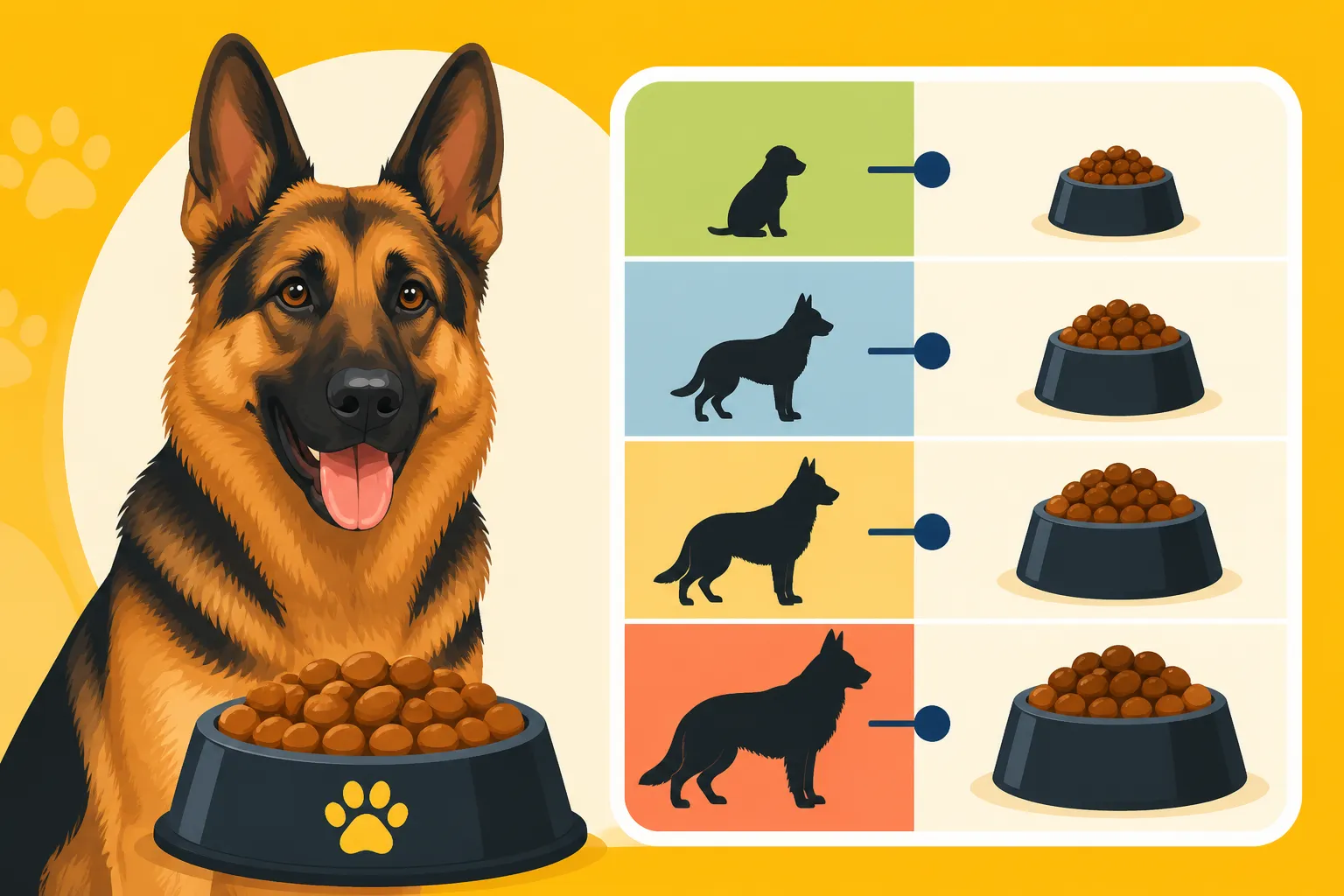
Now that we understand the variables, let's dive into some practical feeding guidelines based on your German Shepherd's stage of life and weight. These charts provide estimated caloric needs and feeding frequencies, but remember, they are starting points. Always observe your dog's individual response and adjust as needed.
Puppy Feeding Schedule and Amounts
German Shepherd puppies grow incredibly fast, and their nutritional needs are intense but delicate. Overfeeding can be just as detrimental as underfeeding, especially regarding joint development. Aim for steady, healthy growth, not rapid bulk. A large-breed puppy formula is essential, as it's specifically designed to support their bone and joint health.
Here's a general guideline for your growing German Shepherd pup:
| Age Range | Estimated Weight Range (lbs) | Estimated Daily Calories (kcal) | Feeding Frequency |
|---|---|---|---|
| 8-12 Weeks | 15-25 lbs | 800-1100 kcal | 3-4 times/day |
| 3-6 Months | 25-55 lbs | 1100-1800 kcal | 3 times/day |
| 6-12 Months | 55-80 lbs | 1800-2400 kcal | 2-3 times/day |
| 12-18 Months | 70-90 lbs | 2400-2800 kcal | 2 times/day |
During the 8-12 week stage, your puppy is undergoing rapid development, and consistent feeding of small meals helps manage their blood sugar and energy levels. As they approach 3-6 months, their growth remains intense, but their digestive system matures enough to handle slightly larger, less frequent meals. By 6-12 months, many German Shepherds are starting to look more like lanky teenagers than true puppies, and their growth plates are still developing. Continuing to feed a high-quality large-breed puppy food is critical during this phase to ensure proper bone and muscle development without putting undue stress on their joints. You can learn more about a structured approach in our German Shepherd Puppy Feeding Schedule article.
It's important to keep an eye on your puppy's body condition. They should have a visible waist and you should be able to easily feel their ribs without them being overly prominent. If you’re ever unsure, don't hesitate to consult your vet.
Adult German Shepherd Feeding Guidelines
Once your German Shepherd reaches about 18 months to 2 years of age, they are generally considered adults, though some may continue to fill out until they are 3. At this stage, their growth has largely stabilized, and the focus shifts to maintaining an ideal body weight and condition for their activity level. An ideal adult male German Shepherd typically weighs between 65-90 pounds, while females range from 50-70 pounds. However, these are averages, and individual genetics and bone structure play a big role.
Monitoring their body condition score is more important than a number on the scale. You should be able to easily feel your dog’s ribs without seeing them, and they should have a distinct waist when viewed from above, with an abdominal tuck when viewed from the side.
Here’s a general adult German Shepherd feeding chart based on weight and activity:
| Weight Range (lbs) | Activity Level | Estimated Daily Calories (kcal) |
|---|---|---|
| 50-60 lbs | Low/Inactive | 1300-1600 kcal |
| Moderate | 1600-1900 kcal | |
| High/Working | 1900-2400+ kcal | |
| 60-70 lbs | Low/Inactive | 1500-1800 kcal |
| Moderate | 1800-2200 kcal | |
| High/Working | 2200-2800+ kcal | |
| 70-80 lbs | Low/Inactive | 1700-2000 kcal |
| Moderate | 2000-2500 kcal | |
| High/Working | 2500-3200+ kcal | |
| 80-90 lbs | Low/Inactive | 1900-2200 kcal |
| Moderate | 2200-2800 kcal | |
| High/Working | 2800-3600+ kcal |
Note: These are approximations. Always adjust based on your dog's individual metabolism, climate, and overall health.
The difference between a low-activity German Shepherd and a high-activity one is substantial. A dog that spends most of its day lounging and going for short walks will require far fewer calories than one training for IGP or herding sheep. You can further explore this topic in our article on How Much to Feed a German Shepherd. Dividing their daily intake into two meals, morning and evening, is generally recommended for adult German Shepherds to aid digestion and help prevent bloat.
Senior German Shepherd Dietary Adjustments
As your German Shepherd enters their golden years (typically around 7-8 years old), their body begins to change. Metabolism often slows, activity levels tend to decrease, and joint issues or other age-related health concerns may emerge. Their diet needs to adapt to support these changes and maintain their quality of life.
Many senior German Shepherds require fewer calories than their adult counterparts to prevent weight gain, which can exacerbate conditions like arthritis. Look for senior-specific dog foods that are often lower in calories and fat, but still provide high-quality protein to maintain muscle mass. These formulas also frequently include beneficial supplements like glucosamine, chondroitin, and omega fatty acids to support joint health and cognitive function.
However, some senior German Shepherds, especially those with certain health issues, might actually need more easily digestible calories to maintain weight. For instance, a dog with dental problems might benefit from wet food, or a dog with a condition like Exocrine Pancreatic Insufficiency might need specific enzyme supplements added to their food. Regular vet check-ups are paramount during this stage to catch any underlying health issues early and adjust their diet accordingly. Your vet can also advise on specific supplements or dietary changes to manage conditions like German Shepherd Arthritis in Senior Dogs or other aging concerns. For a deeper dive into adjusting their diet, check out our German Shepherd Senior Diet Adjustments guide.
Practical Feeding Strategies and Common Pitfalls
Beyond what to feed and how much, how you feed your German Shepherd is equally important. Establishing a consistent routine and being mindful of certain risks can significantly impact their health and well-being.
Scheduled Feeding vs. Free Feeding
When it comes to feeding your German Shepherd, there are two main approaches: scheduled feeding or free feeding. For a breed like the German Shepherd, scheduled feeding is overwhelmingly recommended.
Scheduled feeding means you offer meals at specific times each day, leaving the food down for a set period (usually 15-20 minutes) and then picking up anything uneaten. This method allows you to precisely control portion sizes, monitor your dog's appetite, and establish a predictable routine. For German Shepherds, this routine is incredibly beneficial for several reasons:
- Bloat Prevention: German Shepherds are one of the breeds most susceptible to Gastric Dilatation-Volvulus (GDV), commonly known as bloat, a life-threatening condition. Eating too quickly or too much at once, especially after exercise, can increase the risk. Scheduled meals, often divided into two or three smaller portions throughout the day, help prevent this. You can find more detailed advice in our German Shepherd Bloat Prevention Feeding Tips article.
- Weight Management: It's much easier to prevent obesity when you know exactly how much your dog is consuming.
- Appetite Monitoring: A sudden loss of appetite is often the first sign of illness. With scheduled feeding, you'll notice immediately if your dog isn't eating, prompting a quicker response to potential health issues.
- Potty Training: A consistent feeding schedule leads to a consistent potty schedule, making house-training much easier.
Free feeding, where food is left out all day for your dog to graze, is generally discouraged for German Shepherds. While it might seem convenient, it makes it difficult to track consumption, contributes to overeating and obesity, and increases the risk of bloat if a dog gorges itself. It also attracts pests and can lead to food aggression in multi-dog households.
Monitoring Weight and Body Condition
Regularly assessing your German Shepherd's weight and body condition is perhaps the most important aspect of their feeding plan. The scale is a good starting point, but a visual and tactile assessment of their body is even more telling.
The Rib Check:
- Gently run your hands along your German Shepherd's sides.
- You should be able to easily feel their ribs, but not see them protruding. If you can see their ribs without much effort, they might be too thin. If you have to press hard to feel them, they're likely overweight.
The Waistline Test:
- Look at your German Shepherd from above. They should have a distinct "waist" where their body tucks in behind the rib cage.
- Now look from the side. Their abdomen should tuck up slightly from their chest, not hang low or be straight across.
Regular Weigh-Ins:
Weighing your German Shepherd regularly (once a month or every few months) can help you track trends. For puppies, weekly or bi-weekly weigh-ins are crucial to ensure healthy growth. If you notice a sudden significant weight gain or loss, it's a red flag and warrants a vet visit. This can be one of the first Signs of a Healthy German Shepherd or a signal that something is amiss.
Stool Consistency:
Your dog's stool can also tell you a lot about their digestion and whether their diet is suitable. Well-formed, firm, and consistent stools usually indicate a healthy digestive system and appropriate food intake. Loose stools, diarrhea, or constipation can be signs of dietary intolerance, overfeeding, or an underlying health issue. For more information on recognizing weight issues, you can refer to our article, How to Tell If a German Shepherd Is Overweight.
Choosing the Right Food for Your German Shepherd
With countless dog food brands on the market, selecting the best one for your German Shepherd can be overwhelming. It's not just about meeting caloric needs; it's about providing nutrient-dense, high-quality ingredients that support their robust health.
Ingredient Quality and Formulations
For German Shepherds, a high-quality diet typically means one that is rich in animal protein, has moderate fat content, and includes complex carbohydrates, along with essential vitamins, minerals, and fatty acids.
Protein: Look for real meat as the first ingredient (e.g., chicken, beef, lamb, fish). German Shepherds are active dogs, and sufficient protein is essential for building and maintaining strong muscles. High-quality protein sources are also more digestible.
Fats: Healthy fats, particularly Omega-3 and Omega-6 fatty acids, are crucial for a healthy coat, skin, and joint health. Look for sources like fish oil, flaxseed, or chicken fat. The fat content should be moderate to support energy needs without contributing to obesity.
Carbohydrates: Complex carbohydrates from whole grains (like brown rice, oats, barley) or vegetables (like sweet potatoes, peas) provide sustained energy and fiber for digestive health. Avoid foods with excessive fillers like corn or soy, which offer little nutritional value and can sometimes trigger allergies.
Many reputable brands offer formulas specifically designed for large breeds. These formulas often have a carefully balanced calcium-to-phosphorus ratio important for bone development in puppies and contain joint-supporting ingredients like glucosamine and chondroitin for adults and seniors. Some popular brands known for their large-breed formulas, often found on platforms like Chewy or Amazon, include Purina Pro Plan, Royal Canin, and Hill's Science Diet. For a deeper dive into general recommendations, see our guide on Best Dog Food for German Shepherds.
Beyond traditional kibble, you might consider other food types:
- Wet Food: Can be a good option for senior dogs with dental issues or those needing extra hydration.
- Raw Diet (BARF or PMR): Requires significant research and careful balancing to ensure complete nutrition.
- Fresh Food Delivery: Services like Ollie deliver pre-portioned, human-grade meals that can be an excellent option for some German Shepherds, offering high digestibility and nutrient quality, though often at a higher cost.
Regardless of the type, always ensure the food meets AAFCO (Association of American Feed Control Officials) nutritional guidelines for your dog's life stage.
Special Dietary Considerations
German Shepherds can sometimes have specific dietary needs due to health concerns, making food selection even more critical.
Allergies: German Shepherds can be prone to food allergies, with common culprits including chicken, beef, dairy, and wheat. Symptoms often manifest as itchy skin, ear infections, or digestive upset (diarrhea, vomiting). If you suspect allergies, your vet might recommend a limited ingredient diet (LID) or a hydrolyzed protein diet to identify and eliminate the allergen. Brands that focus on novel proteins or hypoallergenic formulas are often available through Chewy or local pet stores. Check out our detailed guide on Best Dog Food for German Shepherds with Allergies.
Sensitive Stomachs: Some German Shepherds simply have a more delicate digestive system, leading to gas, bloating, or loose stools. For these dogs, easily digestible formulas with prebiotics and probiotics can be beneficial. Ingredients like pumpkin or sweet potato can also aid digestion. Look for foods that are gentle on the gut and avoid abrupt food changes. Our article on German Shepherd Sensitive Stomach Solutions offers more targeted advice.
Joint Support: Given their predisposition to hip and elbow dysplasia, many German Shepherd owners proactively seek out foods or supplements that support joint health. Look for ingredients like glucosamine, chondroitin sulfate, and Omega-3 fatty acids (especially EPA and DHA). While many large-breed formulas include these, your vet might recommend additional supplementation, particularly for older dogs or those already showing signs of joint discomfort. These supplements are readily available on platforms like Amazon. You can delve deeper into this topic in our article about Best Joint Supplements for Senior German Shepherds.
Ultimately, choosing the right food is a process of careful research, observation, and often, collaboration with your veterinarian. A well-nourished German Shepherd is a happy, healthy German Shepherd, and investing time in understanding their nutritional needs is one of the best ways to ensure a long and vibrant life together. Remember, a comprehensive approach to their German Shepherd Nutrition Essentials is key.
Disclaimer
The information provided in this article is for general informational purposes only and is not intended as a substitute for professional veterinary advice. Always consult with a qualified veterinarian or animal nutritionist regarding your German Shepherd's specific dietary needs, health conditions, and any changes to their feeding regimen. Individual dogs may have unique requirements that differ from the general guidelines presented here.