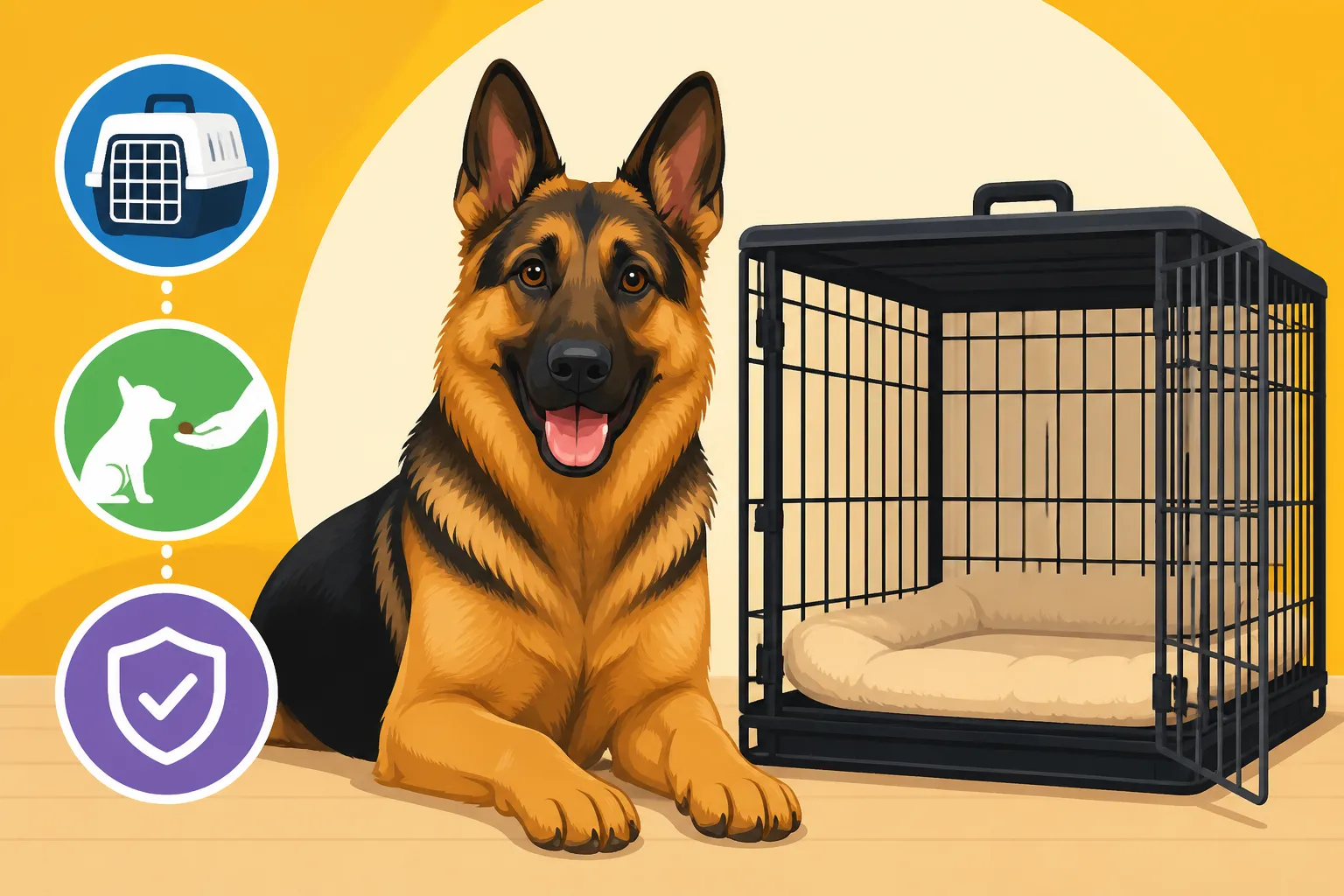
How to Crate Train a German Shepherd
Bringing a German Shepherd into your home is an incredible joy, but let's be honest, those first few months can also be a whirlwind of chewed furniture, unexpected potty accidents, and restless nights. The struggle to keep them safe, prevent destructive behaviors, and establish a sense of calm can feel overwhelming. This comprehensive guide will walk you through the ins and outs of crate training your German Shepherd, transforming what might seem like a punishment into a comforting, safe haven for your beloved companion.
Understanding the "Why" Behind Crate Training Your German Shepherd
When we talk about crate training, it's easy for some people to picture a dog being locked away, and that’s a real concern for many German Shepherd owners. We love our dogs, and the idea of confining them can feel counterintuitive to providing a loving home. However, it's crucial to understand that a properly introduced and utilized crate is not a punishment or a cage; it's a powerful tool that taps into a dog's natural instincts. German Shepherds, like many canids, are den animals. In the wild, dens are safe, quiet places where they feel secure, raise their young, and retreat from threats. The crate, when used correctly, replicates this natural den environment, offering your German Shepherd a personal sanctuary.
The Instinctual Den and Its Modern Application
Think about it: when your German Shepherd puppy is startled or tired, where do they often gravitate? Under a table, behind a couch, or even just tucked into a corner. These aren't random spots; they're attempts to create a secure, enclosed space. This inherent desire for a den is what makes crate training so effective. It provides a defined, predictable area that your dog can call their own, a place where they feel protected from the hustle and bustle of family life. It’s their room, a private space to relax and decompress without being disturbed.
Beyond just comfort, this den instinct also plays a vital role in managing your German Shepherd's behavior and promoting good habits. When they have a designated space, it helps them understand boundaries and expectations within your home. It’s particularly useful for those moments when you can’t supervise them directly, which, let’s face it, is a reality for even the most dedicated dog parents. It's not about ignoring them; it's about providing a safe, temporary spot for them while you handle other tasks.
Core Benefits for You and Your German Shepherd
The advantages of successful crate training extend far beyond providing a cozy nook. For puppies, it's an absolute game-changer for potty training, as dogs are naturally hesitant to soil their sleeping area. This significantly reduces accidents in the house and accelerates the learning process. It also helps with managing destructive chewing, especially during that frustrating puppy teething phase. Instead of coming home to a chewed-up sofa leg, you can rest assured that your German Shepherd is safe and their environment is protected.
For adult German Shepherds, a crate can be a lifesaver in various scenarios. Imagine traveling: a crate provides a familiar, stress-reducing space in unfamiliar hotels or while visiting friends. During vet visits, if your dog needs to stay overnight, being comfortable in a crate makes the experience far less frightening for them. Even at home, it can be a refuge during loud gatherings, thunderstorms, or if a repair person needs to come in. It’s a versatile tool that enhances both their safety and your peace of mind. Moreover, it aids in preventing German Shepherd separation anxiety solutions by providing a predictable, secure space that can lessen the intensity of their distress when you leave.
Choosing the Right Crate for Your German Shepherd
Selecting the perfect crate is a foundational step in successful training. A crate that's too small will be uncomfortable and feel like a cage, leading to aversion. One that's too large can undermine potty training efforts, as your dog might use one end as a bathroom and the other as a sleeping area. Getting the size just right, along with considering the material and placement, will set the stage for your German Shepherd to embrace their new den.
Sizing Up Your German Shepherd's Needs
The golden rule for crate size is simple: your German Shepherd should be able to stand up comfortably, turn around easily, and lie down fully stretched out. For puppies, it’s wise to invest in a crate that will fit them as adults, often coming with a divider panel that can be adjusted as they grow. This way, you don't have to buy multiple crates.
A typical adult male German Shepherd can stand between 24-26 inches tall at the shoulder, with females slightly smaller. Therefore, a crate that is approximately 42-48 inches long, 28-30 inches wide, and 30-32 inches high is generally appropriate for an adult German Shepherd. Always measure your dog from nose to tail while standing, and from the top of their head to the floor, then add a few inches to each measurement for optimal comfort. If you're unsure, leaning towards slightly larger is better than too small.
| German Shepherd Size | Crate Length (Approx.) | Crate Width (Approx.) | Crate Height (Approx.) |
|---|---|---|---|
| Puppy (8-16 weeks) | 30-36 inches (with divider) | 21-24 inches | 23-26 inches |
| Adolescent (4-12 months) | 36-42 inches (with divider) | 23-26 inches | 25-28 inches |
| Adult (Male) | 42-48 inches | 28-30 inches | 30-32 inches |
| Adult (Female) | 36-42 inches | 25-28 inches | 28-30 inches |
Note: These are general guidelines; always measure your individual dog.
Types of Crates and Where to Place Them
There are primarily three types of crates suitable for German Shepherds:
- Wire Crates: These are the most common and versatile. They offer good ventilation, are easy to clean, and often come with divider panels, making them excellent for growing puppies. Many can fold down for easy transport. They are readily available on platforms like Amazon, offering a wide range of sizes and features.
- Plastic Crates (Airline Approved): These crates offer a more "den-like" feel, providing more privacy and feeling cozier for some dogs. They are sturdy, durable, and necessary for air travel. Ventilation is typically through openings on the sides.
- Furniture Crates: These are designed to blend into your home decor, often looking like end tables or attractive dog houses. While aesthetically pleasing, they can be more expensive and may not offer the same portability or ventilation as wire crates. They are generally for dogs already comfortable with crating.
Once you have your crate, placement is key. The crate should be in a central area of your home, like the living room or kitchen, where your family spends a lot of time. This helps your German Shepherd feel like part of the family, not isolated. Avoid banishing the crate to a basement or garage; that reinforces the idea of punishment. For nighttime, the bedroom is often a good choice, especially for puppies, as your presence provides comfort and reassurance. As they grow, you can gradually move the crate to a different location if you prefer, but always start with proximity.
Introducing Your German Shepherd to the Crate
This initial phase is all about creating positive associations and making the crate a place of joy, not fear. Rushing this step or forcing your German Shepherd into the crate will set back your training significantly. Patience, treats, and praise are your most valuable tools here. Remember, you're building trust and comfort, not enforcing a prison sentence.
Making the First Impression Positive and Inviting
The very first interaction with the crate should be a neutral or positive one. Don't just open the door and push them in. Instead, place the crate in its chosen location, leave the door open, and let your German Shepherd discover it on their own terms. Scatter a few high-value treats (like small pieces of cooked chicken or cheese) just inside the crate, around the entrance, and let them sniff them out. You want them to think, "Hey, good stuff happens near and inside this thing!"
Never use the crate for punishment. If your German Shepherd has an accident or chews something they shouldn't, address the behavior separately, but don't banish them to the crate as a consequence. This will only teach them to resent and fear the crate, making all future training much harder. The crate must always be associated with good things – treats, meals, toys, and quiet rest.
The Power of Positive Reinforcement and Luring
Once your German Shepherd is comfortable sniffing around the crate, start encouraging them to go inside completely. Use a cheerful, inviting tone. Toss a treat deep inside the crate, so they have to step in to get it. As they go in, quietly praise them ("Good dog!") and then let them come right back out. Repeat this several times a day, in short sessions (2-5 minutes). Don't try to close the door yet. The goal is for them to voluntarily enter without hesitation.
Many German Shepherds are food-motivated, so mealtimes can be a fantastic way to build positive associations. Start by placing their food bowl just inside the crate, near the entrance. Over several days, gradually move the bowl further back into the crate until they are eating their entire meal inside. While they eat, they are developing a positive memory of being in the crate. This method is incredibly effective and lays a strong foundation for them to view the crate as a desirable place.
Establishing the Crate as a Comfortable Den
Once your German Shepherd is happily entering the crate, the next step is to make it feel like a truly inviting and comfortable den. This isn’t just about putting a blanket in; it’s about creating an environment where they feel safe enough to relax, sleep, and genuinely enjoy their time inside. A true den isn't just a place to be confined; it's a place of sanctuary.
Furnishing the Den: Bedding and Entertainment
Every good den needs cozy bedding! A soft, comfortable bed or blanket will make the crate much more appealing. For puppies, especially those prone to chewing, choose durable, washable bedding that's difficult to destroy. Many brands, easily found on Amazon or Chewy, offer orthopedic or memory foam beds specifically designed for large breeds like German Shepherds, providing joint support that's so important for their German Shepherd hip dysplasia explained and overall health. Just make sure it’s safe and won’t be ingested.
Beyond bedding, always leave a safe, long-lasting chew toy or a puzzle toy stuffed with something delicious (like peanut butter or frozen yogurt) inside the crate when your German Shepherd is expected to be in there for a period. This provides mental stimulation and a positive distraction, helping them associate the crate with enjoyable activities. Brands like Kong offer excellent durable options that can be stuffed and frozen, keeping your German Shepherd engaged for a good amount of time. This isn't just entertainment; it helps them develop a positive association with being alone in their crate.
Introducing Short Stays and Door Closures
Once your German Shepherd is comfortably eating meals inside the crate, it's time to introduce brief periods with the door closed. After they've entered the crate for a treat or meal, quietly close the door. Stay right there. If they remain calm, praise them softly, give another treat through the bars, and then open the door. The initial stays should only be for a few seconds. Gradually, over many repetitions and sessions throughout the day, increase the duration.
The key is to increase the time incrementally and never push them too far too fast. If your German Shepherd starts to whine or paw at the door, you've likely pushed too quickly. Wait for a momentary pause in the whining (even just a second) before opening the door. This teaches them that calm behavior gets them released, not demanding behavior. Don't make a big fuss when you let them out; keep it low-key to avoid reinforcing the idea that being let out is an exciting event. This slow, positive progression is vital for long-term success.
Establishing a Crate Training Schedule
Consistency and a clear schedule are paramount, especially when training a German Shepherd puppy. They thrive on routine, and knowing when to expect crate time, and when they’ll be released, helps them adjust faster. The schedule will differ slightly for puppies versus adult dogs, but the principles remain the same: balance crate time with exercise, potty breaks, and interaction.
Puppy Crate Training: The Early Days
For German Shepherd puppies, crate training goes hand-in-hand with potty training. As a general rule of thumb, a puppy can hold their bladder for approximately one hour per month of age. So, an 8-week-old puppy (2 months) can hold it for about 2 hours. This isn't a hard-and-fast rule, and individual puppies vary, but it provides a good starting point for scheduling.
A typical puppy schedule might look something like this:
- Wake Up: Immediate potty break outside.
- Breakfast: Inside or near the crate.
- Play/Training: 15-30 minutes of supervised activity.
- Potty Break: Immediately outside.
- Crate Time: For a nap or quiet chew.
- Repeat: Every 1.5-3 hours throughout the day, always ending crate time with a potty break.
Overnight, puppies can often hold it a bit longer. For an 8-week-old, aiming for 3-4 hours might be realistic initially, slowly extending as they grow. Always take them out for a potty break just before bed and immediately upon waking. This strict schedule, as detailed in guides like German Shepherd puppy training guide and How to Potty Train a German Shepherd Puppy, is essential for teaching bladder control and preventing accidents.
Adult German Shepherd Crate Training: Adapting the Routine
Training an adult German Shepherd to love their crate might take a bit longer if they have prior negative associations or no experience with a crate. However, it's absolutely possible with patience and positive reinforcement. Adults generally have better bladder control and can handle longer stretches in the crate.
For an adult, the schedule is less about frequent potty breaks and more about managing their time. Incorporate crate time around your daily routine:
- Morning: Potty break, exercise, then a brief crate session while you get ready or for a short errand.
- Mid-day (if you're home): Potty break, exercise, then crate for a quiet rest.
- Evening: Potty break, dinner, family time, then a final potty break before crating for the night.
The goal is not to have them in the crate all day. Adult German Shepherds still need plenty of exercise and mental stimulation. Aim for no more than 4-5 hours during the day, ensuring they get sufficient walks, play, and training sessions outside of the crate. A reputable online training resource, like BAXTER & Bella, offers comprehensive programs that can guide you through structuring your adult German Shepherd's daily routine, including crate time, to ensure their needs are met while training progresses.
Addressing Crate Anxiety and Resistance
It's common for German Shepherds, especially puppies or those new to crating, to vocalize their displeasure. Whining, barking, or even howling can be incredibly frustrating and heart-wrenching. It's vital to address these behaviors with a clear strategy, understanding that reacting incorrectly can inadvertently reinforce the very behaviors you're trying to extinguish.
Understanding the Whines and Barks
When your German Shepherd whines or barks in the crate, it's not always a sign of distress. Sometimes, it's an attempt to communicate: "Hey, I want out!" or "I'm bored!" It can also stem from genuine anxiety or simply being unaccustomed to confinement. It's crucial to differentiate between a "potty needed" whine and a "protesting confinement" whine. A true potty emergency often comes with more urgency, agitation, or a pattern of quiet sleep followed by sudden vocalization.
If you suspect your German Shepherd needs to go to the bathroom, you absolutely must let them out. Take them directly outside, on a leash, without any fuss or play. If they eliminate, praise them, give a small treat, and then return them to the crate. If they don't go, calmly bring them back to the crate. This teaches them that the crate isn't a shortcut to playtime, but a means to relieve themselves when truly necessary. This process is a crucial element of effective German Shepherd Potty Training: Step-by-Step.
Strategies for Overcoming Resistance
For general resistance or protest barking, the most effective strategy is to ignore it. This sounds harsh, but if you let your German Shepherd out every time they make noise, you are teaching them that whining and barking are effective tools to get what they want. They learn that persistent vocalization leads to release, creating a difficult cycle to break. Wait for a brief moment of quiet (even a second or two) before opening the crate door. This teaches them that calm behavior is rewarded.
Here are additional strategies:
- Increase Exercise: A tired German Shepherd is a good crate sleeper. Ensure they're getting plenty of physical exercise and mental stimulation before crate time. A vigorous walk, a game of fetch, or a training session can make a huge difference.
- Mental Stimulation: Beyond physical activity, Best Mental Stimulation for German Shepherds is key. Provide a stuffed Kong or other puzzle toy with a long-lasting treat when you put them in the crate. This redirects their energy and helps them settle.
- Cover the Crate: Some German Shepherds feel more secure and less anxious if their wire crate is covered with a blanket, creating a darker, more den-like environment. Just ensure there's still adequate ventilation.
- Sound Masking: A white noise machine or a fan can help mask household sounds that might trigger barking or keep your German Shepherd from settling.
- Gradual Desensitization: If the anxiety is severe, you may need to revisit the "Introduction" steps. Practice even shorter crate durations, leaving the door open, rewarding entry, and slowly reintroducing closures. This step-by-step approach, championed by many trainers including those offering German Shepherd Crate Training: Step-by-Step guidance, builds confidence.
Troubleshooting Common Crate Training Issues
Even with the best intentions and a solid plan, crate training can present its unique challenges. From continued accidents inside the crate to destructive chewing or escaping, these issues can be incredibly frustrating. Addressing them requires understanding the root cause and adjusting your approach accordingly.
Dealing with Potty Accidents in the Crate
If your German Shepherd is having accidents in the crate, it usually points to one of a few issues:
- Crate is too large: As mentioned earlier, a crate that's too big allows them to designate a "bathroom corner." Use a divider to reduce the space so they can only stand up, turn around, and lie down comfortably.
- Too long in the crate: Even adult German Shepherds have limits. If they're crated for too long without a potty break, they simply can't hold it. Review your schedule and ensure breaks are frequent enough. For puppies, this is especially critical; remember the "one hour per month of age" rule.
- Anxiety-related accidents: Some dogs, when severely anxious, may lose control of their bladder or bowels. If you suspect this, you need to address the underlying anxiety with the strategies mentioned above, like gradual desensitization and positive association.
- Medical issue: Rule out any medical causes for incontinence or frequent urination by consulting your veterinarian.
If an accident occurs, clean the crate thoroughly with an enzymatic cleaner to eliminate odors that might encourage repeat soiling. Never punish your German Shepherd for an accident in the crate; they won't understand why they're being punished, and it will only create fear and aversion towards the crate.
Managing Chewing and Escaping Attempts
A German Shepherd's strong jaws and intelligence mean they can be determined chewers and ingenious escape artists if not properly managed. If your dog is chewing on the crate bars or attempting to escape, it's a clear sign they are not comfortable or sufficiently stimulated.
- Chewing: This often indicates boredom or anxiety. Ensure they always have a safe, appropriate chew toy (like a durable Kong or Nylabone) in the crate. If they're still chewing the bars, it's likely a protest or anxiety. Double-check that they are tired before crating and that the crate is properly introduced and seen as positive. Some German Shepherds might benefit from a more enclosed plastic crate rather than a wire one, as the wire bars can be tempting to chew.
- Escaping: If your German Shepherd is managing to escape, the crate might be flimsy, the latch isn't secure, or they are highly motivated by anxiety. For dedicated escape artists, investing in a heavy-duty, reinforced crate (often made from thick steel) might be necessary. Some brands specialize in "escape-proof" crates for powerful dogs. Before resorting to such measures, revisit the training steps. Is their crate time too long? Are they getting enough exercise? Is the crate location causing undue stress? These behavioral issues, much like dealing with German Shepherd destructive behavior in general, often stem from unmet needs or underlying stress.
When to Stop Crate Training or Modify Its Use
Many German Shepherd owners wonder if crate training is a lifelong commitment or if there comes a point where the crate can be phased out. The answer isn't black and white; it depends entirely on your individual dog, your lifestyle, and your comfort level. For some, the crate remains a valuable tool for their dog's entire life; for others, it's a temporary measure during the puppy and adolescent phases.
Assessing Your German Shepherd's Readiness for Freedom
Before considering phasing out the crate, assess your German Shepherd's behavior. They should consistently meet the following criteria:
- Reliably Potty Trained: No accidents in the house for at least 6-12 months, even when unsupervised for short periods.
- Non-Destructive: They no longer chew inappropriate items, even when left alone with access to household items. This can take a while, as German Shepherds can go through a "teenage" chewing phase.
- Calm When Alone: They can relax independently and do not display signs of separation anxiety, excessive barking, or destructive behaviors when left freely in a room.
- Respectful of Boundaries: They understand and respect household rules, such as staying off furniture or out of certain rooms.
Gradual freedom is key. Don't just open the crate and let them have the run of the house. Start by leaving them unsupervised in a small, puppy-proofed room (like a kitchen or laundry room) for very short periods, gradually increasing the time and the area of access. Always ensure they've had plenty of exercise and a potty break beforehand.
The Crate as a Lifelong Tool Versus a Temporary Measure
For many German Shepherds, the crate remains a comforting den even after they've earned more freedom. They might choose to nap in it, or you might find it useful for specific situations:
- Travel: A familiar crate can reduce stress when traveling or staying in new places.
- Vet Stays/Recovery: If your German Shepherd ever needs medical care that requires an overnight stay, being comfortable in a crate makes the experience much less traumatic.
- Guest Management: When you have visitors who might be uncomfortable with dogs, or if you need to keep your dog safely out of the way during parties or renovations, the crate provides a secure spot.
- Personal Space: Some German Shepherds genuinely enjoy their crate as their own private room, a place to retreat when they want quiet time away from kids or other pets. Providing your dog with a consistent, comfortable space is a significant part of how to keep a German Shepherd healthy, both physically and mentally.
Ultimately, whether you fully phase out the crate or continue to use it, it will always be a valuable piece of your German Shepherd's history. The skills learned during crate training—self-control, comfort in solitude, and respecting boundaries—are invaluable for a well-adjusted companion. It’s a tool that provides both security and structure, helping your German Shepherd navigate their world with confidence.
Disclaimer
The information provided in this guide is for general informational purposes only and does not constitute professional veterinary or dog training advice. Always consult with a qualified veterinarian or certified professional dog trainer for any health concerns or specific behavioral issues your German Shepherd may be experiencing. Individual results with crate training may vary.